Donald Keene
American-born Japanese academic (1922–2019)
From Wikipedia, the free encyclopedia
Donald Lawrence Keene (June 18, 1922 – February 24, 2019) was an American-born Japanese scholar, historian, teacher, writer, and translator of Japanese literature.[1] He was Professor Emeritus and Shincho Professor Emeritus of Japanese Literature at Columbia University, where he taught for over fifty years. Soon after the 2011 Tōhoku earthquake and tsunami, he retired from Columbia, moved to Japan permanently, and acquired citizenship under the name Kīn Donarudo (キーン ドナルド) which is essentially his birth name in the Japanese name order.[2] This was also his poetic pen name (雅号, gagō) and occasional nickname, spelled in the ateji form 鬼怒鳴門.[3][a]
.jpg)
- United States (1922–2012)
- Japan (2012–2019)
- Columbia University (BA, MA, PhD)
- Harvard University
- Cambridge University (MA)
Donald Keene | |
|---|---|
キーン ドナルド | |
Keene in 2011 | |
| Born | June 18, 1922 New York City, U.S |
| Died | February 24, 2019 (aged 96) Tokyo, Japan |
| Citizenship |
|
| Alma mater |
|
| Occupations | Scholar, historian, professor, writer, linguist |
| Organizations |
|
| Children | 1 (adopted) |
| Awards |
|
Early life
Donald Lawrence Keene was born in the Flatbush neighborhood of New York City's Brooklyn borough on June 18, 1922. His father was an international trade businessman while his mother stayed at home to raise Keene and his elder sister. In July 1931, amid the economic crisis of the Great Depression, a nine-year-old Keene begged his father to allow him to accompany him on a business trip to Europe, to which his father agreed. He and his father boarded a United States Lines ship sailing to Normandy, disembarking at Cherbourg before they continued on to Paris by train. Keene met a girl around his age in Paris, but the language barrier made it difficult to talk with her, so he proceeded to sing Frère Jacques to her as it was the only thing he knew in French.[4] These experiences instilled in him a great sense of curiosity for cultures abroad, as well as learning languages. In 1933, his elder sister died of an illness and his parents divorced.
Education and military service
Keene lived with his mother and attended James Madison High School, showing great academic achievement.[5] He then enrolled at Columbia University, where he received a bachelor's degree 1942, studying under Mark Van Doren, Moses Hadas, Lionel Trilling, and Jacques Barzun. While there, he was obsessed with Arthur Waley's English translation of The Tale of Genji, and he became increasingly interested in Japanese culture after he met Ryūsaku Tsunoda, who became a mentor and key influence on his writings.[6][7] Following his graduation, Keene enlisted in the United States Navy under the Selective Training and Service Act of 1940. A self-described pacifist, he was not enthusiastic about joining, especially after hearing about the attack on Pearl Harbor.[8]
While in the Navy, Keene successfully applied to the U.S. Navy Japanese Language School in Boulder, Colorado, and in Berkeley, California,[9] where he learned Japanese. He served as an intelligence officer and in the Pacific region during World War II,[2][9] where he translated for Japanese prisoners, some of whom remained his friends long after the war finished; he later recalled finding poignant diaries of dead Japanese soldiers, stained with their blood, and having his attempts to deliver the diaries to the soldiers' families thwarted by the Navy.[10] Upon his discharge from the Navy, he returned to Columbia and earned a master's degree in 1947. He studied for a year at Harvard University before transferring to Cambridge University in England on the Henry Fellowship, where he earned a second master's degree and became a Fellow of Cambridge's Corpus Christi College from 1948 to 1954, as well as a lecturer from 1949 to 1955.[11] In the interim, he earned a PhD from Columbia in 1949 and studied at Kyoto University in 1953.[12] While staying at Cambridge, he met his idol Waley, who had sparked his initial interest in Asian culture.[13]
Career
Keene went on to become a Japanologist who published about 25 English-language books on Japanese topics, including studies of Japanese literature and culture and translations of classical and modern Japanese literature.[14] He also published about 30 books in Japanese, some of which have been translated from English. He was president of the Donald Keene Foundation for Japanese Culture.
Personal life
In 2008, Emperor Akihito awarded Keene the Order of Culture, one of the highest honors bestowed by the Japanese Imperial House; as of 2025, he remains the only non-Japanese person to receive the award.[15]
In January 2011, at the age of 87, Keene was taken to a Japanese hospital after becoming gravely ill; concerned that he was dying, he instead asked himself what he would do if he recovered, and quickly realized that he would rather live out the rest of his life in Japan than return to the U.S.[14] The Tōhoku earthquake and tsunami struck Japan two months later; Keene soon announced that he would retire from Columbia University, leave his home in Morningside Heights, and settle in Japan.[10][14] He was already known and respected in Japan by this point,[16] and his relocation following the earthquake was universally welcomed.[10][14]
According to the Financial Times, which referred to Keene as a legendary figure in Japan, "The announcement made headline news. Japanese spoke, many with tears in their eyes, of the courage he had given them in their hour of need."[14] He told The New York Times, "Many foreigners are leaving Japan. People have asked me why I should be choosing this moment to spend the rest of my life in Japan. [...] I decided to move there to voluntarily and gladly join the people in time of disaster, because I have more friends there than I have here, and most of my awards have come there. I want to show my appreciation to the Japanese people, and I could think of no other way than to say I'd be with them."[10]
Upon settling in Japan, Keene adopted the legal name Kīn Donarudo (キーン ドナルド) and acquired Japanese citizenship, which required him to relinquish his American citizenship as Japan does not permit multiple citizenship.[2] Having long maintained a home in a suburb of Tokyo, he made it his primary home upon relocating.[14] He never married and had no biological children. In 2012, at the age of 89, he utilized Japan's adult adoption process to adopt professional shamisen player Seiki Uehara as his son and heir.[17] Uehara was 63 years old at the time.[18]
Death
Keene died of cardiac arrest in Tokyo at the age of 96 on February 24, 2019.[19][20]
Selected works
In an overview of writings by and about Keene, OCLC/WorldCat lists over 600 works in over 1,400 publications in 16 languages and over 39,000 library holdings.[21]
Works in English
| Year | Title | Publisher | Notes |
|---|---|---|---|
| 1951 | The Battles of Coxinga: Chikamatsu's Puppet Play, Its Background and Importance | Taylor's Foreign Press | |
| 1952 | The Japanese Discovery of Europe: Honda Toshiaki and Other Discoverers, 1720–1952 | Routledge and K. Paul | Japanese trans.: 日本人の西洋発見 (錦正社, 1957), trans. 藤田豊 & 大沼雅彦; nihonjin no seiyou hakken; 日本人の西洋発見 (中公叢書, 1968), trans. 芳賀徹 [?trans of 2nd ed] |
| 1955 | Japanese Literature: An Introduction for Western Readers | Grove Press | |
| 1956 | Modern Japanese Literature: An Anthology | Grove Press | |
| 1959 | Living Japan | Doubleday | Japanese trans.: 生きている日本 (朝日出版社, 1973), trans. 江藤淳 & 足立康; ikiteiru nihon; Revised edition: 果てしなく美しい日本 (講談社学術文庫, 2002), trans. 足立康改 [?mistake. ?Separate work] |
| 1961 | Major Plays of Chikamatsu | Columbia University Press | |
| 1961 | Four Major Plays of Chikamatsu | Columbia University Press | |
| 1965 | Bunraku: The Art of the Japanese Puppet Theatre | Kodansha International | With Kaneko Hiroshi (photography) & Jun'ichirō Tanizaki (introduction); Japanese trans.: 文楽 (講談社, 1966), trans. 吉田健一; bunraku |
| 1969 | The Japanese Discovery of Europe, 1720–1830 | Stanford University Press | Revised/2nd edition |
| 1969 | The Manyōshū | Columbia University Press | |
| 1970 | Twenty Plays of the Noh Theatre | Columbia University Press | |
| 1975 | War-Wasted Asia: Letters, 1945–46 | Kodansha International | Japanese trans.: 昨日の戦地から (中央公論新社, 2006), trans. 松宮史朗; kinou no senchi kara |
| 1976 | World Within Walls: Japanese Literature of the Pre-Modern Era, 1600–1867 | Henry Holt & Co | Second book in "A History of Japanese Literature" series; Japanese trans.: 日本文学史 近世篇, 2 vols. (中央公論社, 1976–77), trans. 徳岡孝夫; nihon bungakushi kinseihen |
| 1978 | Landscapes and Portraits: Appreciations of Japanese Culture | Kodansha International | |
| 1978/79 | Some Japanese Portraits | Kodansha America Inc | Japanese trans.: 日本文学散歩 (朝日選書, 1975), trans. 篠田一士; nihon bungaku sanpo |
| 1979 | Meeting with Japan | 学生社 | Japanese trans.: 日本との出会い (中央公論社, 1972), trans. 篠田一士; nihon tono deai |
| 1981 | Travels in Japan | Gakuseisha | Japanese trans.: 日本細見 (中央公論社, 1980), trans. 中矢一義; nihonsaiken |
| 1984 | Dawn to the West: Japanese Literature of the Modern Era: Fiction | Holt Rinehart & Winston | Third book in "A History of Japanese Literature" series |
| 1984 | Dawn to the West: Japanese Literature in the Modern Era: Poetry, Drama, Criticism | Holt Rinehart & Winston | Fourth book in "A History of Japanese Literature" series |
| 1987 | Dawn to the West: Japanese Literature in the Modern Era | Henry Holt & Co | |
| 1988 | The Pleasures of Japanese Literature | Columbia University Press | ISBN 0-231-06736-4; Japanese trans.: 古典の愉しみ (JICC, 1992; 宝島社, 2000) |
| 1989 | Introducing Kyoto | Kodansha America Inc | With Herbert E. Plutschow |
| 1989 | Travelers of a Hundred Ages: The Japanese As Revealed Through 1,000 Years of Diaries | Diane Publishing Co | Japanese trans.: 百代の過客 日記にみる日本人 (朝日選書, 1984 and 1988), trans. 金関寿夫; hyakudai no kakaku: nikkini miru nihonjin; Later published by Asahi, 2011 and 2012 [?trans of revised edition] |
| 1989 | Modern Japanese Novels and the West | Umi Research Press | |
| 1990 | No and Bunraku: Two Forms of Japanese Theatre | Columbia University Press | Japanese trans.: 能・文楽・歌舞伎 (講談社, 2001), trans. 吉田健一 & 松宮史朗; noh, bunraku, kabuki |
| 1991 | Appreciations of Japanese Culture | Kodansha America Inc | |
| 1991 | The Colors of Poetry: Essays in Classic Japanese Verse | Katydid Books | With Ooka Makoto |
| 1992 | Travelers of a Hundred Ages | Henry Holt & Co | |
| 1993 | Seeds in the Heart: Japanese Literature from Earliest Times to the Late Sixteenth Century | Henry Holt & Co | First book in "A History of Japanese Literature" series |
| 1994 | On Familiar Terms: A Journey Across Cultures | Kodansha America Inc | Reworking of 1990–1992 Japanese newspaper column; Japanese trans.: このひとすじにつながりて (朝日選書, 1993), trans. 金関寿夫; kono hitosuji ni tsunagarite |
| 1995 | Modern Japanese Diaries: The Japanese at Home and Abroad as Revealed Through Their Diaries | Henry Holt & Co | Later published by Columbia University Press, 1999 [?revised edition]; Japanese edition published first |
| 1996 | The Blue-Eyed Tarokaja: A Donald Keene Anthology | Columbia University Press | Editor: J. Thomas Rimer; Japanese trans.: 碧い眼の太郎冠者; aoi me no taroukaja |
| 1996 | On Familiar Terms: To Japan and Back, a Lifetime Across Cultures | Kodansha America Inc | |
| 1999 | もう一つの母国、日本へ – Living in Two Countries | Kodansha International | English and Japanese bilingual text, trans. 塩谷紘 |
| 2001 | Japan at the Dawn of the Modern Age: Woodblock Prints from the Meiji Era, 1868–1912 | Museum of Fine Arts Boston | With Anne Nishimura & Frederic A. Sharf |
| 2001 | Sources of Japanese Tradition: From Earliest Times to 1600 | Columbia University Press | Compiled by Donald Keene, Wm. Theodore De Bary, George Tanabe and Paul Varley |
| 2002 | Emperor of Japan: Meiji and His World, 1852–1912 | Columbia University Press | Japanese trans.: 明治天皇 (新潮社, 2001), trans. 角地幸男; meiji tennou; Also published in 4 volumes, 2007 |
| 2002 | Masterful Illusions: Japanese Prints from the Anne Van Biema Collection | University of Washington Press | With Lee Bruschke-Johnson & Ann Yonemura |
| 2002 | Five Modern Japanese Novelists | Columbia University Press | Japanese trans.: 思い出の作家たち―谷崎・川端・三島・安部・司馬 (新潮社, 2005), trans. 松宮史朗; omoide no sakkatachi: Tanizaki, Kawabata, Mishima, Abe, Shiba |
| 2003 | Yoshimasa and the Silver Pavilion: The Creation of the Soul of Japan | Columbia University Press | Japanese trans.: 足利義政と銀閣寺 (中央公論新社, 2008), trans. 角地幸男; Yoshimasa to ginkakuji |
| 2006 | Frog in the Well: Portraits of Japan by Watanabe Kazan 1793–1841 | Columbia University Press | Japanese trans.: 渡辺崋山 (新潮社, 2007), trans. 角地幸男; Watanabe Kazan |
| 2008 | Chronicles of My Life: An American in the Heart of Japan | Columbia University Press | Japanese trans.: 私と20世紀のクロニカル (中央公論新社, 2007), trans. 角地幸男; watashi to 20 seiki no kuronikaru; Later published as ドナルド・キーン自伝 (中公公論新社, 2011); Spanish trans.: Un Occidental En Japon (Nocturna Ediciones, 2011), trans. José Pazó Espinosa |
| 2010 | So Lovely a Country Will Never Perish: Wartime Diaries of Japanese Writers | Columbia University Press | Japanese trans.: 日本人の戦争 作家の日記を読む (文藝春秋, 2009), trans. 角地幸男; nihonjin no sensou: sakka no nikki wo yomu |
| 2013 | The Winter Sun Shines In: A Life of Masaoka Shiki | Columbia University Press | Japanese trans.: 正岡子規 (新潮社, 2012), trans. 角地幸男; Masaoka Shiki |
| 2016 | The First Modern Japanese: The Life of Ishikawa Takuboku | Columbia University Press |
Works in Japanese
| Year | Japanese title | Romanized title | Publisher | Notes |
|---|---|---|---|---|
| 1957–1975 | ドナルド・キーンの日本文学散歩 | Donald Kīn no Nihonbungaku Sanpo | 週刊朝日 | Column in Asahi Weekly |
| 1963 | 日本の文学 | Nihon no Bungaku | 筑摩書房 | Trans. 吉田健一 |
| 1972 | 日本の作家 | Nihon no Sakka | 中央公論社 | |
| 1972 | 日本人と日本文化 司馬遼太郎との対談 | Nihonjin to Nihonbunka: Shiba Ryōtarō to no Taidan | 中公新書 | In conversation with Ryotaro Shiba; republished 1992 as 世界のなかの日本 |
| 1973 | 反劇的人間 | Hangekiteki Ningen | 中公新書 | In conversation with Kobo Abe |
| 1973 | 東と西のはざまで 大岡昇平と対談 | Higashi to Nishi no Hazama de | 朝日出版社 | In conversation with Ooka Shouhei |
| 1973 | 悼友紀行 三島由紀夫の作品風土 | 中央公論社 | With Tokuoka Takao | |
| 1977 | ドナルド・キーンの音盤風刺花伝 | 音楽之友社 | Later published as わたしの好きなレコード | |
| 1977 | 日本文学を読む | Nihonbungaku wo Yomu | 新潮選書 | |
| 1979 | 日本の魅力 対談集 | Nihon no Miryoku | 中央公論社 | Collection of conversations |
| 1979 | 日本を理解するまで | Nihon wo Rikai suru Made | 新潮社 | |
| 1979 | 日本文学のなかへ | Nihonbungaku no Naka e | 文藝春秋 | |
| 1980 | 音楽の出会いとよろこび | Ongaku no Deai to Yorokobi | 音楽之友社 | Trans. 中矢一義; republished 中央公論社 1992 |
| 1981 | ついさきの歌声 | Tsuisaki no Utagoe | 中央公論社 | Trans. 中矢一義 |
| 1981 | 私の日本文学逍遥 | Watashi no Nihonbungaku Shōyō | 新潮社 | |
| 1983 | 日本人の質問 | Nihonjin no Shitsumon | 朝日選書 | |
| 1983–1984 | 百代の過客 日記にみる日本人 | Hyakudai no Kakaku: Nikki ni Miru Nihonjin | Asahi Evening News | Column |
| 1984–1997 | 日本文学史 | Nihonbungakushi | 中央公論社 | Translation of "History of Japanese Literature" series; various volumes and editions |
| 1986 | 少し耳の痛くなる話 | Sukoshi Mimi no Itakunaru Hanashi | 新潮社 | |
| 1987 | 二つの母国に生きて | Futatsu no Bokoku ni Ikite | Asahi | Trans. 塩谷紘 |
| 1990 | 古典を楽しむ 私の日本文学 | Koten wo Tanoshimu: Watashi no Nihonbungaku | 朝日選書 | |
| 1990 | 日本人の美意識 | Nihonjin no Biishiki | 中央公論 | |
| 1990–1992 | このひとすじにつながりて | Kono Hitosuji ni Tsunagarite | Asahi Evening News | Column |
| 1992 | 声の残り 私の文壇交遊録 | Koe no Nokori: Watashi no Bundan Kōyūroku | Asahi | |
| 1998 | 三島由紀夫未発表書簡 ドナルド・キーン氏宛の97通 | Mishima Yukio Mihappyō Shokan | 中央公論社 | Editor; 97 letters from Yukio Mishima |
| 2000 | 日本語の美 | Nihongo no Bi | 中公文庫 | |
| 2003 | 明治天皇を語る | Meiji Tennō wo Kataru | 新潮新書 | Based on lecture series |
| 2003 | 日本文学は世界のかけ橋 | Nihonbungaku wa Sekai no Kakebashi | たちばな出版 | |
| 2004 | 同時代を生きて 忘れえぬ人びと | Dōjidai wo Ikite Wasureenu Hitobito | 岩波書店 | With Jakucho Setouchi & Shunsuke Tsurumi |
| 2005 | 私の大事な場所 | Watashi no Daiji na Basho | 中央公論新社 | Republished 2010 |
| 2011 | 戦場のエロイカ・シンフォニー 私が体験した日米戦 | Senjō no Eroica Shinfonī: Watashi ga Keiken shita Nichibei-sen | 藤原書店 | With Koike Masayuki |
| 2011–2020 | ドナルド・キーン著作集(全15巻・別巻) | Donald Kīn Chosakushū (Zen-15kan) | 新潮社 | Complete works (15 volumes) |
| 2012 | 日本を、信じる | Nihon wo, Shinjiru | 中央公論新社 | With Setouchi Jakuchou |
| 2013 | 私が日本人になった理由―日本語に魅せられて | Watashi ga Nihonjin ni Natta Riyū—Nihongo ni Miserarete | PHP研究所 |
Translations
| Year | Original author | Title | Publisher | Notes |
|---|---|---|---|---|
| 1951 | Chikamatsu Monzaemon | The Battles of Coxinga: Chikamatsu's Puppet Play, Its Background and Importance | Taylor's Foreign Press | |
| 1956 | Dazai Osamu | The Setting Sun | New Directions | |
| 1958 | Dazai Osamu | No Longer Human | New Directions | |
| 1961 | Chikamatsu Monzaemon | The Major Plays of Chikamatsu | Columbia University Press | Includes critical commentary |
| 1967 | Yoshida Kenkō | Essays in Idleness: The Tsurezuregusa of Kenko | Columbia University Press | |
| 1967 | Mishima Yukio | Five Modern Noh Plays | Tuttle | Including Madame de Sade |
| 1971 | Chushingura: The Treasury of Loyal Retainers, a Puppet Play | Columbia University Press | ||
| 1973 | Mishima Yukio | After the Banquet | Random House Inc | |
| 1975 | Abe Kobo | The Man Who Turned into a Stick: Three Related Plays | Columbia University Press | Original text published by Tokyo University Press |
| 1981 | The Tale of the Shining Princess | Metropolitan Museum of Art and Viking Press | ||
| 1986 | Abe Kobo | Friends: A Play | Tuttle | |
| 1997 | Abe Kobo | Three Plays | Columbia University Press | |
| 1997 | Matsuo Bashō | The Narrow Road to Oku | Kodansha America Inc | |
| 1998 | Kawabata Yasunari | The Tale of the Bamboo Cutter | Kodansha America Inc | |
| 1998 | Yamamoto Yuzo | One Hundred Sacks of Rice: A Stage Play | Nagaoka City Kome Hyappyo Foundation | |
| 2001 | The Tale of Genji | Kodansha International | Bilingual illustrated text with essay; with Miyata Masayuki (illustrations) & H. Mack Horton | |
| 2003 | Oda Makoto | The Breaking Jewel | Columbia University Press |
Editor
| Year | Title | Publisher | Notes |
|---|---|---|---|
| 1960 | Anthology of Japanese Literature from the Earliest Era to the Mid-Nineteenth Century | Grove Press | |
| 1961 | The Old Woman, the Wife, and the Archer: Three Modern Japanese Short Novels | Viking Press | |
| 1987 | Anthology of Chinese Literature: From the 14th Century to the Present Day | Grove Press | Co-editor with Cyril Birch |
| 1994 | Modern Japanese Literature from 1868 to the Present Day | Grove Press | |
| 2000 | Love Songs from the Man'Yoshu | Kodansha America Inc |
Honorary degrees
Keene was awarded various honorary doctorates, from:
- University of Cambridge (1978)
- St. Andrews Presbyterian College (North Carolina, 1990)
- Middlebury College (Vermont, 1995)
- Columbia University (New York, 1997)
- Tohoku University (Sendai, 1997)
- Waseda University (Tokyo, 1998)
- Tokyo University of Foreign Studies (Tokyo, 1999)
- Keiwa College (Niigata, 2000)
- Kyoto Sangyo University (Kyoto, 2002)
- Kyorin University (Tokyo, 2007)
- Toyo University (Tokyo, 2011)
- Japan Women's University (Tokyo, 2012)
- Nishogakusha University (Kyoto, 2012)
- Doshisha University (Kyoto, 2013)
Awards and commendations
- Guggenheim Fellowship, 1961
- Kikuchi Kan Prize (Kikuchi Kan Shō Society for the Advancement of Japanese Culture), 1962.[22]
- Van Ameringen Distinguished Book Award, 1967
- Kokusai Shuppan Bunka Shō Taishō, 1969
- Kokusai Shuppan Bunka Shō, 1971
- Yamagata Banto Prize (Yamagata Bantō Shō), 1983
- The Japan Foundation Award (Kokusai Kōryū Kikin Shō), 1983
- Yomiuri Literary Prize (Yomiuri Bungaku Shō), 1985 (Keene was the first non-Japanese to receive this prize, for a book of literary criticism (Travellers of a Hundred Ages) in Japanese)
- Award for Excellence (Graduate Faculties Alumni of Columbia University), 1985
- Nihon Bungaku Taishō, 1985
- Donald Keene Center of Japanese Culture at Columbia University named in Keene's honour, 1986
- Tōkyō-to Bunka Shō, 1987
- NBCC (The National Book Critics Circle) Ivan Sandrof Award for Lifetime Achievement in Publishing, 1990
- The Fukuoka Asian Culture Prize (Fukuoka Ajia Bunka Shō), 1991
- Nihon Hōsō Kyōkai (NHK) Hōsō Bunka Shō, 1993
- Inoue Yasushi Bunka Shō (Inoue Yasushi Kinen Bunka Zaidan), 1995
- The Distinguished Achievement Award (from The Tokyo American Club) (for the lifetime achievements and unique contribution to international relations), 1995
- Award of Honor (from The Japan Society of Northern California), 1996
- Asahi Prize, 1997
- Mainichi Shuppan Bunka Shō (The Mainichi Newspapers), 2002
- The PEN/Ralph Manheim Medal for Translation, 2003
- Ango Award (from Niigata, Niigata), 2010
National honors and decorations
Decorations
 (Order of the Rising Sun, Gold Rays with Neck Ribbon, Third Class, 1975)
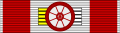 (Order of the Rising Sun, Gold and Silver Star, Second Class, 1993)
 (Order of Culture (Bunka kunshō), 2008[23])


Honors
- Person of Cultural Merit (Bunka Kōrōsha) (Japanese Government), 2002 (Keene was the third non-Japanese person to be designated "an individual of distinguished cultural service" by the Japanese government)
- Freedom of (meiyo kumin) Kita ward, Tokyo, 2006
Notes
- Glossed as 鬼怒(キーン・ド)鳴門(ナルド) or kīn do narudo; 鬼怒 is usually pronounced kinu, as in Kinugawa River, and 鳴門 as naruto, as in the Naruto Strait, which are both well-known place names, yielding the reading kinu naruto. A further twist is that 怒 can also be read as do, corresponding to the Do- in Donald.

