Ella Hall
From Wikipedia, the free encyclopedia
March 17, 1897[1]
- Actress
- producer
Ella Hall | |
|---|---|
.jpg) Hall c. 1918 | |
| Born | Ella Augusta Hall March 17, 1897[1] Hoboken, New Jersey, U.S. |
| Died | September 3, 1981 (aged 84) Los Angeles, California, U.S. |
| Resting place | Forest Lawn Memorial Park, Glendale |
| Occupations |
|
| Years active | 1906–1933 |
| Known for | |
| Spouses | |
| Children | 4, including Ellen Hall and Richard Emory |
| Mother | Mary Hall actress |
| Signature | |
 | |
Ella Augusta Hall (March 17, 1897 – September 3, 1981) was an American actress. She appeared in more than 90 films between 1912 and 1933.
Ella Augusta Hall was born in Hoboken, New Jersey on March 17, 1897.[2] Her family moved to Hollywood in the early days of silent films so her mother, May Hall, could pursue an acting career.
Career
Ella Hall's first credited film appearance was the lead role in the 1913 film Memories. Her career took off after that film, and she appeared in thirty-seven films from 1913 through the end of 1914. She had another thirty-nine film appearances from 1915 through 1919. She did not appear in another film until 1921. Her career had slowed considerably during this two-year break, and she starred in only seven more films. Her best-known film was The Flying Dutchman, released in 1923, which was her final silent film.
She had a minor appearance, uncredited, in the 1930 Cecil B. DeMille film Madam Satan. Her final film appearance was in 1933's The Bitter Tea of General Yen.
Marriage, children and divorce


1924
Carl Laemmle, head of Universal, went to Universal City to oversee the California plant. Once he wrapped up his business, he was slated to return to Universal's New York offices on the Santa Fe train.[3] Before he left, he chose to host a gala on June 13, 1917. Invitations were sent out, and three thousand guests took advantage of Laemmle's offer. "The occasion promised to be one of the most noteworthy in the history of film functions." [4]
Among the guests was Emory Johnson, 23, a Universal leading man currently in the third year of his contract. At an appropriate moment during the ball, glasses were clinked, and Emory Johnson and fellow universalite Ella Hall professed their love and announced their engagement.[5] Hall had recently turned 20 years old.
Fast-forward to Thursday, September 6, 1917. Hall and Johnson were busy finishing their day's work for Universal. They worked until 2 pm. After they removed their makeup, they left the studios and were married in a private ceremony at 3 o'clock. After the ceremony, they hopped in Johnson's Hupmobile and drove off on their honeymoon. They were scheduled to return to work on October 1.[6][7] After the honeymoon was over, the couple moved into Johnson's house along with Johnson's mother Emilie Johnson.
After their marriage, Johnson and Hall acted in four pictures together. They made their first together playing husband and wife in – My Little Boy released in December 1917. The movie was Johnson's first film with his bride. Johnson and Hall followed the release of that film with acting in New Love for Old (Feb 1918) and then, Beauty in Chains (Mar 1918). Their last film together was A Mother's Secret released on April 4, 1918.
In June 1918, Universal failed to renew the contracts of Ella Hall and Emory Johnson.[8] Ella Hall was pregnant with their first child at the time of their release.

Their first son (Richard), Walter Emory, was born on January 27, 1919, in Santa Barbara, California.[9] Their second son Bernard Alfred was born on September 26, 1920, in Santa Barbara, California.[10] Their daughter Ellen Joanna was born in Los Angeles, California, on April 18, 1923.[11]
By 1924, their marriage was falling apart, and they separated. Hall initially filed for divorce, but ultimately, they reconciled.[12] A series of separations and reconciliations would follow.
The couple's disagreements about money, children, and their living situation were very public, from 1924 on. Their relationship was defined by repeated separations and reunions. It was difficult for Hall to reconcile her emotions toward Johnson's only-child status and what she viewed as his overdependence on his mother. She considered Emory to be overly attached to his mother, which strained their relationship. She thought her mother-in-law had too much control. Hall's frustration was summed up perfectly with the words, "Too much mother-in-law!"[13]
In the 1920s, Johnson and her son became famous as Hollywood's only mother-son directing/writing team. She wrote all the stories and screenplays her son used to build his successful career directing melodramas.[14][15]
Tragedy struck in March 1926. While Hall and the kids were walking down a street in Hollywood, the couple's five-year-old son, Bernard, was fatally struck by a truck.[16] Bernard's death would provide a catalyst for another reconciliation.[17]
Early 1929 saw another split, followed by a reconciliation. The pair decided to have a baby to make their relationship stronger. Dinie, or Diana Marie, was born on October 27, 1929, in Los Angeles, California. They would have no more children together.[18]
"Two in a family can't be picture folk and stay married, and sometimes one can't either. So I'm in neither picture nor marriage"
September 1931[19]
In 1930, their stormy relationship came to an end. The divorce between Johnson, 36, and Hall, 34, was finalized in Los Angeles, California. At one time, they were considered one of Hollywood's ideal marriages. After the divorce, their public and legal battles would continue.[20]
Two of their children would follow their parents in the movie industry, Ellen Hall and Richard Emory.[21]
In October 1934, Hall briefly wed weathy sportsman Charles Clow. Legal complications arose in 1936. Appearing before Los Angeles superior court judge, Hall explained that her husband's first wife, Linda Lee Clows of Chicago, had his divorce from her set aside last April for the purpose of interposing a cross-Complaint making his marriage to Hall illegal. "I left my husband upon learning her action made our marriage illegal," Hall testified in court. The marriage was officially annulled on January 21, 1936.[22]
Death
Ella Hall, 84, was living in Los Angeles, California, when she died due to a stroke on September 3, 1981. Per her request, she was cremated. Her ashes were interred at Forest Lawn's Columbarium of Sunlight in Glendale, California.[23][a]
In November 1984, Hall's youngest daughter, Diana Marie (Dinie) Moxley, died in Los Angeles at 55.[24] Her only surviving son, Richard Emory 75, died in 1994.[25] In March 1999, Hall's oldest daughter, Ellen Hall, died in Bellevue, Nebraska. She was 75 and living with her son.[26] Like her mother, she was cremated, and then her ashes were transported west to Forest Lawn Memorial Park.[27]
Hall's former spouse, Emory Johnson died in San Mateo, California on April 18, 1960, from burns suffered in a fire.[28]
Filmography
Introduction
This film catalogue is the verified filmography of Ella Hall. The sources used to compile this listing are trustworthy and were verified through archives and historical records, including trade publications, newspaper reviews, and published filmography references.
However, some of Hall's film work may have been missed, especially her early uncredited roles and her cameos after 1923. These omissions stem from imperfect record-keeping, particularly in the film industry's early days, when credits were not consistent, and documentation was often lacking.
As ongoing research and archival discoveries continue to shed new light on early cinema, this filmography may be revised to reflect additional verified findings.
Film authentication
The films in this compilation were verified using the following references.
- Hall's known appearances in Short films were verified using the following sources: [b]
- Hall's known appearances in Feature films were verified using the following sources:[c]


Gallery
- Ella Hall's Family
 Emory Johnson
Father
1925 Ella Hall
Mother
1915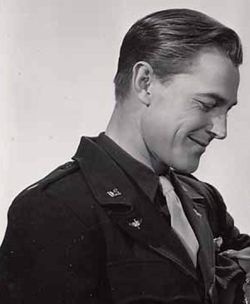


- Ella Hall timeline
 1914
1914 1918
1918 1923
1923 1936
1936


- From 1916–1918, Ella Hall acted in 15 Bluebird Photoplays.
 Secret Love
Jan 1916 The Crippled Hand
May 1916 The Love Girl
Jul 1916 Little Eve Edgarton
Aug 1916 The Bugler of Algiers
Nov 1916 Her Soul's Inspiration
Jan 1917 Polly Redhead
Mar 1917 A Jewel in Pawn
Apr 1917 The Little Orphan
Jun 1917 The Charmer
Aug 1918 The Spotted Lily
Oct 1917 My Little Boy
Dec 1917 New Love for Old
Feb 1918 A Mother's Secret
Apr 1918 Which Woman?
Jun 1918


_-_2.jpg)


Notes
References
Links to surviving films
- "Hot Stuff" on YouTube 1912
- "The School Teacher and the Waif" on YouTube 1912
- "The Third Alarm" on YouTube 1922
- The West~Bound Limited on YouTube 1923
- Madam Satan 1930
- Street Scene on YouTube 1931
- Taxi! on Dailymotion 1932
- Rasputin and the Empress 1932
- The Bitter Tea of General Yen on YouTube 1933


