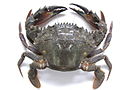
Heterotremata
From Wikipedia, the free encyclopedia
| Heterotremata | |
|---|---|
 | |
| Xantho poressa (Xanthoidea: Xanthidae) | |
Scientific classification  | |
| Kingdom: | Animalia |
| Phylum: | Arthropoda |
| Class: | Malacostraca |
| Order: | Decapoda |
| Suborder: | Pleocyemata |
| Infraorder: | Brachyura |
| Section: | Eubrachyura |
| Subsection: | Heterotremata Guinot, 1977 |
| Superfamilies | |
|
See text | |
Heterotremata (from Ancient Greek ἕτερος (héteros), meaning "different", and τρῆμα (trêma), meaning "hole") is a clade of crabs, comprising those crabs in which the genital openings are on the sternum in females, but on the legs in males. It comprises 68 families in 28 superfamilies.[1]
Heterotremata is the sister group to Thoracotremata within the clade Eubrachyura, having diverged during the Cretaceous period. Eubrachyura itself is a subset of the larger clade Brachyura, which consists of all "true crabs". A summary of the high-level internal relationships within Brachyura can be shown in the cladogram below:[2][3]
| Brachyura |
| ||||||||||||||||||
The internal relationships within Heterotremata are less certain, with many of the superfamilies found to be invalid. The proposed cladogram below is from analysis by Tsang et al, 2014:[2]
| Heterotremata |
| ||||||||||||||||||||||||||||||||||||||||||||||||||||||||||||||||||||||||