Mitochondrial pyruvate carrier 1
Protein-coding gene in the species Homo sapiens
From Wikipedia, the free encyclopedia
Mitochondrial pyruvate carrier 1 (MPC1), also known as brain protein 44-like (BRP44L) and SLC54A1, is a protein that in humans is encoded by the MPC1 gene.[5] It is part of the mitochondrial pyruvate carrier (MPC) protein family. This protein is involved in transport of pyruvate across the inner membrane of mitochondria in preparation for the pyruvate dehydrogenase reaction.

| MPC1 | |||||||||||||||||||||||||||||||||||||||||||||||||||
|---|---|---|---|---|---|---|---|---|---|---|---|---|---|---|---|---|---|---|---|---|---|---|---|---|---|---|---|---|---|---|---|---|---|---|---|---|---|---|---|---|---|---|---|---|---|---|---|---|---|---|---|
| Identifiers | |||||||||||||||||||||||||||||||||||||||||||||||||||
| Aliases | MPC1, BRP44L, MPYCD, dJ68L15.3, CGI-129, mitochondrial pyruvate carrier 1, SLC54A1 | ||||||||||||||||||||||||||||||||||||||||||||||||||
| External IDs | OMIM: 614738; MGI: 1915240; HomoloGene: 9384; GeneCards: MPC1; OMA:MPC1 - orthologs | ||||||||||||||||||||||||||||||||||||||||||||||||||
| |||||||||||||||||||||||||||||||||||||||||||||||||||
| |||||||||||||||||||||||||||||||||||||||||||||||||||
| |||||||||||||||||||||||||||||||||||||||||||||||||||
| |||||||||||||||||||||||||||||||||||||||||||||||||||
| |||||||||||||||||||||||||||||||||||||||||||||||||||
| Wikidata | |||||||||||||||||||||||||||||||||||||||||||||||||||
| |||||||||||||||||||||||||||||||||||||||||||||||||||


Interactive pathway map
Click on genes, proteins and metabolites below to link to respective articles.[§ 1]
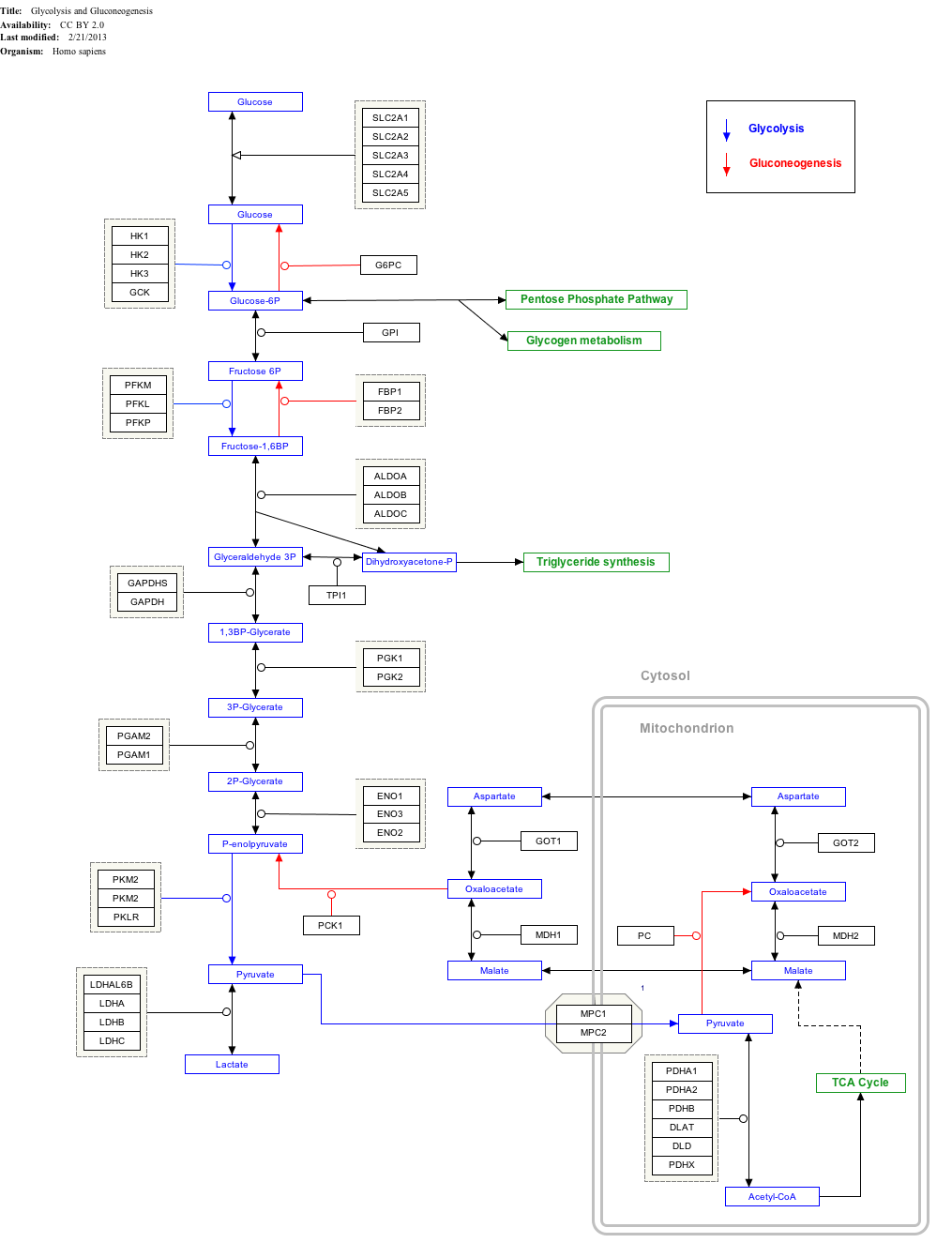
- The interactive pathway map can be edited at WikiPathways: "GlycolysisGluconeogenesis_WP534".
Clinical significance
Mitochondrial pyruvate carrier deficiency (MPYCD) is an autosomal recessive disease due to mutations in the MPC1 gene on chromosome 6q27. It is an inborn error of carbohydrate metabolism that blocks aerobic glycolysis by preventing the transport of pyruvate from the cytosol into the mitochondrion for oxidative phosphorylation; however, anaerobic glycolysis is preserved. Common signs and symptoms include poor growth, normal lactate/pyruvate ratio (however both lactate and pyruvate are in higher than normal concentrations), hepatomegaly, lactic acidosis, hypoglycemia, neurological problems, and hypotonia.[6] A disease with comparable symptoms is also seen in autosomal recessive mutations of the MPC2 gene.[7]
