Portal:Kent
Wikipedia portal for content related to Kent
From Wikipedia, the free encyclopedia

Introduction

Kent is a ceremonial county in South East England. It is bordered by Essex across the Thames Estuary to the north, the Strait of Dover to the south-east, East Sussex to the south-west, Surrey to the west, and Greater London to the north-west.
The county has an area of 3,544 square kilometres (1,368 sq mi) and had an estimated population of 1,931,684 in 2024. The north-west of Kent is densely populated, with Dartford and Gravesend belonging to the Greater London conurbation and Chatham, Gillingham and Rochester forming a second conurbation around the River Medway; the town of Maidstone is to their south. The remainder of the county is more rural, and its principal settlements include the city of Canterbury in the north-east, the seaside resort of Margate on the north-east coast, and the ports of Dover and Folkestone on the east coast. For local government purposes Kent consists of a non-metropolitan county, with twelve districts, and the unitary authority area of Medway. The county historically included south-east Greater London, and is one of the home counties. (Full article...)
Selected article

Wormshill (/wɜːrmzˈhɪl/ wurmz-HIL), historically Wormsell, is a small village and civil parish within the Borough of Maidstone, Kent, England. The parish is approximately 7 miles (11 km) south of the Swale and 8 mi (13 km) east of Maidstone. The village of Frinsted lies 0.6 mi (1 km) to the east and Bicknor 1+1⁄2 miles (2.4 km) to the north-west; while Hollingbourne is 3 mi (5 km) to the south-west. The village lies on an exposed high point of the North Downs, within the Kent Downs Area of Outstanding Natural Beauty.
Archaeological and toponymic evidence of Wormshill's existence predates its appearance in the Domesday Book of 1086. The village contains a number of heritage-listed buildings, which include a Norman church, a public house and one of the oldest surviving post office buildings in the United Kingdom. The fields and woodland surrounding Wormshill have changed little in the past 500 years, and the village itself remains rural with a low population density compared to the national average. The population of 200 is a mixture of agricultural workers employed by local farms, and professional residents who commute to nearby towns. (Full article...)
Selected images
 Credit: Michael HaslamHowletts Wild Animal Park was set up as a private zoo in 1958 by John Aspinall in Canterbury, Kent. (from Portal:Kent/Selected pictures)
 Credit: Michael RoweCanterbury is a cathedral city in east Kent and is the seat of the Archbishop of Canterbury. (from Portal:Kent/Selected pictures)
 Credit: Tony HobbsScotney Castle is a country house with gardens in the valley of the River Bewl in Kent, England. (from Portal:Kent/Selected pictures)
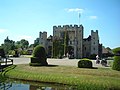 Credit: James ArmitageHever Castle, in Kent, England (in the village of Hever), was the seat of the Boleyn family, later bestowed to Anne of Cleves following her divorce from King Henry VIII. (from Portal:Kent/Selected pictures)
 Credit: Cas Liber.Leeds Castle dates back to 1119, though a manor house stood on the same site from the 9th century. (from Portal:Kent/Selected pictures)
 Credit: XtrememachineukThe Channel Tunnel is a 31 mile long rail tunnel beneath the English Channel connecting England to France. (from Portal:Kent/Selected pictures)
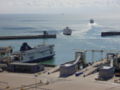 Credit: O1iveDover is a major channel port in the English county of Kent (from Portal:Kent/Selected pictures)
 Credit: O1iveSt Mary in Castro (or St Mary de Castro) is the church at Dover Castle.(from Portal:Kent/Selected pictures)
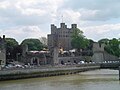 Credit: PireotisRochester is a large town in Kent, England, at the lowest bridging point of the River Medway about 30 miles (50 km) from London. (from Portal:Kent/Selected pictures)
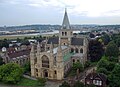 Credit: Sdwelch1031Rochester is a large town in Kent, England, at the lowest bridging point of the River Medway about 30 miles (50 km) from London. Construction of Rochester Cathedral, shown, began in about 1080. (from Portal:Kent/Selected pictures)
 Credit: LuckyStarrHops are a flower used primarily as a flavouring and stability agent in beer. The principal production centres for the UK are in Kent. (from Portal:Kent/Selected pictures)
![Image 12Credit: Michael Wilmore The Kent & East Sussex Railway was opened by Colonel H.F. Stephens, the railway engineer, in 1900. At its fullest extent, it ran nearly 22 miles[35km] from Robertsbridge on the Tonbridge to Hastings main line to Headcorn on the main line between Tonbridge and Ashford, Kent.More about the Kent & East Sussex Railway... (from Portal:Kent/Selected pictures)](//upload.wikimedia.org/wikipedia/commons/thumb/2/2f/KentAndEastSussexRailway%28MichaelWilmore%29Oct2005.jpg/120px-KentAndEastSussexRailway%28MichaelWilmore%29Oct2005.jpg) Credit: Michael WilmoreThe Kent & East Sussex Railway was opened by Colonel H.F. Stephens, the railway engineer, in 1900. At its fullest extent, it ran nearly 22 miles[35km] from Robertsbridge on the Tonbridge to Hastings main line to Headcorn on the main line between Tonbridge and Ashford, Kent. (from Portal:Kent/Selected pictures)
Credit: Michael WilmoreThe Kent & East Sussex Railway was opened by Colonel H.F. Stephens, the railway engineer, in 1900. At its fullest extent, it ran nearly 22 miles[35km] from Robertsbridge on the Tonbridge to Hastings main line to Headcorn on the main line between Tonbridge and Ashford, Kent. (from Portal:Kent/Selected pictures) Credit: Michael RoweDover Castle is situated at Dover, Kent and has been described as the "Key to England" due to its defensive significance throughout history. (from Portal:Kent/Selected pictures)
 Credit: O1iveBrockhill Country Park is dominated by a large grassy valley, bisected by the Brockhill Stream as it makes its way to the Royal Military Canal at Hythe. (from Portal:Kent/Selected pictures)
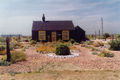 Credit: Lancevortex (from Portal:Kent/Selected pictures)
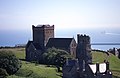 Credit: Marco SinibaldiAround AD 50 the Romans built a lighthouse which still stands to its full height in the grounds of Dover Castle. (from Portal:Kent/Selected pictures)
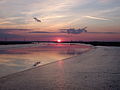 Credit: Adam MillerThe Swale refers to the strip of water separating North Kent from the Isle of Sheppey. (from Portal:Kent/Selected pictures)
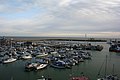 Credit: Craig BassRamsgate Harbour constructed between 1749 and 1850, has the unique distinction of being the only Royal Harbour in the United Kingdom. (from Portal:Kent/Selected pictures)
 Credit: StephenDawsonThe Channel Tunnel terminal at Cheriton near Folkestone in Kent, from the Pilgrims' Way on the escarpment on the southern edge of Cheriton Hill, part of the North Downs. (from Portal:Kent/Selected pictures)
 Credit: C.HoyleEastwell Park was a British stately home at Ashford, Kent, that for a time served as a royal residence. (from Portal:Kent/Selected pictures)
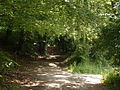 Credit: Oliver DixonThe Pilgrims' Way is the route supposed to have been taken by pilgrims from Winchester in Hampshire, England, to the shrine of Thomas Becket at Canterbury in Kent. (from Portal:Kent/Selected pictures)
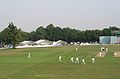 Credit: Paddy BriggsSt Lawrence Ground is the home of Kent County Cricket Club and is notable as a first-class cricket ground that has a tree within the boundary. (from Portal:Kent/Selected pictures)
 Credit: C HoyleBrockhill Country Park is dominated by a large grassy valley, bisected by the Brockhill Stream as it makes its way to the Royal Military Canal at Hythe. (from Portal:Kent/Selected pictures)
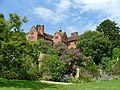 Credit: Baryonic BeingChartwell, located two miles south of Westerham, Kent, England, was the home of Sir Winston Churchill. (from Portal:Kent/Selected pictures)
 Credit: Hans MusilCanterbury Cathedral is one of the oldest and most famous Christian structures in England and forms part of a World Heritage Site. (from Portal:Kent/Selected pictures)
 Credit: Dave Bushell.A Eurostar on High Speed 1 going through the Medway Towns (from Portal:Kent/Selected pictures)


![Image 12Credit: Michael Wilmore The Kent & East Sussex Railway was opened by Colonel H.F. Stephens, the railway engineer, in 1900. At its fullest extent, it ran nearly 22 miles[35km] from Robertsbridge on the Tonbridge to Hastings main line to Headcorn on the main line between Tonbridge and Ashford, Kent.More about the Kent & East Sussex Railway... (from Portal:Kent/Selected pictures)](#/media/File:KentAndEastSussexRailway(MichaelWilmore)Oct2005.jpg)


Selected biography

William Harvey (1 April 1578 – 3 June 1657) was an English physician who made influential contributions to anatomy and physiology. He was the first known physician to describe completely, and in detail, pulmonary and systemic circulation as well as the specific process of blood being pumped to the brain and the rest of the body by the heart (though earlier writers, such as Realdo Colombo, Michael Servetus, and Jacques Dubois, had provided precursors to some of his theories). (Full article...)
Things you can do
Nominate:

Join the WikiProject Kent: Any help on the Kent project would be gratefully received, even if only on your local area of expertise. FAQ about editing Ask the project a question here

Tasks: Here are some Kent related tasks you can do:
- Clean up an article: Here are automatically generated lists of articles needing cleanup sorted alphabetically and by category.
- Edit the Top and High importance articles.
- Refine/polish: Ashford, Royal Tunbridge Wells, Canterbury
- Expand:: List of churches in Kent, Maidstone Borough Council
- NPOV: K College
- Citation needed: Unreferenced Kent articles
- Cleanup/Copyedit: Kingdom of Kent
- Expert attention: Channel Tunnel, Bromley Civic Society
- Stubs: see Kent geography stubs articles
Note: These articles may overlap with those on other related lists. If you would like to make a change, either do so yourself, or make a suggestion.
Districts in Kent
Kent is divided into 12 local authority districts and Medway Unitary Authority.

Did you know...

- ... that the present town of Ashford in Kent, England, originates from an original settlement established in 893 AD by inhabitants escaping a Danish Viking raid?
- ...that Charles Davis Lucas, the first person to be awarded the Victoria Cross, is buried in the churchyard of St Lawrence's Church in Mereworth, Kent?
- ...that the village of Chiddingstone near Sevenoaks is unique in that with the exception of church and castle it is entirely owned by the National Trust?
- ...that Matthew Webb, the very first person to swim the English Channel, left from Dover in 1875 ?
- ... that the world’s first aircraft factory was opened at Eastchurch on the Isle of Sheppey by the Short Brothers in 1909?
- ... that there were 36 Kings of Kent?
- ... that Herne Bay Pier was the setting for the opening sequence of Ken Russell's first feature film French Dressing?"
On this Day - July 9th
- 1965 - An Avro 748 of Skyways Coach-Air crashed on landing at Lympne Airport. All52 people on board survived although the aircraft was written off.
The County
At the time of the 1831 census, Kent was the 10th largest county, covering 972,240 acres (3,934.5 km2), however by 1871 it had grown to 995,344 acres (4,028.01 km2) and became the 9th largest.
WikiProjects


Related portals


Associated Wikimedia
The following Wikimedia Foundation sister projects provide more on this subject:
-
 Commons
Free media repository -
 Wikidata
Free knowledge base -
 Wikiquote
Collection of quotations -
 Wikisource
Free-content library -
 Wikiversity
Free learning tools -
 Wikivoyage
Free travel guide -
 Wiktionary
Dictionary and thesaurus


