Sayed Jamaluddin Mosque
From Wikipedia, the free encyclopedia
(partial ruinous state)
| Sayed Jamaluddin Mosque | |
|---|---|
 The former mosque in 2008 | |
| Religion | |
| Affiliation | Islam (former) |
| Ecclesiastical or organizational status | Mosque (former) |
| Status | Inactive; (partial ruinous state) |
| Location | |
| Location | Hooghly district, West Bengal |
| Country | India |
  Location of the former mosque in West Bengal | |
| Geographic coordinates | 22°57′37″N 88°22′11″E / 22.96028°N 88.36972°E |
| Architecture | |
| Style | Indo-Islamic |
| Completed | 936 AH (1529/1530 CE) |
| Specifications | |
| Minaret | One (partial ruins) |
| Materials | Brick; terracotta |
| Official name | Mosque & Tombs |
| Reference no. | N-WB-70 |
The Sayed Jamaluddin Mosque (Bengali: সৈয়দ জামালুদ্দিনের মসজিদ; Arabic: مسجد سيد جمال الدين) is a former mosque and archaeological site, now in partial ruins, located in the ancient city of Saptagram in Hooghly district, West Bengal. The mosque was built during the reign of the Bengali sultan Nasiruddin Nasrat Shah.[1] The structure is a Monument of National Importance.[2]
A stone foundation plaque attached to the mosque states that it was constructed by Sayed Jamaluddin, son of Sayed Fakhruddin of Amol during the reign of Nasiruddin Nasrat Shah.[3] The date mentioned in the inscription is Ramadan 936 AH (1529/1530 CE), in the month of May. Within the mosque complex are three tombs, which belong to Sayed Fakhruddin, his wife, and his eunuch.[4]
Architecture
It is a unique brick built mosque decorated with terracotta ornamentation. It represents the terracotta elements of the Indian architecture of Bengal.[5] There are three tombs in the mosque complex. The ruined mosque is under the maintenance of Archaeological Survey of India (ASI).[1][6][7]
Gallery
 Signboard
 Entrance
 Inscription
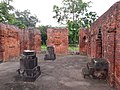 Pillars
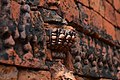 Terracotta work
 Terracotta work


