Safi, Morocco
City in Marrakesh-Safi, Morocco
From Wikipedia, the free encyclopedia
Safi[a] is a city in western Morocco on the Atlantic Ocean. It is the capital of Safi Province. It recorded a population of 346,000 as of 2024.[1] The city was occupied by the Portuguese Empire from 1488 to 1541, was the center of Morocco's weaving industry, and became a fortaleza of the Portuguese Crown in 1508.[2] Safi is the main fishing port for the country's sardine industry, and also exports phosphates, textiles and ceramics. During the Second World War, Safi was the site of Operation Blackstone, one of the landing sites for Operation Torch.

Safi
| |
|---|---|
 Safi city | |
 Coat of arms | |
  Safi Location in Morocco  Safi Safi (Africa) | |
| Coordinates: 32°17′N 9°14′W | |
| Country |  Morocco Morocco |
| Region | Marrakesh-Safi |
| Province | Safi |
| Area | |
• Total | 34 km2 (13 sq mi) |
| Population (2024)[1] | |
• Total | 346,000 |
| • Rank | 13th in Morocco |
| Demonym | Mesfioui |
Etymology
The origin of the name Safi is likely derived from the Berber language. According to the scholar and historian Muhammad bin Ahmad al-Abdi al-Kanuni, the earliest mention of the city of Safi was in the book Geography by Claudius Ptolemy in the first section of the second part of the known world, referred to as "Taisapha." It appears that the name has Berber roots from the word "Asfo," pronounced by some as "Asfi," meaning light or bright. The city may have been named due to the lighthouses built on the shores to guide ships in their navigation. [3][4]
The first mention of the city in Islamic sources is found in the book Routes and Realms by the geographer Abu Ubayd al-Bakri. He explicitly states that the name of the city Safi is derived from the Berber word "Asif," meaning a temporary watercourse.[5] Indeed, a stream known as Wadi Shaaba still runs through the city and flows into it. Ahmad Toufiq similarly states that the name is Berber, meaning river mouth, and in the Mozabite dialect, a water basin filled by a waterwheel is called "Asfi."[6][7][8]
This etymology underscores Safi's geographical significance as a coastal city characterized by a notable riverine presence. The term "Asfi" highlights the city's historical connection to water, which has been a pivotal factor in its development and strategic importance. [9][10][11]
In his book Nuzhat al-Mushtaq, Al-Idrisi connects the origin of the name to a story of young adventurers who set out from Lisbon and sailed the dark sea until they reached the location of the city of Safi. When a group of Berbers saw them and learned of their ordeal, their leader exclaimed 'Wa Asfi', Arabic for regret, in sympathy for what they endured, and thus the place was named "Asfi."[12][13]
History
According to historians Henri Basset and Robert Ricard, Safi was not a very ancient city.[14] It was mentioned in the writings of al-Bakri in the 11th century and of al-Idrisi in the 12th century.[14] According to Moroccan historian Mohammed al-Kanuni, Safi can be identified with the ancient Thymiaterium or Carcunticus that was founded by the Carthaginian admiral Hanno during his Periplus, as related by Pliny the Elder.[15]
Al-Idrisi mentions Safi as a busy port in the 12th century.[14] At this time it served as a port for Marrakesh, the capital of the Almoravids and the subsequent Almohads, replacing the port of Ribat Kuz (present-day Souira Kedima) that had served as the main port for Aghmat in the previous century.[16]
Safi was part of the Barghawata state, a confederation of Berber tribes with a distinct religious and political structure. [17] This influential group in the region, resisted multiple invasions before eventually succumbing first to the Almoravids and then being definitively eliminated by the Almohads by 1149.[18]
The city was under Portuguese rule from 1488 to 1541; it is believed that they abandoned it to the Saadians (who were at war with them), since the city proved difficult to defend from land attacks. The Sea Castle and Kechla, two Portuguese fortresses built to protect the city, are still there today.
After 1541, the city played a major role in Morocco as one of the safest and biggest seaports in the country. Many ambassadors to the Saadian and Alaouite kings during the 16th–18th centuries came to Morocco via Safi; its proximity to Marrakesh, then capital of Morocco, helped expand the maritime trade in the city.
Louis De Chénier, consul of the French court in Morocco in 1767, reported that the city was the only usable seaport at the time.
A French Navy captive, Bidé de Maurville, who wrote the account of his stay in Morocco in his 1765 book Relations de l'affaire de Larache, reported the presence of an important number of foreign trading houses in the city: Dutch, Danish, British and French.
After the Sultan Mohammed ben Abdallah built the city of Mogador (modern-day Essaouira), he banned foreign trade in all Moroccan ports except in his newly built city. Consequently, Safi stopped playing a leading role in the Moroccan trade.
Safi's patron saint is Abu Mohammed Salih.
In 1942 as part of Operation Torch, American forces attacked Safi in Operation Blackstone. During November 8-10, 1942 the Americans took control over Safi and its port and took relatively few casualties compared to the other operations at Casablanca and at Port Mehdia.
The OCP Group, a cornerstone of Morocco's phosphate industry, established its Safi chemical complex in 1965.[19] This site, one of the earliest in OCP’s expansion into chemical processing, significantly contributes to the local economy by processing phosphate rock sourced from Benguerir. Equipped with facilities for fertilizer production, phosphoric acid manufacturing, phosphate washing, and a sulfuric acid plant, the Safi complex is a major industrial hub. In 2016, it achieved record production levels, producing 1.5 million tonnes of phosphoric acid and 832,600 tonnes of triple superphosphate TSP fertilizer., catering to both domestic and international markets. Founded in 1920, OCP is now the world's largest fertilizer manufacturer, controlling over 70% of global phosphate reserves. It employs 23,000 people and generated $5.884 billion in 2018 revenue, emphasizing the Safi complex's significant role[20] The company holds a 31% market share of the world phosphate product market.[21]
Infrastructure
Safi has seen significant advancements in its infrastructure aimed at supporting its economic growth and sustainability. The Safi Industrial Port, one of the key developments, has undergone substantial expansion as part of the national port strategy to enhance Morocco's infrastructure by 2030. This expansion, which began in 2014 and was completed in 2017 by SGTM-STFA, a construction firm, included enhancements to the port's dock facilities. These improvements are essential for the new thermal power plant, which relies on coal to meet the energy demands of OCP Group. Ciments du Maroc, a subsidiary of Heidelberg Materials, supplied approximately 210,000 tonnes of marine cement for this project, underscoring its scale and impact on the local economy, particularly in the energy and chemical sectors.[22] In addition to port development, the OCP Group is spearheading the construction of new modular seawater desalination plants. These facilities are designed to significantly increase the supply of clean drinking water to Safi and the surrounding areas. Once operational, the plants will have a total annual capacity of 110 million cubic meters, with Safi benefiting from up to 75 million cubic meters. This project is critical in providing a sustainable source of unconventional water, catering to the growing demands of the area's industrial sites and improving water availability for over 1.5 million local residents and workers.[23]
Climate
Safi has a hot semi-arid climate (Köppen climate classification BSh).
| Climate data for Safi (1991–2020) | |||||||||||||
|---|---|---|---|---|---|---|---|---|---|---|---|---|---|
| Month | Jan | Feb | Mar | Apr | May | Jun | Jul | Aug | Sep | Oct | Nov | Dec | Year |
| Record high °C (°F) | 30.3 (86.5) |
32.0 (89.6) |
36.0 (96.8) |
37.7 (99.9) |
40.5 (104.9) |
45.8 (114.4) |
46.4 (115.5) |
46.5 (115.7) |
42.6 (108.7) |
39.5 (103.1) |
34.2 (93.6) |
27.4 (81.3) |
46.5 (115.7) |
| Mean daily maximum °C (°F) | 18.7 (65.7) |
19.6 (67.3) |
21.5 (70.7) |
22.5 (72.5) |
24.3 (75.7) |
26.1 (79.0) |
29.1 (84.4) |
29.3 (84.7) |
27.5 (81.5) |
25.5 (77.9) |
22.2 (72.0) |
19.9 (67.8) |
23.8 (74.8) |
| Daily mean °C (°F) | 13.3 (55.9) |
14.3 (57.7) |
16.2 (61.2) |
17.5 (63.5) |
19.7 (67.5) |
22.0 (71.6) |
24.5 (76.1) |
24.8 (76.6) |
23.0 (73.4) |
20.9 (69.6) |
17.2 (63.0) |
14.8 (58.6) |
19.0 (66.2) |
| Mean daily minimum °C (°F) | 7.9 (46.2) |
8.9 (48.0) |
10.9 (51.6) |
12.6 (54.7) |
15.1 (59.2) |
17.8 (64.0) |
19.7 (67.5) |
20.2 (68.4) |
18.6 (65.5) |
16.3 (61.3) |
12.2 (54.0) |
9.8 (49.6) |
14.2 (57.6) |
| Record low °C (°F) | −2.2 (28.0) |
−0.1 (31.8) |
2.9 (37.2) |
5.8 (42.4) |
6.0 (42.8) |
11.6 (52.9) |
14.7 (58.5) |
15.1 (59.2) |
11.1 (52.0) |
8.9 (48.0) |
2.3 (36.1) |
2.2 (36.0) |
−2.2 (28.0) |
| Average precipitation mm (inches) | 55.8 (2.20) |
48.2 (1.90) |
41.2 (1.62) |
24.5 (0.96) |
14.8 (0.58) |
3.2 (0.13) |
0.6 (0.02) |
0.2 (0.01) |
5.0 (0.20) |
41.6 (1.64) |
68.7 (2.70) |
62.2 (2.45) |
366.0 (14.41) |
| Average precipitation days (≥ 1.0 mm) | 5.7 | 5.0 | 5.2 | 3.7 | 2.0 | 0.6 | 0.2 | 0.0 | 1.0 | 4.0 | 5.7 | 5.4 | 38.5 |
| Mean monthly sunshine hours | 219.3 | 211.7 | 258.0 | 284.7 | 318.8 | 303.9 | 320.3 | 306.2 | 267.6 | 246.0 | 220.3 | 208.9 | 3,165.7 |
| Source 1: NCEI (sun, 1981-2010)[24] | |||||||||||||
| Source 2: NOAA[25] | |||||||||||||
Demographics
Languages
According to the 2024 Moroccan census, 98.9% of the population of Safi spoke Arabic as their native language, whereas 1% spoke Berber languages natively.[27]
Population
The inhabitants are composed of Berber and Arab descendants.
The Berber origin is related to:[citation needed]
- The Berbers who lived in the region before the foundation of the city.
- The Berbers who came later from the Sous plains, south of the region.
The Arab origin is related to two tribes:[28]
- Abda: They descend from Banu Hilal and settled into the region in the twelfth century and spawned: Bhatra and Rabiaa.
- Ahmar: They descend from Maqil.
Safi also used to have a large Jewish community, more than 20% of the population,[citation needed] many of whom subsequently emigrated to France, Canada and Israel.
Economy

In the early 20th century, the Moroccan potter Boujemâa Lamali established a pottery school in Safi, supported by the colonial administration. Since then pottery has been a mainstay of Safi's economy. Prior to the COVID-19 pandemic there were 2,000 registered artisans working in the city's 212 workshops, and thousands more unregistered artisans.[29]
Sport
Football and rugby are popular sports in Safi. The local football team Olympic Safi have been competing in Morocco's premier football division, Botola, since 2004.
The Rugby Union team of the same name is one of Morocco's best, having won the "Coupe du Trône" several times. There also is a little Tennis Sport Club with a couple of fields (following the high road, beyond the Colline des Poitiers).
European cemetery
There is an abandoned European cemetery in Safi. Some of the marble decorations have been stolen from the richest tombs, including: Russian, Portuguese, Spanish (e.g. the Do Carmo family), Italian (e.g. the Bormioli family), French (e.g., the Chanel family), German and other European nationals. Some engravings identifying or memorializing the deceased have also been stolen. Although there are 19th century tombs present, most are of pre-independence (1956) 20th century origin.[citation needed]
Notable people
- Meir Ben-Shabbat, Israel's National Security Adviser and Chief of Staff for National Security[30]
- Edmond Amran El Maleh, writer
- Mohamed Bajeddoub, Andalusian classical music singer
- Mohamed Benhima, politician, former Prime Minister of Morocco
- Brahim Boulami, athlete
- Khalid Boulami, athlete
- Driss Benhima, CEO of Royal Air Maroc and president of Hawd Assafi, Safi-based non-profit organization
- Samy Elmaghribi, Moroccan musician
- Shayfeen, hip-hop duo
- Michel Galabru, French actor
- Abderrahim Goumri, long-distance runner
- Zakaria El Masbahi, basketball player
- Haja Hamounia, traditional chanteuse of Bedouin song
- Mohamed Mjid, former longtime president of the Royal Moroccan Tennis Federation
- Aharon Nahmias, Israeli politician
- Abu Mohammed Salih, 12th century religious leader
- Mohamed Reggab, film director
- Uri Sebag, Israeli politician
- Abraham Ben Zmirro, 15th century rabbi
- Abderrazak Hamdallah, footballer
- Yahia Attiyat Allah, footballer
Gallery

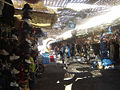


 Tajine memorial


.jpg)


.jpg)


Notes
- Arabic: آسفي, romanized: ʾāsafī,Standard Moroccan Tamazight: ⴰⵙⴼⵉ
