Inveniam viam
Latin phrase meaning "I shall either find a way or make one"
From Wikipedia, the free encyclopedia
"Aut inveniam viam aut faciam" (or "Aut viam inveniam aut faciam") is Latin for "I shall either find a way or make one".[1][2][3] The first word "aut" may be omitted, corresponding to omitting the English word "either" from the translation.
The phrase has been traditionally attributed to Carthaginian General Hannibal, in response to his generals statement that it was impossible to cross the Alps by elephant, during the Second Punic War in 218 BC.
The first part of the sentence, "inveniam viam", "I shall find a way", also appears in other contexts in the tragedies of Seneca, spoken by Hercules and by Oedipus, and in Seneca's Hercules Furens (Act II, Scene 1, line 276) the whole sentence appears, in third person: "inveniet viam, aut faciet."[4]

It has been used as a motto for instance by Francis Bacon[5] as well as Robert Peary. It has remained popular in social, educational and military organizations.[6]
In first person plural, the quote is written on an iron arch over the class of 1893 memorial gate at the University of Pennsylvania.[7] A painting in the National Portrait Gallery, formerly attributed as Sir Philip Sidney and now thought to depict his brother Robert, is adorned with the phrase.[8] In The Dunciad, Alexander Pope writes of John Henley that he "turned his rhetoric to buffoonry" by handing out medallions engraved with this motto.[9]
 Robert Peary's signature 10 June 1907 with quote
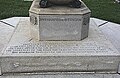 Peary's grave at Arlington National Cemetery
 Emblem of the U.S. Army 440th Civil Affairs Battalion of Fort Carson, Colorado
 Emblem of the USAF 628th Logistics Readiness Squadron of Joint Base Charleston
 Emblem of the USAF 405th Expeditionary Operations Support Squadron (provisional)
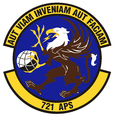 Emblem of the USAF 721st Aerial Port Squadron of Ramstein Air Base, Germany


