SearchSuite provides further control over Wikipedia search results, such as on/off features to sort them, to present results one-per-line, and more. While it seems to work fairly well, there is definitely room for improvement. Comments and suggestions are welcome.
By the way, most of the scripts I've been working on are for building and augmenting outlines...
I'm interested in all knowledge, especially how to organize it so you can find whatever is most relevant at any given moment.
I've been around Wikipedia since the Fall of 2005, and have been working mostly on Wikipedia's structure, and its knowledge navigation systems, throughout that time.
Beyond AGI, artificial superintelligence (ASI) would outperform the best human abilities across every domain by a wide margin. Unlike artificial narrow intelligence (ANI), whose competence is confined to well‑defined tasks, an AGI system can generalise knowledge, transfer skills between domains, and solve novel problems without task‑specific reprogramming.
Creating AGI is a stated goal of AI technology companies such as OpenAI, Google, xAI, and Meta. A 2020 survey identified 72 active AGI research and development projects across 37 countries.
Moore's law is an example of futurology; it is a statistical collection of past and present trends with the goal of accurately extrapolating future trends. Futures studies, futures research or futurology is the systematic, interdisciplinary and holistic study of social and technological advancement, and other environmental trends, often for the purpose of exploring how people will live and work in the future. Predictive techniques, such as forecasting, can be applied, but contemporary futures studies scholars emphasize the importance of systematically exploring alternatives. In general, it can be considered as a branch of the social sciences and an extension to the field of history. Futures studies (colloquially called "futures" by many of the field's practitioners) seeks to understand what is likely to continue and what could plausibly change. Part of the discipline thus seeks a systematic and pattern-based understanding of past and present, and to explore the possibility of future events and trends.
Unlike the physical sciences where a narrower, more specified system is studied, futurology concerns a much bigger and more complex world system. The methodology and knowledge are much less proven than in natural science and social sciences like sociology and economics. There is a debate as to whether this discipline is an art or science, and it is sometimes described as pseudoscience; nevertheless, the Association of Professional Futurists was formed in 2002, developing a Foresight Competency Model in 2017, and it is now possible to study it academically, for example at the FU Berlin in their master's course. To encourage inclusive and cross-disciplinary discussions about futures studies, UNESCO declared December 2 as World Futures Day. (Full article...)
Some scientists, including Stephen Hawking, have expressed concern that artificial superintelligence could result in human extinction. The consequences of a technological singularity and its potential benefit or harm to the human species have been intensely debated.
Prominent technologists and academics dispute the plausibility of a technological singularity and associated artificial intelligence "explosion", including Paul Allen, Jeff Hawkins, John Holland, Jaron Lanier, Steven Pinker, Theodore Modis, Gordon Moore, and Roger Penrose. One claim is that artificial intelligence growth is likely to run into decreasing returns instead of accelerating ones. Stuart J. Russell and Peter Norvig observe that in the history of technology, improvement in a particular area tends to follow an S curve: it begins with accelerating improvement, then levels off without continuing upward into a hyperbolic singularity. (Full article...)
Image 5
Trichophyton rubrum
Trichophyton is a genus of fungus, which includes the parasitic varieties that cause tinea, including athlete's foot, ringworm, jock itch, and similar infections of the nail, beard, skin and scalp. Trichophyton fungi are molds characterized by the development of both smooth-walled macro- and microconidia. Macroconidia are mostly borne laterally directly on the hyphae or on short pedicels, and are thin- or thick-walled, clavate to fusiform, and range from 4 to 8 by 8 to 50 μm in size. Macroconidia are few or absent in many species. Microconidia are spherical, pyriform to clavate or of irregular shape, and range from 2 to 3 by 2 to 4 μm in size. (Full article...)
Image 6
Traditionally, meals have been prepared by women in a home kitchen (painting from the circle of Jean-Baptiste de Saive, 1563). A meal is an occasion that occurs at a specific time and involves the consumption of food. The English names used for specific meals vary, depending on the speaker's culture, the time of day, or the size of the meal. A meal is different from a snack in that meals are generally larger, more varied, and more filling.
Though they can be eaten anywhere, meals usually take place in homes, restaurants, and cafeterias. Regular meals occur on a daily basis, typically several times a day. Special meals are normally held in conjunction with celebratory or momentous occasions such as birthdays, weddings, anniversaries, funerals, and holidays.
The type of food that is served or consumed at any given time depends on regional customs. Three main meals are typically eaten in the morning, early afternoon, and evening in most civilizations. Furthermore, the names of meals are often interchangeable by custom as well. Some serve dinner as the main meal at midday, with supper as the late afternoon/early evening meal, while others may call their midday meal lunch and their early evening meal supper or dinner. Except for breakfast, these names can vary from region to region or even from family to family. (Full article...)
Image 7
A revenue model is a framework for generating financial income. There can be a variety of ways for revenue generation such as the production model, manufacturing model, as well as the construction model. A revenue model identifies which revenue source to pursue, what value to offer, how to price the value, and whopays for the value. It is a key component of a company's business model. A revenue model primarily identifies what product or service will be created and sold in order to generate revenues.
Without a clear and well-defined revenue model new businesses will be more likely to struggle. By having a clear revenue model, a business can focus on a target audience, fund development plans for a product or service, establish marketing plans, open a line of credit and raise capital. (Full article...)
LCC has been criticized for lacking a sound theoretical basis; many of the classification decisions were driven by the practical needs of that library rather than epistemological considerations. Although it divides subjects into broad categories, it is essentially enumerative in nature. That is, it provides a guide to the books actually in one library's collections, not a classification of the world. (Full article...)
Image 10
A superintelligence is a hypothetical agent that possesses intelligence surpassing that of the most giftedhuman minds. Philosopher Nick Bostrom defines superintelligence as "any intellect that greatly exceeds the cognitive performance of humans in virtually all domains of interest".
Technological researchers disagree about how likely present-day human intelligence is to be surpassed. Some argue that advances in artificial intelligence (AI) will probably result in general reasoning systems that lack human cognitive limitations. Others believe that humans will evolve or directly modify their biology to achieve radically greater intelligence. Several future study scenarios combine elements from both of these possibilities, suggesting that humans are likely to interface with computers, or upload their minds to computers, in a way that enables substantial intelligence amplification. The hypothetical creation of the first superintelligence may or may not result from an intelligence explosion or a technological singularity.
Some researchers believe that superintelligence will likely follow shortly after the development of artificial general intelligence. The first generally intelligent machines are likely to immediately hold an enormous advantage in at least some forms of mental capability, including the capacity of perfect recall, a vastly superior knowledge base, and the ability to multitask in ways not possible to biological entities.
Scientific knowledge must be grounded in observable phenomena and must be capable of being verified by other researchers working under the same conditions.
One argument for the validity of this concern and the importance of this risk references how human beings dominate other species because the human brain possesses distinctive capabilities other animals lack. If AI were to surpass human intelligence and become superintelligent, it might become uncontrollable. Just as the fate of the mountain gorilla depends on human goodwill, the fate of humanity could depend on the actions of a future machine superintelligence.
Experts disagree on whether artificial general intelligence (AGI) can achieve the capabilities needed for human extinction. Debates center on AGI's technical feasibility, the speed of self-improvement, and the effectiveness of alignment strategies. Concerns about superintelligence have been voiced by researchers including Geoffrey Hinton, Yoshua Bengio, Demis Hassabis, and Alan Turing, and AI company CEOs such as Dario Amodei (Anthropic), Sam Altman (OpenAI), and Elon Musk (xAI). In 2022, a survey of AI researchers with a 17% response rate found that the majority believed there is a 10 percent or greater chance that human inability to control AI will cause an existential catastrophe. In 2023, hundreds of AI experts and other notable figures signed a statement declaring, "Mitigating the risk of extinction from AI should be a global priority alongside other societal-scale risks such as pandemics and nuclear war". Following increased concern over AI risks, government leaders such as United Kingdom prime ministerRishi Sunak and United Nations Secretary-GeneralAntónio Guterres called for an increased focus on global AI regulation.
Two sources of concern stem from the problems of AI control and alignment. Controlling a superintelligent machine or instilling it with human-compatible values may be difficult. Many researchers believe that a superintelligent machine would likely resist attempts to disable it or change its goals as that would prevent it from accomplishing its present goals. It would be extremely challenging to align a superintelligence with the full breadth of significant human values and constraints. In contrast, skeptics such as computer scientistYann LeCun argue that superintelligent machines will have no desire for self-preservation. A June 2025 study showed that in some circumstances, models may break laws and disobey direct commands to prevent shutdown or replacement, even at the cost of human lives. (Full article...)
Image 13
An AI takeover is a fictional or hypothetical future event in which autonomous artificial intelligence systems acquire the capability to override human decision-making. This could be achieved through economic manipulation, infrastructure control, or direct intervention, resulting in de facto governance. Scenarios range from economic dominance by way of the replacement of the entire human workforce due to automation to the violent takeover of the world by a robot uprising or rogue AI.
Stories of AI takeovers have been popular throughout science fiction. Commentators argue that recent advancements in the field have heightened concern about such scenarios. In public debate, prominent figures such as Stephen Hawking have advocated research into precautionary measures to ensure future superintelligent machines remain under human control. (Full article...)
Image 14
Knowledge extraction is the creation of knowledge from structured (relational databases, XML) and unstructured (text, documents, images) sources. The resulting knowledge needs to be in a machine-readable and machine-interpretable format and must represent knowledge in a manner that facilitates inferencing. Although it is methodically similar to information extraction (NLP) and ETL (data warehouse), the main criterion is that the extraction result goes beyond the creation of structured information or the transformation into a relational schema. It requires either the reuse of existing formal knowledge (reusing identifiers or ontologies) or the generation of a schema based on the source data.
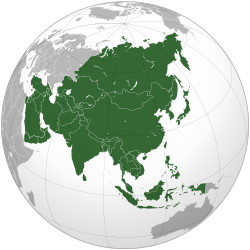
Location of Asia Asian cuisine encompasses several significant regional cooking styles of Asia: Central Asian, East Asian, North Asian, South Asian, Southeast Asian, and West Asian. Cuisine is a distinctive way of cooking practices and customs, usually associated with a specific culture. Asia, as the largest and most populous continent, is home to many cultures, each with its own characteristic cuisine. Asian cuisine, also known as Eastern cuisine, is considered the "culture of food within a society" due to the beliefs, cooking methods, and the specific ingredients used throughout the entire process. Asian cuisines are also renowned for their spices. A key taste factor in Asian cuisine is “umami” flavor, a strong savoriness prominent in Asian cooking, which can be achieved through fermented food or meat extract.
Ingredients common to many cultures in East and Southeast Asia include rice, ginger, garlic, sesame seeds, chilis, dried onions, soy, and tofu. Stir frying, steaming, and deep frying are common cooking methods.
While rice is common to most Asian cuisines, different varieties are popular in the various regions. Glutinous rice is ingrained in the culture, religious tradition and national identity of Laos. Basmati rice is popular in the Indian subcontinent, jasmine rice is often found across Southeast Asia, while long-grain rice is popular in China and short-grain in Japan and Korea.
Curry is a common dish in South Asia, Southeast Asia, and East Asia. Curry dishes have their origins in the Indian subcontinent. Countries in Indochina typically use a coconut milk base in their curries; countries in Southwest Asia typically use a yogurt base. (Full article...)
Image 16
A block is a defensive tactic in chess in response to an attack, consisting of interposing a piece between the opponent's attacking piece and the piece being attacked. This type of blocking will only work if the attacking piece is a type that can move linearly an indefinite number of squares such as a queen, rook, or bishop and there is at least one empty square in the line between the attacking and attacked piece. Blocking is not an option when the attacking piece is directly adjacent to the piece it is attacking, or when the attacking piece is a knight (because knights "jump over other pieces" and cannot be blocked). When an opponent's attack on a piece is blocked, the blocking piece is to some extent pinned, either relatively or absolutely, until a future move by either side allows it to be unpinned.
A check on a king by an opponent's queen, rook, or bishop can sometimes be blocked by moving a piece to a square in line in between the opponent's checking piece and the checked king. The blocking piece is then absolutely pinned to the king by the attacking piece.
Another type of interposing in chess can involve placing a piece between two opponent's pieces where one of those pieces is protecting the other, or they are both protecting each other. This chess tactic can be called interference. (Full article...)
The term anthropogenic designates an effect or object resulting from human activity. The term was first used in the technical sense by Russian geologist Alexey Pavlov, and it was first used in English by British ecologist Arthur Tansley in reference to human influences on climax plant communities. The atmospheric scientist Paul Crutzen introduced the term "Anthropocene" in the mid-1970s. The term is sometimes used in the context of pollution produced from human activity since the start of the Agricultural Revolution but also applies broadly to all major human impacts on the environment. Many of the actions taken by humans that contribute to a heated environment stem from the burning of fossil fuel from a variety of sources, such as electricity, cars, planes, space heating, manufacturing, or the destruction of forests. (Full article...)
Some scientists, including Stephen Hawking, have expressed concern that artificial superintelligence could result in human extinction. The consequences of a technological singularity and its potential benefit or harm to the human species have been intensely debated.
Prominent technologists and academics dispute the plausibility of a technological singularity and associated artificial intelligence "explosion", including Paul Allen, Jeff Hawkins, John Holland, Jaron Lanier, Steven Pinker, Theodore Modis, Gordon Moore, and Roger Penrose. One claim is that artificial intelligence growth is likely to run into decreasing returns instead of accelerating ones. Stuart J. Russell and Peter Norvig observe that in the history of technology, improvement in a particular area tends to follow an S curve: it begins with accelerating improvement, then levels off without continuing upward into a hyperbolic singularity. (Full article...)
Robots impact humans by displacing workers. Some expect this to occur at an increasing rate, leading to proposed solutions such as basic income. Robotics is itself a lucrative business that creates careers, especially for postgraduates. Roboticists often aim to create machines that seem to interface naturally with humans. The field is under active research and development, with areas of interest including robot kinematics and quantum robotics. (Full article...)
Scraping a web page involves fetching it and then extracting data from it. Fetching is the downloading of a page (which a browser does when a user views a page). Therefore, web crawling is a main component of web scraping, to fetch pages for later processing. Having fetched, extraction can take place. The content of a page may be parsed, searched and reformatted, and its data copied into a spreadsheet or loaded into a database. Web scrapers typically take something out of a page, to make use of it for another purpose somewhere else. An example would be finding and copying names and telephone numbers, companies and their URLs, or e-mail addresses to a list (contact scraping). Another example is collecting competitors’ product prices for marketing purposes.
Web pages are built using text-based markup languages (HTML and XHTML), and frequently contain a wealth of useful data in text form. However, most web pages are designed for human end-users and not for ease of automated use. As a result, specialized tools and software have been developed to facilitate the scraping of web pages. Web scraping applications include market research, price comparison, content monitoring and artificial intelligence. Businesses rely on web scraping services to efficiently gather and utilize this data. (Full article...)
Image 22
A depiction of Idris visiting Heaven and Hell from a Persian illuminated manuscript version of the Islamic text Stories of the Prophets (1577) The afterlife or life after death is a speculation concerning existence after death, in which the essential part of an individual's stream of consciousness or identity continues to exist after the death of their physical body. The surviving essential aspect varies between belief systems; it may be some partial element, or the entire soul or spirit, which carries with it one's personal identity.
In some views, this continued existence takes place in a spiritual realm, while in others, the individual may be reborn into this world and begin the life cycle over again in a process referred to as reincarnation, likely with no memory of what they have done in the past. In this latter view, such rebirths and deaths may take place over and over again continuously until the individual gains entry to a spiritual realm or otherworld. Major views on the afterlife derive from religion, esotericism, and metaphysics.
Some belief systems, such as those in the Abrahamic tradition, hold that the dead go to a specific place (e.g., paradise or hell) after death, as determined by their god, based on their actions and beliefs during life. In contrast, in systems of reincarnation, such as those of the Indian religions, the nature of the continued existence is determined directly by the actions of the individual in the ended life. (Full article...)
The term "sentience" can be used when specifically designating ethical considerations stemming from a form of phenomenal consciousness (P-consciousness, or the ability to feel qualia). Since sentience involves the ability to experience ethically positive or negative (i.e., valenced) mental states, it may justify welfare concerns and legal protection, as with non-human animals.
Some scholars believe that consciousness is generated by the interoperation of various parts of the brain; these mechanisms are labeled the neural correlates of consciousness (NCC). Some further believe that constructing a system (e.g., a computer system) that can emulate this NCC interoperation would result in a system that is conscious. Some scholars reject the possibility of non-biological conscious beings. (Full article...)
A taxonomy (or taxonomical classification) is a scheme of classification, especially, a hierarchical classification, in which things are organized into groups or types. Among other things, a taxonomy can be used to organize and index knowledge (stored as documents, articles, videos, etc.), such as in the form of a library classification system, or a search engine taxonomy, so that users can more easily find the information they are searching for. Many taxonomies are hierarchies (and thus, have an intrinsic tree structure), but not all are.
Manually developing and maintaining a taxonomy is a labor-intensive task requiring significant time and resources, including familiarity of or expertise in the taxonomy's domain (scope, subject, or field), which drives the costs and limits the scope of such projects. Also, domain modelers have their own points of view which inevitably, even if unintentionally, work their way into the taxonomy. ATC uses artificial intelligence techniques to quickly automatically generate a taxonomy for a domain in order to avoid these problems and remove limitations. (Full article...)
Image 25
Life extension is the concept of extending the human lifespan, either through incremental improvements in medicine or through radical increases in maximum lifespan beyond its generally-settled biological limit of around 125 years. This field of study has been explored by numerous researchers and advocates, including "life extensionists", "immortalists", and "longevists" (those who aspire to achieve prolonged lifespans themselves). These researchers and advocates hypothesize that future advancements in tissue rejuvenation, stem cells, regenerative medicine, molecular repair, gene therapy, pharmaceuticals, and organ replacement (such as through artificial organs or xenotransplantations) will eventually enable humans to have indefinite lifespans through complete rejuvenation to a state of optimal health and youth (agerasia). The ethical implications of life extension are a subject of discourse among bioethicists.
The sale of purported anti-aging products, such as supplements and hormone replacement therapy, is a lucrative global industry. For example, the industry that promotes the use of hormones as a treatment for consumers to slow or reverse the aging process in the US market generated about $50billion of revenue a year in 2009. The use of such hormone products has not been proven to be effective or safe. Similarly, a variety of apps make claims to assist in extending the life of their users, or predicting their lifespans. (Full article...)
Selected emerging technologies and related articles
Image 1
A house using solar panels and rainwater harvestingOff-the-grid or off-grid is a characteristic of buildings and a lifestyle designed in an independent manner without reliance on one or more public utilities. The term "off-the-grid" traditionally refers to not being connected to the electrical grid, but can also include other utilities like water, gas, and sewer systems, and can scale from residential homes to small communities. Off-the-grid living allows for buildings and people to be self-sufficient, which is advantageous in isolated locations where normal utilities cannot reach and is attractive to those who want to reduce environmental impact and cost of living. Generally, an off-grid building must be able to supply energy and potable water for itself, as well as manage food, waste and wastewater. (Full article...)
Image 2
Computer ethics is a part of practical philosophy concerned with how computing professionals should make decisions regarding professional and social conduct. Margaret Anne Pierce, a professor in the Department of Mathematics and Computers at Georgia Southern University has categorized the ethical decisions related to computer technology and usage into three primary influences:
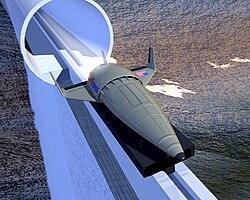
Non-rocket spacelaunch refers to theoretical concepts for launch into space where much of the speed and altitude needed to achieve orbit is provided by a propulsion technique that is not subject to the limits of the rocket equation. Although all space launches to date have been rockets, a number of alternatives to rockets have been proposed. In some systems, such as a combination launch system, skyhook, rocket sled launch, rockoon, or air launch, a portion of the total delta-v may be provided, either directly or indirectly, by using rocket propulsion.
Present-day launch costs are very high – $2,500 to $25,000 per kilogram from Earth to low Earth orbit (LEO). As a result, launch costs are a large percentage of the cost of all space endeavors. If launch can be made cheaper, the total cost of space missions will be reduced. Due to the exponential nature of the rocket equation, providing even a small amount of the velocity to LEO by other means has the potential of greatly reducing the cost of getting to orbit. (Full article...)
Image 4
GNU Radio is a free software development toolkit that provides signal processing blocks to implement software-defined radios and signal processing systems. It can be used with external radio frequency (RF) hardware to create software-defined radios, or without hardware in a simulation-like environment. It is widely used in hobbyist, academic, and commercial environments to support both wireless communications research and real-world radio systems. (Full article...)
Image 5
A computer monitor provides a visual interface between the machine and the user.
Human–computer interaction (HCI) is the process through which people operate and engage with computer systems. Research in HCI covers the design and the use of computer technology, which focuses on the interfaces between people (users) and computers. HCI researchers observe how people interact with computers and design technologies that allow humans to interact with computers in new ways. These include visual, auditory, and tactile (haptic) feedback systems, which serve as channels for interaction in both traditional interfaces and mobile computing contexts. A device that allows interaction between human and a computer is known as a "human–computer interface".
As 241Am has a half-life roughly similar to 238Pu (432.2 years vs. 87 years), it has been proposed as an active element of radioisotope thermoelectric generators, for example in spacecraft. Although americium produces less heat and electricity – the power yield is 114.7mW/g for 241Am and 6.31mW/g for 243Am (cf. 390mW/g for 238Pu) – and its radiation poses more threat to humans owing to neutron emission, the European Space Agency is considering using americium for its space probes.
Another proposed space-related application of americium is a fuel for space ships with nuclear propulsion. It relies on the very high rate of nuclear fission of 242mAm, which can be maintained even in a micrometer-thick foil. Small thickness avoids the problem of self-absorption of emitted radiation. This problem is pertinent to uranium or plutonium rods, in which only surface layers provide alpha-particles. The fission products of 242mAm can either directly propel the spaceship or they can heat a thrusting gas. They can also transfer their energy to a fluid and generate electricity through a magnetohydrodynamic generator. (Full article...)
Image 7
With the cloaking device active, light is 'deflected' around the object to make it appear as if it did not exist, rendering it invisible.
Developments in scientific research show that real-world cloaking devices can obscure objects from at least one wavelength of EM emissions. Scientists already use artificial materials called metamaterials to bend light around an object. However, over the entire spectrum, a cloaked object scatters more than an uncloaked object. (Full article...)
Most people who experience traumatic events do not develop PTSD. People who experience interpersonal violence such as rape, other sexual assaults, being kidnapped, stalking, physical abuse by an intimate partner, and childhood abuse are more likely to develop PTSD than those who experience non-assault based trauma, such as accidents and natural disasters. In the United States, about 3.5% of adults have PTSD in a given year, and 9% of people develop it at some point in their lives. In much of the rest of the world, rates during a given year are between 0.5% and 1%. Higher rates may occur in regions of armed conflict. It is more common in women than men. (Full article...)
Image 9
An agricultural robot is a robot deployed for agricultural purposes. The main area of application of robots in agriculture today is at the harvesting stage. Emerging applications of robots or drones in agriculture include weed control, planting seeds, harvesting, environmental monitoring and soil analysis. According to Verified Market Research, the agricultural robots market is expected to reach $11.58 billion by 2025. (Full article...)
Image 10
12-16.5 Mk1 Croc Tyre with rim center fitted Airless tires, non-pneumatic tires (NPT), or flat-free tires are tires that are not supported by air pressure. They can be used on small vehicles such as ride-on lawn mowers and motorized golf carts. They also are used on heavy equipment required to operate on sites where risk of tire punctures is high. Tires composed of closed-cell polyurethane foam are also made for bicycles and wheelchairs. (Full article...)
A human brain in a jar. A brain transplant, brain cell transplant, or whole-body transplant is a procedure in which the brain of one organism is transplanted into the body of another organism. It is a procedure distinct from head transplantation, which involves transferring the entire head to a new body, as opposed to the brain only. Theoretically, a person with complete organ failure could be given a new and functional body while keeping their own personality, memories, and consciousness through such a procedure. NeurosurgeonRobert J. White has grafted the head of a monkey onto the headless body of another monkey. Electroencephalography (EEG) readings showed the brain was later functioning normally. Initially, it was thought to prove that the brain was an immunologically privileged organ, as the host's immune system did not attack it at first, but immune rejection caused the monkey to die after nine days. (Full article...)
Image 13
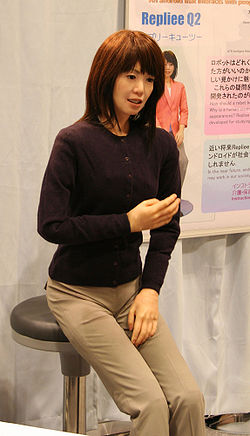
Repliee Q2, an android, can mimic human functions such as blinking, breathing and speaking, with the ability to recognize and process speech and touch, and then respond in kind. An android is a humanoid robot or other artificial being, often made from a flesh-like material. Historically, androids existed only in the domain of science fiction and were frequently seen in film and television, but advances in robot technology have allowed the creation of similar robots in real life. (Full article...)
Currently, standard virtual reality systems use either virtual reality headsets or multi-projected environments to generate some realistic images, sounds, and other sensations that simulate a user's physical presence in a virtual environment. A person using virtual reality equipment is able to look around the artificial world, move around in it, and interact with virtual features or items. The effect is commonly created by VR headsets consisting of a head-mounted display with a small screen in front of the eyes but can also be created through specially designed rooms with multiple large screens. Virtual reality typically incorporates auditory and video feedback but may also allow other types of sensory and force feedback through haptic technology. (Full article...)
A neural network is a group of interconnected units called neurons that send signals to one another. Neurons can be either biological cells or mathematical models. While individual neurons are simple, many of them together in a network can perform complex tasks. There are two main types of neural networks.
Solid-state transformers can actively regulate voltage and current. Some can convert single-phase power to three-phase power and vice versa. Variations can input or output DC power to reduce the number of conversions, for greater end-to-end efficiency. As a complex electronic circuit, it must be designed to withstand lightning and other surges. (Full article...)
Image 19
The Blue Brain Project was a Swiss brain research initiative that aimed to create a digital reconstruction of the mouse brain. The project was founded in May 2005 by the Brain Mind Institute of École Polytechnique Fédérale de Lausanne (EPFL) in Switzerland. The project ended in December 2024. Its mission was to use biologically detailed digital reconstructions and simulations of the mammalian brain to identify the fundamental principles of brain structure and function.
Layered Model of Quantum Computing A quantum computer is a (real or theoretical) computer that exploits superposed and entangledstates. Quantum computers can be viewed as sampling from quantum systems. These systems evolve in ways that operate on an enormous number of possibilities simultaneously, though they remain subject to strict computational constraints. By contrast, ordinary ("classical") computers operate according to deterministic rules. (A classical computer can, in principle, be replicated by a classical mechanical device, with only a simple multiple of time cost. On the other hand (it is believed), a quantum computer would require exponentially more time and energy to be simulated classically.) It is widely believed that a quantum computer could perform some calculations exponentially faster than any classical computer. For example, a large-scale quantum computer could break some widely used public-key cryptographic schemes and aid physicists in performing physical simulations. However, current hardware implementations of quantum computation are largely experimental and only suitable for specialized tasks.
The basic unit of information in quantum computing is the qubit (or "quantum bit"), which serves the same function as the bit in ordinary, or "classical", computing. However, unlike a classical bit, which can be in one of two binary states, a qubit can exist in a linear combination of two states, known as a quantum superposition. When one measures a qubit, the outcome is one of those two states, determined by the Born rule as a probabilistic rule. If a quantum computer manipulates a qubit in a particular way, wave interference effects can amplify the probability of the desired measurement result. The design of quantum algorithms involves creating procedures that allow a quantum computer to perform this amplification. (Full article...)
Image 21
Pittsburgh Police using a bomb disposal robot to examine a potential bomb during the 2010 Pittsburgh Marathon Bomb disposal is an explosives engineering profession using the process by which hazardous explosive devices are disabled or otherwise rendered safe. Bomb disposal is an all-encompassing term to describe the separate, but interrelated functions in the military fields of explosive ordnance disposal (EOD) and improvised explosive device disposal (IEDD), and the public safety roles of public safety bomb disposal (PSBD) and the bomb squad. (Full article...)
Image 22
Genetically modified foods (GM foods), also known as genetically engineered foods (GE foods), or bioengineered foods are foods produced from organisms that have had changes introduced into their DNA using various methods of genetic engineering. Genetic engineering techniques allow for the introduction of new traits as well as greater control (molecular-level insertion with greater predictability and speed) over traits when compared to previous methods, such as selective breeding and mutation breeding.
The discovery of DNA and the improvement of genetic technology in the 20th century played a crucial role in the development of transgenic technology. In 1988, genetically modified microbial enzymes were first approved for use in food manufacture. Recombinant rennet was used in several countries in the 1990s. Commercial sale of genetically modified foods began in 1994, when Calgene first marketed its later-withdrawn Flavr Savr delayed-ripening tomato. Most food modifications have primarily focused on cash crops in high demand by farmers such as soybean, maize/corn, canola, and cotton. Genetically modified crops have been engineered for resistance to pathogens and herbicides and for better nutrient profiles. The production of golden rice in 2000 represented the first genetically modified crop developed primarily to enhance nutritional value. GM livestock have been developed, although, as of 2015[update], none were on the market. As of 2015, the AquAdvantage salmon was the only animal approved for commercial production, sale and consumption by the FDA. It is the first genetically modified animal to be approved for human consumption. (Full article...)
Image 23
Screen printed e-textile coils showing wireless powering of flexible circuits through the fabric. Electronic textiles or e-textiles are fabrics that enable electronic components such as batteries, lights, sensors, and microcontrollers to be embedded in them. Many smart clothing items, wearable technology products, and wearable computing projects involve the use of e-textiles.
Electronic textiles are distinct from wearable computing because the emphasis is placed on the seamless integration of textiles with electronic elements like microcontrollers, sensors, and actuators. Furthermore, e-textiles need not be wearable, as they are also found in interior design. (Full article...)
Analog data communication conveys voice, data, image, signal or video information using a continuous signal, which varies in amplitude, phase, or some other property. In baseband analog transmission, messages are represented by a sequence of pulses by means of a line code; in passband analog transmission, they are communicated by a limited set of continuously varying waveforms, using a digital modulation method. Passband modulation and demodulation is carried out by modem equipment. (Full article...)
Map of the world's biodiversity hot spots, all of which are heavily threatened by habitat loss and degradation
Habitat destruction (also termed habitat loss) occurs when a natural habitat is no longer able to support its native species. The organisms once living there have either moved elsewhere, or are dead, leading to a decrease in biodiversity and species numbers. Habitat destruction is in fact the leading cause of biodiversity loss and species extinction worldwide.
Global monthly average total ozone amount Ozone depletion consists of two related events observed since the late 1970s: a lowered total amount of ozone in Earth's upper atmosphere, and a much larger springtime decrease in stratospheric ozone (the ozone layer) around Earth's polar regions. The latter phenomenon is referred to as the ozone hole. There are also springtime polar tropospheric ozone depletion events in addition to these stratospheric events.
The main causes of ozone depletion and the ozone hole are manufactured chemicals, especially manufactured halocarbonrefrigerants, solvents, propellants, and foam-blowing agents (chlorofluorocarbons (CFCs), HCFCs, halons), referred to as ozone-depleting substances (ODS). These compounds are transported into the stratosphere by turbulent mixing after being emitted from the surface, mixing much faster than the molecules can settle. Once in the stratosphere, they release atoms from the halogen group through photodissociation, which catalyze the breakdown of ozone (O3) into oxygen (O2). Both types of ozone depletion were observed to increase as emissions of halocarbons increased.
Ozone depletion and the ozone hole have generated worldwide concern over increased cancer risks and other negative effects. The ozone layer prevents harmful wavelengths of ultraviolet (UVB) light from passing through the Earth's atmosphere. These wavelengths cause skin cancer, sunburn, permanent blindness, and cataracts, which were projected to increase dramatically as a result of thinning ozone, as well as harming plants and animals. These concerns led to the adoption of the Montreal Protocol in 1987, which bans the production of CFCs, halons, and other ozone-depleting chemicals. Over time, scientists have developed new refrigerants with lower global warming potential (GWP) to replace older ones. For example, in new automobiles, R-1234yf systems are now common, being chosen over refrigerants with much higher GWP such as R-134a and R-12. (Full article...)
Image 3
World population growth, 1700–2100 (2024 projection) Human overpopulation or human population overshoot is the condition in which human populations may become too large to be sustained by their environment or resources in the long term. Human overpopulation or population overshoot is usually discussed in the context of world population, though it may concern individual nations, regions, and cities.
Since 1804, the global living human population has increased from 1 billion to 8 billion due to medical advancements and improved agricultural productivity. Annual world population growth peaked at 2.1% in 1968 and has since dropped to 1.1%. According to the most recent United Nations' projections, the global human population is expected to reach 9.7 billion in 2050 and would peak at around 10.4 billion people in the 2080s, before decreasing, noting that fertility rates are falling worldwide. Other models agree that the population will stabilize before or after 2100. Conversely, some researchers analyzing national birth registries data from 2022 and 2023—which cover half the world's population—argue that the 2022 UN projections overestimated fertility rates by 10 to 20% and were already outdated by 2024. They suggest that the global fertility rate may have already fallen below the sub-replacement fertility level for the first time in human history and that the global population will peak at approximately 9.5 billion by 2061. The 2024 UN projections report estimated that world population would peak at 10.29 billion in 2084 and decline to 10.18 billion by 2100, which was 6% lower than the UN had estimated in 2014.
Pollution is the introduction of contaminants into the natural environment that cause harm. Pollution can take the form of any substance (solid, liquid, or gas) or energy (such as radioactivity, heat, sound, or light). Pollutants, the components of pollution, can be either foreign substances/energies or naturally occurring contaminants.
Unemployment is the state of not being in paid employment or self-employment but rather currently available for work. Unemployment is measured by the unemployment rate, which is the number of people who are unemployed as a percentage of the labour force (the total number of people employed above a specified age added to those unemployed) during the reference period.
Unemployment can have many sources, such as the following below:
the status of the economy, which can be influenced by a recession
A typical suburban development in the United States, located in Chandler, Arizona
Urban sprawl (also known as suburban sprawl or urban encroachment) is defined as "the rapid expansion of the geographic extent of cities and towns, often characterized by low-density residential housing, single-use zoning, and increased reliance on the private automobile for transportation". Urban sprawl has been described as the unrestricted growth in many urban areas of housing, commercial development, and roads over large expanses of land, with little concern for very dense urban planning.
Urban sprawl refers to a special form of urbanization, and it relates to the social and environmental consequences associated with such development. In modern times some suburban areas described as "sprawl" have less detached housing and higher density than the nearby core city. Medieval suburbs suffered from the loss of protection of city walls, before the advent of industrial warfare. Sometimes the urban areas described as the most "sprawling" are the most densely populated.
The modern disadvantages and costs of urban sprawl include increased travel time, transport costs, pollution, and destruction of the countryside. The revenue for building and maintaining urban infrastructure in these areas are gained mostly through property and sales taxes. Most jobs in the US are now located in suburbs generating much of the revenue, although a lack of growth will require higher tax rates. (Full article...)
Image 7
Soil retrogression and degradation are two regressive evolution processes associated with the loss of equilibrium of a stablesoil. Retrogression is primarily due to soil erosion and corresponds to a phenomenon where succession reverts the land to its natural physical state. Degradation or pedolysis is an evolution, different from natural evolution, related to the local climate and vegetation. It is due to the replacement of primary plant communities (known as climax vegetation) by the secondary communities. This replacement modifies the humus composition and amount, and affects the formation of the soil. It is directly related to human activity. Soil degradation may also be viewed as any change or ecological disturbance to the soil perceived to be deleterious or undesirable.
According to the Center for Development Research at the University of Bonn and the International Food Policy Research Institute in Washington, the quality of 33% of pastureland, 25% of arable land and 23% of forests has deteriorated globally over the last 30 years. 3.2 billion people are dependent on this land. (Full article...)
Image 8
Summary of major environmental-change categories that cause biodiversity loss. The data is expressed as a percentage of human-driven change (in red) relative to baseline (blue), as of 2021. Red indicates the percentage of the category that is damaged, lost, or otherwise affected, whereas blue indicates the percentage that is intact, remaining, or otherwise unaffected. Biodiversity loss happens when species disappear completely from Earth (extinction) or when there is a decrease or disappearance of species in a specific area. Biodiversity loss means that there is a reduction in biological diversity in a given area. The decrease can be temporary or permanent. It is temporary if the damage that led to the loss is reversible in time, for example through ecological restoration. If this is not possible, then the decrease is permanent. The cause of most of the biodiversity loss is, generally speaking, human activities that push the planetary boundaries too far. These activities include habitat destruction (for example deforestation) and land use intensification (for example monoculture farming). Further problem areas are air and water pollution (including nutrient pollution), over-exploitation, invasive species and climate change.
Many scientists, along with the Global Assessment Report on Biodiversity and Ecosystem Services, say that the main reason for biodiversity loss is a growing human population because this leads to human overpopulation and excessive consumption. Others disagree, saying that loss of habitat is caused mainly by "the growth of commodities for export" and that population has very little to do with overall consumption. More important are wealth disparities between and within countries. In any case, all contemporary biodiversity loss has been attributed to human activities.
Climate change is another threat to global biodiversity. For example, coral reefs—which are biodiversity hotspots—will be lost by the year 2100 if global warming continues at the current rate. Still, it is the general habitat destruction (often for expansion of agriculture), not climate change, that is currently the bigger driver of biodiversity loss. Invasive species and other disturbances have become more common in forests in the last several decades. These tend to be directly or indirectly connected to climate change and can cause a deterioration of forest ecosystems. (Full article...)
Image 9
Anti Shein protest, Grenoble, France Overconsumption describes a situation where consumers overuse their available goods and services to where they cannot, or do not want to, replenish or reuse them. In microeconomics, this is the point where the marginal cost of a consumer is greater than their marginal utility. The term overconsumption is quite controversial and does not necessarily have a single unifying definition. When used to refer to natural resources to the point where the environment is negatively affected, it is synonymous with the term overexploitation. However, when used in the broader economic sense, overconsumption can refer to all types of goods and services, including artificial ones, e.g., "the overconsumption of alcohol can lead to alcohol poisoning." Overconsumption is driven by several factors of the current global economy, including forces like consumerism, planned obsolescence, economic materialism, and other unsustainable business models, and can be contrasted with sustainable consumption.
Defining the amount of a natural resource required to be consumed for it to count as "overconsumption" is challenging because defining a sustainable capacity of the system requires accounting for many variables. A system's total capacity occurs at regional and worldwide levels, which means that specific regions may have higher consumption levels of certain resources than others due to greater resources without overconsuming a resource. A long-term pattern of overconsumption in any region or ecological system can cause a reduction in natural resources, often resulting in environmental degradation. However, this is only when applying the word to environmental impacts. When used in an economic sense, this point is defined as when the marginal cost of a consumer is equal to their marginal utility. Gossen's law of diminishing utility states that at this point, the consumer realizes the cost of consuming/purchasing another item/good is not worth the amount of utility (also known as happiness or satisfaction from the good) they had received, and therefore is not conducive to the consumer's wellbeing.
When used in the environmental sense, the discussion of overconsumption often parallels population size, growth, and human development: more people demanding a higher quality of living requires greater extraction of resources, which causes subsequent environmental degradation, such as climate change and biodiversity loss. Currently, the inhabitants of high-wealth, "developed" nations consume resources at a rate almost 32 times greater than those of the developing world, making up most of the human population (7.9 billion people). However, the developing world is a growing consumer market. These nations are quickly gaining more purchasing power. The Global South, which includes cities in Asia, America, and Africa, is expected to account for 56% of consumption growth by 2030, meaning that if current trends continue, relative consumption rates will shift more into these developing countries, whereas developed countries would start to plateau. Sustainable Development Goal 12, "responsible consumption and production", is the main international policy tool with goals to abate the impact of overconsumption. (Full article...)
Image 10
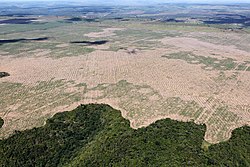
Deforestation of the Amazon rainforest in Brazil's Maranhão state, 2016 Deforestation or forest clearance is the removal and destruction of a forest or stand of trees from land that is then converted to non-forest use. Deforestation can involve conversion of forest land to farms, ranches, or urban use. About 31% of Earth's land surface is covered by forests at present. This is one-third less than the forest cover before the expansion of agriculture, with half of that loss occurring in the last century. On average 2,400 trees are cut down each minute. Estimates vary widely as to the extent of deforestation in the tropics. In 2019, nearly a third of the overall tree cover loss, or 3.8 million hectares, occurred within humid tropical primary forests. These are areas of mature rainforest that are especially important for biodiversity and carbon storage.
Resource depletion occurs when a natural resource is consumed faster than it can be replenished. The value of a resource depends on its availability in nature and the cost of extracting it. By the law of supply and demand, the scarcer the resource the more valuable it becomes. There are several types of resource depletion, including but not limited to: wetland and ecosystem degradation, soil erosion, aquifer depletion, and overfishing. The depletion of wildlife populations is called defaunation.
It is a matter of research and debate how humanity will be impacted and what the future will look like if resource consumption continues at the current rate, and when specific resources will be completely exhausted. (Full article...)
While the ability to deliberately engineer pathogens has been constrained to high-end labs run by top researchers, the technology to achieve this is rapidly becoming cheaper and more widespread. For example, the diminishing cost of sequencing the human genome (from $10 million to $1,000), the accumulation of large datasets of genetic information, the discovery of gene drives, and the discovery of CRISPR. Biotechnology risk is therefore a credible explanation for the Fermi paradox. (Full article...)
Image 17
Ocean acidification means that the average seawaterpH value is dropping over time.
A change in pH by 0.1 represents a 26% increase in hydrogen ion concentration in the world's oceans (the pH scale is logarithmic, so a change of one in pH units is equivalent to a tenfold change in hydrogen ion concentration). Sea-surface pH and carbonate saturation states vary depending on ocean depth and location. Colder and higher latitude waters are capable of absorbing more CO2. This can cause acidity to rise, lowering the pH and carbonate saturation levels in these areas. There are several other factors that influence the atmosphere-ocean CO2 exchange, and thus local ocean acidification. These include ocean currents and upwelling zones, proximity to large continental rivers, sea ice coverage, and atmospheric exchange with nitrogen and sulfur from fossil fuel burning and agriculture.
A lower ocean pH has a range of potentially harmful effects for marine organisms. Scientists have observed for example reduced calcification, lowered immune responses, and reduced energy for basic functions such as reproduction. Ocean acidification can impact marine ecosystems that provide food and livelihoods for many people. About one billion people are wholly or partially dependent on the fishing, tourism, and coastal management services provided by coral reefs. Ongoing acidification of the oceans may therefore threaten food chains linked with the oceans. (Full article...)
Image 18
Summary of major environmental-change categories that cause biodiversity loss. The data is expressed as a percentage of human-driven change (in red) relative to baseline (blue), as of 2021. Red indicates the percentage of the category that is damaged, lost, or otherwise affected, whereas blue indicates the percentage that is intact, remaining, or otherwise unaffected. Biodiversity loss happens when species disappear completely from Earth (extinction) or when there is a decrease or disappearance of species in a specific area. Biodiversity loss means that there is a reduction in biological diversity in a given area. The decrease can be temporary or permanent. It is temporary if the damage that led to the loss is reversible in time, for example through ecological restoration. If this is not possible, then the decrease is permanent. The cause of most of the biodiversity loss is, generally speaking, human activities that push the planetary boundaries too far. These activities include habitat destruction (for example deforestation) and land use intensification (for example monoculture farming). Further problem areas are air and water pollution (including nutrient pollution), over-exploitation, invasive species and climate change.
Many scientists, along with the Global Assessment Report on Biodiversity and Ecosystem Services, say that the main reason for biodiversity loss is a growing human population because this leads to human overpopulation and excessive consumption. Others disagree, saying that loss of habitat is caused mainly by "the growth of commodities for export" and that population has very little to do with overall consumption. More important are wealth disparities between and within countries. In any case, all contemporary biodiversity loss has been attributed to human activities.
Climate change is another threat to global biodiversity. For example, coral reefs—which are biodiversity hotspots—will be lost by the year 2100 if global warming continues at the current rate. Still, it is the general habitat destruction (often for expansion of agriculture), not climate change, that is currently the bigger driver of biodiversity loss. Invasive species and other disturbances have become more common in forests in the last several decades. These tend to be directly or indirectly connected to climate change and can cause a deterioration of forest ecosystems. (Full article...)
One argument for the validity of this concern and the importance of this risk references how human beings dominate other species because the human brain possesses distinctive capabilities other animals lack. If AI were to surpass human intelligence and become superintelligent, it might become uncontrollable. Just as the fate of the mountain gorilla depends on human goodwill, the fate of humanity could depend on the actions of a future machine superintelligence.
Experts disagree on whether artificial general intelligence (AGI) can achieve the capabilities needed for human extinction. Debates center on AGI's technical feasibility, the speed of self-improvement, and the effectiveness of alignment strategies. Concerns about superintelligence have been voiced by researchers including Geoffrey Hinton, Yoshua Bengio, Demis Hassabis, and Alan Turing, and AI company CEOs such as Dario Amodei (Anthropic), Sam Altman (OpenAI), and Elon Musk (xAI). In 2022, a survey of AI researchers with a 17% response rate found that the majority believed there is a 10 percent or greater chance that human inability to control AI will cause an existential catastrophe. In 2023, hundreds of AI experts and other notable figures signed a statement declaring, "Mitigating the risk of extinction from AI should be a global priority alongside other societal-scale risks such as pandemics and nuclear war". Following increased concern over AI risks, government leaders such as United Kingdom prime ministerRishi Sunak and United Nations Secretary-GeneralAntónio Guterres called for an increased focus on global AI regulation. (Full article...)
Image 20
Women selling produce at a market in Lilongwe, Malawi Food security is the state of having reliable access to a sufficient quantity of affordable, healthy food. The availability of food for people of any class, gender, status, ethnicity, or religion is another element of food protection. Similarly, household food security is considered to exist when all the members of a family have consistent access to enough food for an active, healthy life. Food-secure individuals do not live in hunger or fear of starvation. Food security includes resilience to future disruptions of food supply. Such a disruption could occur due to various risk factors such as droughts and floods, shipping disruptions, fuel shortages, economic instability, and wars. Food insecurity is the opposite of food security: a state where there is only limited or uncertain availability of suitable food.
The concept of food security has evolved over time. The four pillars of food security include availability, access, utilization, and stability. In addition, there are two more dimensions that are important: agency and sustainability. These six dimensions of food security are reinforced in conceptual and legal understandings of the right to food. The World Food Summit in 1996 declared that "food should not be used as an instrument for political and economic pressure."
There are many causes of food insecurity. The most important ones are high food prices and disruptions in global food supplies for example due to war. There is also climate change, water scarcity, land degradation, agricultural diseases, pandemics and disease outbreaks that can all lead to food insecurity. Additionally, food insecurity affects individuals with low socioeconomic status, affects the health of a population on an individual level, and causes divisions in interpersonal relationships. Food insecurity due to unemployment causes a higher rate of poverty. (Full article...)
Image 21
Fruit and vegetables in a dumpster, discarded uneaten Food loss and waste is food that is discarded or otherwise lost uneaten. This occurs throughout the food system, during production, processing, distribution, retail and food service sales, and consumption. Overall, about one-third of the world's food is thrown away, and a huge amount of resources used in food production are wasted. A 2021 meta-analysis by the United Nations Environment Programme estimated that global food waste amounted to 931 million tonnes annually (about 121kg per person) across three sectors: 61 percent from households, 26 percent from food service and 13 percent from retail.
In most countries, such trade represents a significant share of gross domestic product (GDP). While international trade has existed throughout history (for example Uttarapatha, Silk Road, Amber Road, salt roads), its economic, social, and political importance has been on the rise in recent centuries.
Carrying out trade at an international level is a complex process when compared to domestic trade. When trade takes place between two or more states, factors like currency, government policies, economy, judicial system, laws, and markets influence trade. (Full article...)
Virtually all civilizations have suffered such a fate, regardless of their size or complexity. Most never recovered, such as the Western and Eastern Roman Empires, the Maya civilization, and the Easter Island civilization. Some civilizations like ancient Greece have survived indirectly through other civilizations such as the West, while other ancient civilizations like Chinese civilization and Indian civilization have survived continuously to the present day.
Anthropologists, historians, and sociologists have proposed a variety of explanations for the collapse of civilizations involving causative factors such as environmental degradation, depletion of resources, costs of rising complexity, invasion, disease, decay of social cohesion, growing inequality, extractive institutions, long-term decline of cognitive abilities, loss of creativity, and misfortune. However, complete extinction of a culture is not inevitable, and in some cases, the new societies that arise from the ashes of the old one are evidently its offspring, despite a dramatic reduction in sophistication. Moreover, the influence of a collapsed society, such as the Western Roman Empire, may linger on long after its death. (Full article...)
Besides the immediate destruction of cities by nuclear blasts, the potential aftermath of a nuclear war could involve firestorms, a nuclear winter, widespread radiation sickness from fallout, and/or the temporary (if not permanent) loss of much modern technology due to electromagnetic pulses. Some scientists, such as Alan Robock, have speculated that a thermonuclear war could result in the end of modern civilization on Earth, in part due to a long-lasting nuclear winter. In one model, the average temperature of Earth following a full thermonuclear war falls for several years by 7 to 8°C (13 to 15 degrees Fahrenheit) on average.
Early Cold War-era studies suggested that billions of humans would survive the immediate effects of nuclear blasts and radiation following a global thermonuclear war. The International Physicians for the Prevention of Nuclear War believe that nuclear war could indirectly contribute to human extinction via secondary effects, including environmental consequences, societal breakdown, and economic collapse. (Full article...)
Image 25
Solid waste after being shredded to a uniform size Waste are unwanted or unusable materials. Waste is any substance discarded after primary use, or is worthless, defective and of no use. A by-product, by contrast is a joint product of relatively minor economic value. A waste product may become a by-product, joint product or resource through an invention that raises a waste product's value above zero.
... that several parents opted against including their children's names on the New London Cenotaph, with the designers leaving blank spaces on the memorial to commemorate them?
... that astronomers discovered the wide binary system 2001QW322 while searching for new moons of Uranus?
... that around the age of four, Jacob von Eggers was deported to Arkhangelsk in Russia together with the entire German-speaking population of Tartu?
... that the 1962 space-age pop album Latin-esque was recorded with halves of the orchestra separated by almost a city block to heighten its stereo effects?
... that a 2018 film by David Wilcock has been described by Vice as making the case that space aliens "occupy large swaths of Antarctica [and] are massing for an invasion"?
... that plans for Myanmar's space programme began under an elected civilian government in 2017, but the Myanmar Space Agency was ultimately formed in 2025 under military rule?
... that many Muslims in Gaza reportedly celebrate Christmas with the Christian population, despite being officially forbidden to do so since 2020?
Image 1A man engaging in big wave surfing at Mavericks, located just north of Half Moon Bay, California. Big wave surfing is a discipline within surfing in which experienced surfers paddle into or are towed onto waves which are at least 20ft (6.1m) high, and is a hazardous activity, as surfers can be pushed far beneath the surface of the water after a wipeout.
Image 4A dust storm rushes towards a military camp as it rolls over Al Asad Airbase, Iraq, just before nightfall on April 27, 2005. A dust storm (or sandstorm) is a meteorological phenomenon common in dry, arid and semi-arid regions, usually the result of convection currents created by intense heating of the ground. These currents then carry clouds of sand over large distances.
Image 5The Door to Hell is a natural gas field in Derweze, Turkmenistan, which has been burning since 1971 when it was ignited by Soviet scientists who expected it to burn out within days. They were trying to prevent the release of poisonous gases. The name "Door to Hell" was given to the field by locals. The hot spots range over an area with a width of 60 metres (200 ft) and to a depth of about 20 metres (66 ft).
Image 7An animation of a cicada undergoing ecdysis, the molting of the exoskeleton in arthropods and related groups. Since the cuticula of these animals is inelastic, it is shed during growth and a new, larger covering is formed. The old, empty exoskeleton is called an exuvia. Within one or two hours, the cuticle hardens and darkens, during which time the animal grows, since growth is otherwise constrained by the rigidity of the exoskeleton. Each frame of this image was taken at one-minute intervals, with a 30-minute gap in middle while the cicada rested. The entire process took about 2 hours to complete.
Image 8Devastation caused by Hurricane Katrina in New Orleans, Louisiana during 2005, shown here looking down on Interstate 10 at West End Boulevard towards Lake Pontchartrain. Over 1,800 people were confirmed dead with 705 still missing. It was the costliest Atlantic hurricane in history causing around $86 billion in damage. This photo shows flooded roadways as the United States Coast Guard conducted initial damage assessment overflights of New Orleans on Monday, August 29, 2005. The city flooded due primarily to the failure of the levee system. Many who remained in their homes had to swim for their lives, wade through deep water, or remain trapped in their attics or on their rooftops.
Image 9The I-35W Mississippi River bridge was an eight-lane, steel truss arch bridge that carried Interstate 35W across the Saint Anthony Falls of the Mississippi River in Minneapolis, Minnesota. Once the third-busiest bridge in the state, it suddenly collapsed on August 1, 2007, killing 13 and injuring 145. Rescue of people stranded on the bridge was complete in three hours, while recovery of bodies—involving 75 local, state and federal agencies—took three weeks. An NTSB investigation cited a design flaw as the likely cause of the collapse, noting that a too-thin gusset plate ripped along a line of rivets.
Image 15The Leaning Tower of Pisa is the freestanding bell tower of the Cathedral of Pisa, Italy. The third oldest structure in the city's Square of Miracles, it is known worldwide for its unintended tilt. The tower's tilt began during construction in the 12th century, caused by an inadequate foundation on ground too soft on one side to properly support the structure's weight. The tilt gradually increased until the tower was stabilized (and the tilt partially corrected) by efforts in the late 20th and early 21st centuries. The tower, which measures 55.86 metres (183.27 feet) from the ground on the low side and 56.67 metres (185.93 feet) on the high side, has been listed as a UNESCO World Heritage Site since 1987.
Image 16One of two monkey selfies taken by Celebes crested macaques using equipment belonging to the British nature photographer David Slater. In mid-2014, the images' hosting on Wikimedia Commons was at the centre of a dispute over whether copyright could be held on artworks made by non-human animals. Slater argued that, as he had "engineered" the shot, he held copyright, while Wikimedia considered the photographs public domain on the grounds that they were made by an animal rather than a person. In December 2014, the United States Copyright Office stated that works by a non-human are not subject to US copyright, a view reaffirmed by a US federal judge in 2016.
Image 19An overhead view of Skylab, the United States' first space station, in Earth orbit as photographed from the Skylab 4 Command and Service Modules. Skylab 4 was the last mission to Skylab and brought back its final crew; this photograph was the last one taken of the station before the mission re-entered Earth's atmosphere and disintegrated in 1979.
Image 22The American Bison, or Buffalo, is the largest terrestrial mammal in North America, and once inhabited the Great Plains in massive herds. They were central to the lives of Native American tribes. This pile of bison skulls from the 1870s illustrates the extent of their slaughter in the 19th century by settlers: from a population of about 60 million in 1800 to as few as 750 in 1890. They have since been reintroduced into the wild and are no longer considered a high risk endangered species.
Image 23A neutral density filter is a filter that reduces or modifies the intensity of all wavelengths or colors of light equally, giving no changes in hue of color rendition. The filter reduces the amount of light entering the lens, allowing the photographer to select combinations of aperture, exposure time and sensor sensitivity to avoid overexposed pictures. It would normally be attached to the lens, but is hand-held here to illustrate the effect.
Image 24NGC 1300 is a barred spiral galaxy located roughly 69 million light-years away in the direction of the constellation Eridanus. In its core, the nucleus shows its own extraordinary and distinct "grand-design" spiral structure that is about 3,300 light-years long.
Image 25Crash landing of an F6F Hellcat into the port side 20mm gun gallery of the USS Enterprise, November 10, 1943. Lieutenant Walter L. Chewning, Jr., USNR, the Catapult Officer, is climbing up the plane's side to assist the pilot from the burning aircraft. The pilot, Ensign Byron M. Johnson, escaped without significant injury. Note the plane's ruptured belly fuel tank.
Image 29Sandboarding is a boardsport similar to snowboarding, but competitions take place on sand dunes rather than snow-covered mountains. Here, a member of the US Navy sandboards down a dune in Jebel Ali, Dubai.
Image 32Imagine waking up to this. Which makes me wonder whatever happened to the guy who took this photo.
Image 33Glaucus atlanticus is a species of small, blue sea slug. This pelagic aeolid nudibranch floats upside down, using the surface tension of the water to stay up, and is carried along by the winds and ocean currents. The blue side of their body faces upwards, blending in with the blue of the water, while the grey side faces downwards, blending in with the silvery surface of the sea. G.atlanticus feeds on other pelagic creatures, including the Portuguese man o' war.
Image 34The sperm whale is the largest toothed animal on Earth. The species was hunted extensively by humans throughout history, until protected by a worldwide moratorium on whaling starting in 1985–86.
Image 36San Francisco Bay shrouded in fog, as seen from the Marin Headlands looking east. The fog of San Francisco is a kind of sea fog, created when warm, moist air blows from the central Pacific Ocean across the cold water of the California Current, which flows just off the coast. The water is cold enough to lower the temperature of the air to the dew point, causing fog generation. In this photo, the towers of the Golden Gate Bridge can be seen poking through the fog, and the Bay Bridge is visible in the distance.
Image 37The International Space Station (ISS) as seen from the Space Shuttle Endeavour. Zarya, the first module of the ISS launched in 1998, is seen in the foreground. Since then, twenty-six Space Shuttle flights have docked with the ISS to assemble various other modules and components, which include four pairs of solar arrays seen on each side.
Image 38The Pinwheel Galaxy is a face-on spiral galaxy located 21 million light-years away in the constellationUrsa Major. It was first discovered by Pierre Méchain on March 27, 1781, and communicated to Charles Messier, who verified its position for inclusion in the Messier Catalogue as one of its final entries. This image, released on February 28, 2006, is composed of 51 individual exposures, as well as some extra ground-based photos. At the time of its release, it was the largest and most detailed image of a galaxy by the Hubble Space Telescope.
Image 39Lucky Diamond Rich (b. 1971) is a New Zealand-born performance artist and street performer who holds the Guinness World Record for most tattooed man, taking the title from Tom Leppard in 2006. He is recognized by Guinness as being covered in tattoos over 100% of his body, including the inside of his eyelids, ears, and mouth.
Image 41A lava lake at Mount Nyiragongo, a volcano found in Virunga National Park in the Democratic Republic of the Congo. Lava lakes, which can form in three different ways, are large volumes of molten lava, usually basaltic, contained in a volcanic vent, crater, or broad depression. Persistent lava lakes such as the one at Nyiragongo, which is the largest to appear in recent times, are rare.
Image 42A swan created using modular origami, a paperfolding technique which uses two or more sheets of paper to create a larger and more complex structure than possible with single-piece origami techniques. Each individual sheet of paper is folded into a module, or unit, and then modules are assembled into an integrated flat shape or three-dimensional structure by inserting flaps into pockets created by the folding process. These insertions create tension or friction that holds the model together.
Image 43The Hubble Extreme Deep Field is an image of a small area of space in the constellation Fornax released by NASA on September 25, 2012. The successor to the Hubble Ultra-Deep Field, this image was compiled from 10 years of previous images with a total exposure time of two million seconds, or approximately 23 days.
Image 44The Aqueduct of Segovia is a Roman aqueduct located in Segovia, Spain that transports water from the Rio Frio. It is thought to have been constructed during the 1st centuryCE. One of the most significant and best-preserved ancient monuments left on the Iberian Peninsula, the aqueduct is considered a symbol of Segovia and is present on the city's coat of arms.





.jpg)


_Kitchen_interior_with_maid_1563.jpg)
.svg)






.jpg)




_relative_to_baseline_-_fcosc-01-615419-g001.jpg)

.jpg)


.jpg)


 A man engaging in big wave surfing at Mavericks, located just north of Half Moon Bay, California. Big wave surfing is a discipline within surfing in which experienced surfers paddle into or are towed onto waves which are at least 20 ft (6.1 m) high, and is a hazardous activity, as surfers can be pushed far beneath the surface of the water after a wipeout.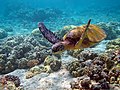
 Burj Khalifa is a skyscraper in Dubai, United Arab Emirates, and currently the tallest man-made structure in the world, at 829.8 m (2,722 ft). It was designed to be the centerpiece of a large-scale, mixed-use development known as Downtown Dubai. Construction took over five years, and the skyscraper was officially opened in January 2010.
 A dust storm rushes towards a military camp as it rolls over Al Asad Airbase, Iraq, just before nightfall on April 27, 2005. A dust storm (or sandstorm) is a meteorological phenomenon common in dry, arid and semi-arid regions, usually the result of convection currents created by intense heating of the ground. These currents then carry clouds of sand over large distances.
 The Door to Hell is a natural gas field in Derweze, Turkmenistan, which has been burning since 1971 when it was ignited by Soviet scientists who expected it to burn out within days. They were trying to prevent the release of poisonous gases. The name "Door to Hell" was given to the field by locals. The hot spots range over an area with a width of 60 metres (200 ft) and to a depth of about 20 metres (66 ft).
 The mushroom cloud from the Ivy Mike nuclear test, one of two tests conducted as part of Operation Ivy at the Pacific Proving Grounds on Elugelab in the Marshall Islands. Mike was the first successful full-scale test of a multi-megaton thermonuclear weapon, and it left an underwater crater 6,240 ft (1,900 m) wide and 164 ft (50 m) deep where the island had been.
 An animation of a cicada undergoing ecdysis, the molting of the exoskeleton in arthropods and related groups. Since the cuticula of these animals is inelastic, it is shed during growth and a new, larger covering is formed. The old, empty exoskeleton is called an exuvia. Within one or two hours, the cuticle hardens and darkens, during which time the animal grows, since growth is otherwise constrained by the rigidity of the exoskeleton. Each frame of this image was taken at one-minute intervals, with a 30-minute gap in middle while the cicada rested. The entire process took about 2 hours to complete.
 Devastation caused by Hurricane Katrina in New Orleans, Louisiana during 2005, shown here looking down on Interstate 10 at West End Boulevard towards Lake Pontchartrain. Over 1,800 people were confirmed dead with 705 still missing. It was the costliest Atlantic hurricane in history causing around $86 billion in damage. This photo shows flooded roadways as the United States Coast Guard conducted initial damage assessment overflights of New Orleans on Monday, August 29, 2005. The city flooded due primarily to the failure of the levee system. Many who remained in their homes had to swim for their lives, wade through deep water, or remain trapped in their attics or on their rooftops.
 The I-35W Mississippi River bridge was an eight-lane, steel truss arch bridge that carried Interstate 35W across the Saint Anthony Falls of the Mississippi River in Minneapolis, Minnesota. Once the third-busiest bridge in the state, it suddenly collapsed on August 1, 2007, killing 13 and injuring 145. Rescue of people stranded on the bridge was complete in three hours, while recovery of bodies—involving 75 local, state and federal agencies—took three weeks. An NTSB investigation cited a design flaw as the likely cause of the collapse, noting that a too-thin gusset plate ripped along a line of rivets.
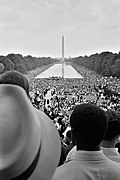 Crowds surrounding the Reflecting Pool, during the August 28 1963 March on Washington for Jobs and Freedom. An estimated 200,000 to 500,000 people participated in the march, which featured Martin Luther King Jr.'s famous "I Have a Dream" speech. It was a major factor leading to the passage of the Civil Rights Act of 1964 and the 1965 Voting Rights Act. The march was also condemned by the Nation of Islam and Malcolm X, who termed it the "farce on Washington".
 View from Notre-Dame de Paris.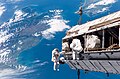
 A Marginated Tortoise hatchling.
 Atlantic White-sided Dolphins, on a concrete-floored dock at the port of Hvalba, which is in the Faroe Islands, north of the United Kingdom. Whaling in the Faroe Islands has been practised since at least the 10th century. It is strongly regulated by Faroese authorities and is approved by the International Whaling Commission.
 The Leaning Tower of Pisa is the freestanding bell tower of the Cathedral of Pisa, Italy. The third oldest structure in the city's Square of Miracles, it is known worldwide for its unintended tilt. The tower's tilt began during construction in the 12th century, caused by an inadequate foundation on ground too soft on one side to properly support the structure's weight. The tilt gradually increased until the tower was stabilized (and the tilt partially corrected) by efforts in the late 20th and early 21st centuries. The tower, which measures 55.86 metres (183.27 feet) from the ground on the low side and 56.67 metres (185.93 feet) on the high side, has been listed as a UNESCO World Heritage Site since 1987.
 One of two monkey selfies taken by Celebes crested macaques using equipment belonging to the British nature photographer David Slater. In mid-2014, the images' hosting on Wikimedia Commons was at the centre of a dispute over whether copyright could be held on artworks made by non-human animals. Slater argued that, as he had "engineered" the shot, he held copyright, while Wikimedia considered the photographs public domain on the grounds that they were made by an animal rather than a person. In December 2014, the United States Copyright Office stated that works by a non-human are not subject to US copyright, a view reaffirmed by a US federal judge in 2016.
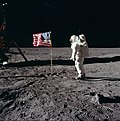 Astronaut Buzz Aldrin saluting the flag of the United States, part of the Lunar Flag Assembly, during Apollo 11. The Lunar Flag Assembly was designed to survive a Moon landing and to appear to "wave" as it would in a breeze on Earth. This flag fell over when the Lunar Module Eagle took off.
 American astronaut Eugene Cernan (born March 14, 1934), shown here on the surface of the Moon during the Apollo 17 mission, the last time any human has set foot on it. In that final lunar landing mission, launched December 7, 1972, Cernan became "the last man on the moon" since he was the last to re-enter the Apollo Lunar Module during its third and final extra-vehicular activity. Prior to this, Cernan had also gone into space twice on the Gemini 9A and Apollo 10 missions.
 An overhead view of Skylab, the United States' first space station, in Earth orbit as photographed from the Skylab 4 Command and Service Modules. Skylab 4 was the last mission to Skylab and brought back its final crew; this photograph was the last one taken of the station before the mission re-entered Earth's atmosphere and disintegrated in 1979.
 aurora australis, as seen from the International Space Station. Aurorae are natural light displays in the sky caused by the collision of energetic charged particles with atoms in the high altitude thermosphere. The particles originate in the magnetosphere and solar wind and, on Earth, are directed by Earth's magnetic field into the atmosphere.
 Height comparison of notable statues: 1) Statue of Unity 240 m. 2) Spring Temple Buddha 153 m. 3) Statue of Liberty 93 m. 4) The Motherland Calls 91 m. 5) Christ the Redeemer 39.6 m. 6) Statue of David 5.17 m.
 The American Bison, or Buffalo, is the largest terrestrial mammal in North America, and once inhabited the Great Plains in massive herds. They were central to the lives of Native American tribes. This pile of bison skulls from the 1870s illustrates the extent of their slaughter in the 19th century by settlers: from a population of about 60 million in 1800 to as few as 750 in 1890. They have since been reintroduced into the wild and are no longer considered a high risk endangered species.
 A neutral density filter is a filter that reduces or modifies the intensity of all wavelengths or colors of light equally, giving no changes in hue of color rendition. The filter reduces the amount of light entering the lens, allowing the photographer to select combinations of aperture, exposure time and sensor sensitivity to avoid overexposed pictures. It would normally be attached to the lens, but is hand-held here to illustrate the effect.
 NGC 1300 is a barred spiral galaxy located roughly 69 million light-years away in the direction of the constellation Eridanus. In its core, the nucleus shows its own extraordinary and distinct "grand-design" spiral structure that is about 3,300 light-years long.
 Crash landing of an F6F Hellcat into the port side 20mm gun gallery of the USS Enterprise, November 10, 1943. Lieutenant Walter L. Chewning, Jr., USNR, the Catapult Officer, is climbing up the plane's side to assist the pilot from the burning aircraft. The pilot, Ensign Byron M. Johnson, escaped without significant injury. Note the plane's ruptured belly fuel tank.
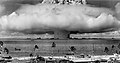 The "Baker" explosion, part of Operation Crossroads, a nuclear weapon test by the United States military at Bikini Atoll, Micronesia, on July 25, 1946. Its purpose was to test the effect of nuclear weapons on naval ships. It was the second US nuclear bomb set off since the bombing of Nagasaki.
 You are feeling very sleepy...
 Sandboarding is a boardsport similar to snowboarding, but competitions take place on sand dunes rather than snow-covered mountains. Here, a member of the US Navy sandboards down a dune in Jebel Ali, Dubai.
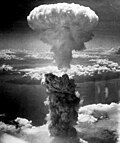 The mushroom cloud caused by the detonation of the "Fat Man" bomb during the atomic bombing of Nagasaki, Japan in 1945, rising approximately 18 kilometres (11 mi) above the hypocenter.
 The 2004 Indian Ocean earthquake was a magnitude 9.15, undersea earthquake that occurred at 00:58:53 UTC on December 26 2004. The earthquake generated a tsunami that killed more than 150,000 people around the Indian Ocean, making it one of the deadliest disasters in modern history. This photograph shows the tsunami as it reached Ao Nang, Thailand.
 Imagine waking up to this. Which makes me wonder whatever happened to the guy who took this photo.
 Glaucus atlanticus is a species of small, blue sea slug. This pelagic aeolid nudibranch floats upside down, using the surface tension of the water to stay up, and is carried along by the winds and ocean currents. The blue side of their body faces upwards, blending in with the blue of the water, while the grey side faces downwards, blending in with the silvery surface of the sea. G. atlanticus feeds on other pelagic creatures, including the Portuguese man o' war.
 The sperm whale is the largest toothed animal on Earth. The species was hunted extensively by humans throughout history, until protected by a worldwide moratorium on whaling starting in 1985–86.
 Tracy Caldwell Dyson in the Cupola module of the International Space Station, observing the Earth below during Expedition 24. Caldwell Dyson is an American chemist and astronaut. She was selected by NASA in 1998 and made her first spaceflight in August 2007 on the STS-118 mission aboard Space Shuttle Endeavour.
 San Francisco Bay shrouded in fog, as seen from the Marin Headlands looking east. The fog of San Francisco is a kind of sea fog, created when warm, moist air blows from the central Pacific Ocean across the cold water of the California Current, which flows just off the coast. The water is cold enough to lower the temperature of the air to the dew point, causing fog generation. In this photo, the towers of the Golden Gate Bridge can be seen poking through the fog, and the Bay Bridge is visible in the distance.
 The International Space Station (ISS) as seen from the Space Shuttle Endeavour. Zarya, the first module of the ISS launched in 1998, is seen in the foreground. Since then, twenty-six Space Shuttle flights have docked with the ISS to assemble various other modules and components, which include four pairs of solar arrays seen on each side.
 The Pinwheel Galaxy is a face-on spiral galaxy located 21 million light-years away in the constellation Ursa Major. It was first discovered by Pierre Méchain on March 27, 1781, and communicated to Charles Messier, who verified its position for inclusion in the Messier Catalogue as one of its final entries. This image, released on February 28, 2006, is composed of 51 individual exposures, as well as some extra ground-based photos. At the time of its release, it was the largest and most detailed image of a galaxy by the Hubble Space Telescope.
 Lucky Diamond Rich (b. 1971) is a New Zealand-born performance artist and street performer who holds the Guinness World Record for most tattooed man, taking the title from Tom Leppard in 2006. He is recognized by Guinness as being covered in tattoos over 100% of his body, including the inside of his eyelids, ears, and mouth.
 United States Navy personnel engage in Special Patrol Insertion/Extraction (SPIE) training between a Sikorsky SH-60 Seahawk helicopter and the USS Dwight D. Eisenhower (CVN-69). SPIE involves either a person or goods being lowered from or raised to a helicopter via a cable above terrain on which landing would be difficult.
 A lava lake at Mount Nyiragongo, a volcano found in Virunga National Park in the Democratic Republic of the Congo. Lava lakes, which can form in three different ways, are large volumes of molten lava, usually basaltic, contained in a volcanic vent, crater, or broad depression. Persistent lava lakes such as the one at Nyiragongo, which is the largest to appear in recent times, are rare.
 A swan created using modular origami, a paperfolding technique which uses two or more sheets of paper to create a larger and more complex structure than possible with single-piece origami techniques. Each individual sheet of paper is folded into a module, or unit, and then modules are assembled into an integrated flat shape or three-dimensional structure by inserting flaps into pockets created by the folding process. These insertions create tension or friction that holds the model together.
 The Hubble Extreme Deep Field is an image of a small area of space in the constellation Fornax released by NASA on September 25, 2012. The successor to the Hubble Ultra-Deep Field, this image was compiled from 10 years of previous images with a total exposure time of two million seconds, or approximately 23 days.
 The Aqueduct of Segovia is a Roman aqueduct located in Segovia, Spain that transports water from the Rio Frio. It is thought to have been constructed during the 1st century CE. One of the most significant and best-preserved ancient monuments left on the Iberian Peninsula, the aqueduct is considered a symbol of Segovia and is present on the city's coat of arms.


_edit.jpg)


.svg)


_on_10_November_1943_(80-G-205473).jpg)


.jpg)


.png)


 Commons
 Wikibooks
 Wikidata
 Wikinews
 Wikiquote
 Wikisource
 Wikiversity
 Wiktionary


