Grape leaves
Ingredient in various cuisines
From Wikipedia, the free encyclopedia
Grape leaves, the leaves of the grapevine plant, are used in the cuisines of a number of cultures. They may be obtained fresh, or preserved in jars or cans.[1][2] The leaves are commonly rolled or stuffed with mixtures of meat and rice to produce dolma (often, sarma), found widely in the Mediterranean, Caucasus, Balkans, and Middle East.[3] They may also be used in various other recipes and dishes.[4] When cut into smaller pieces they are used as a savory addition to soups that include greens and cabbage.[5]

Merchant selling grape leaves in Damascus (2008) | |

Nutrition
Canned grape leaves (cooked, salted) are 76% water, 12% carbohydrates, 4% protein, and 2% fat.[6] In a reference amount of 100 grams (3.5 oz), the leaves supply 69 calories and are a rich source (20% or more of the Daily Value, DV) of sodium (119% DV), vitamin A (105% DV), copper (95% DV), pantothenic acid (43% DV), and several other B vitamins and dietary minerals.[6]
Gallery
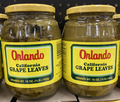 Preserved grape leaves in jars
 Stuffed grape leaves with yogurt mint sauce


