1914 in South Africa
From Wikipedia, the free encyclopedia
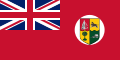
Incumbents
- Monarch: King George V.
- Governor-General and High Commissioner for Southern Africa:
- The Viscount Gladstone (until 27 July).[1]
- Baron De Villiers (acting, 27 July to 2 September).
- Sir James Rose Innes (acting, 2 to 8 September).
- The Viscount Buxton (from 8 September).[1]
- Prime Minister: Louis Botha.
- Chief Justice: Baron De Villiers then Sir James Rose Innes
Events
- January
- 8 â A railway strike is declared in the Transvaal and Orange River Colony.
- April
- 23 â The Afrikaans language receives official recognition when Cornelis Jacobus Langenhoven addresses the English caucus of the Cape Provincial Council.
- July
- 1 â The National Party is formed in Bloemfontein.
- 18 â Mahatma Gandhi leaves South Africa for the last time, sailing out of Cape Town for England on board the SS Kinfauns Castle.
- September
- 8 â The Viscount Buxton is appointed the second Governor-General of the Union of South Africa.
- 10 â South Africa declares war on Germany.
- 13 â South African troops open hostilities in German South-West Africa with an assault on the Ramansdrift police station.
- 15 â The Maritz Rebellion against the government of the Union of South Africa begins.
- Unknown date
- The steamship Clan Stuart is blown ashore between Glencairn and Simon's Town in the Cape Province.
- The Kimberley mine or "Big Hole" is closed.
- South Africa's government agree to many of the Indians' demands. Discriminatory taxes on Indian traders are abolished, the legality of non-Christian marriages is recognized and the continued immigration of free Indians is permitted.
- A new lighthouse is built at Cape Point.
Births
- 3 July â Pat Pattle, World War II fighter pilot. (d. 1941)
- 20 February â John Charles Daly, South African-born journalist, game show host (d. 1991)[2]
- 9 December â Shmuel Katz, Israeli writer, historian and journalist. (d. 2008)
Deaths
- 15 September â Koos de la Rey, Boer War general, is shot dead at a police roadblock. (b. 1847)
Railways

.jpg)
.jpg)
.jpg)
.jpg)
Railway lines opened
- 1 January â Cape â Kleipan to Birdfield, 6 miles 59 chains (10.8 kilometres).[3]
- 5 January â Natal â Winterton to Bergville, 18 miles 27 chains (29.5 kilometres).[3]
- 2 February â Natal â Ixopo to Madonela (Narrow gauge), 17 miles 27 chains (27.9 kilometres).[3]
- 23 February â Natal â Ahrens to Kranskop, 12 miles 26 chains (19.8 kilometres).[3]
- 4 March â Free State â Marsala to Frankfort, 17 miles 39 chains (28.1 kilometres).[3]
- 3 April â Cape â Gamtoos to Patensie (Narrow gauge), 18 miles 79 chains (30.6 kilometres).[3]
- 6 April â Cape â Caledon to Klipdale, 43 miles 9 chains (69.4 kilometres).[3]
- 5 May â Transvaal â Lilliput to Messina, 19 miles 7 chains (30.7 kilometres).[3]
- 18 May â Transvaal â Sabie to Graskop, 21 miles 75 chains (35.3 kilometres).[3]
- 25 May â Transvaal â Cranbourne to Modderbee, 6 miles 79 chains (11.2 kilometres).[3]
- September â Natal â Newleigh to Estcourt deviation, 26 miles 4 chains (41.9 kilometres).[3]
- 21 December â Transvaal â Bethal to Morgenzon, 27 miles 10 chains (43.7 kilometres).[3]
Locomotives
Six new Cape gauge locomotive types enter service on the South African Railways (SAR):
- Forty-one Class 14A 4-8-2 Mountain type steam locomotives.[4]
- Ten Class 15 4-8-2 Mountain type locomotives.[4]
- The first of 119 Class 15A 4-8-2 Mountain type locomotives.[4][5]
- Twelve Class 16 4-6-2 Pacific type passenger steam locomotives.[4]
- Fifteen Class MC1 2-6-6-0 Mallet articulated compound steam locomotives.[5]
- Only two of the ten Class MJ 2-6-6-0 Mallet compound locomotives ordered from German manufacturer Maffei before the outbreak of World War I disrupts further delivery.[4][5]