Armfelt Conspiracy
From Wikipedia, the free encyclopedia
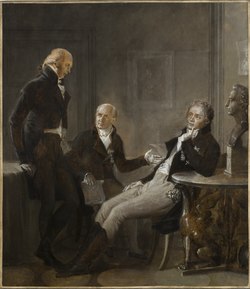


The Armfelt Conspiracy was a plot in Sweden in 1793. The purpose was to depose the de jure regent Duke Charles and the de facto regent Gustaf Adolf Reuterholm, leaders of the regency government of Gustav IV Adolf of Sweden, and replace them with Gustaf Mauritz Armfelt, the favorite of the king's father Gustav III of Sweden. The conspiracy was discovered and prevented in 1793.[1][2][3][4][5]
King Gustav III had been assassinated in 1792 and his son, Gustav IV Adolf (born 1778) was too young to rule himself when he was made king. Gustav III's younger brother Duke Charles (who would become Charles XIII when he succeeded Gustav IV in 1809) was named regent, with the Privy Council to advise him. On his deathbed, King Gustav III had also committed the care of his son to Gustaf Mauritz Armfelt and appointed him a member of the Privy Council and Governor of Stockholm.[6][1][4]
Soon after the murder of Gustav III, Gustaf Adolf Reuterholm was recalled from his exile by Duke Charles and made president of the Kammarrevisionen (a forerunner of the Administrative court of appeal). Reuterholm had been implicated in the failed 1789 Conspiracy to depose Gustav III and replace him with Charles, and in 1792 he became the de facto ruler of Sweden through his advice to Duke Charles. The "Gustavians" of the regency and the wider government, those still loyal to Gustav III and his policies, were systematically pushed to the side by Reuterholm.[6][1][4]
Armfelt was removed from the position as Governor of Stockholm and Reuterholm had him named Swedish minister to Italian courts in 1792, which was a convenient way to remove him from the political action in Stockholm.[6][1][4]
