Asterolasia phebalioides
From Wikipedia, the free encyclopedia
| Downy starbush | |
|---|---|
 | |
| Asterolasia phebalioides in the ANBG | |
Scientific classification  | |
| Kingdom: | Plantae |
| Clade: | Tracheophytes |
| Clade: | Angiosperms |
| Clade: | Eudicots |
| Clade: | Rosids |
| Order: | Sapindales |
| Family: | Rutaceae |
| Genus: | Asterolasia |
| Species: | A. phebalioides |
| Binomial name | |
| Asterolasia phebalioides | |
| Synonyms[1] | |
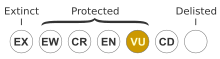

Asterolasia phebalioides, commonly known as downy starbush,[2] is a species of shrub in the family Rutaceae and is endemic to south-eastern continental Australia. It has densely crowded heart-shaped to wedge-shaped leaves densely covered with star-shaped hairs, and single yellow flowers borne on the ends of branchlets with star-shaped hairs on the back of the petals.
Asterolasia phebalioides is a shrub that typically grows to a height of 50 cm (20 in) and is more or less covered with woolly, grey hairs and silvery to rust-coloured star-shaped hairs. The leaves are densely crowded on short branches, wedge-shaped to heart-shaped, 5–7 mm (0.20–0.28 in) long and densely covered with star-shaped hairs. The flowers are borne singly on the ends of branchlets with five scaly bracts at the base. The petals are yellow, broadly elliptical, 6–10 mm (0.24–0.39 in) long and covered with star-shaped hairs on the back. Flowering occurs from September to December.[2][3][4][5]
Taxonomy
Asterolasia phebalioides was first formally described in 1854 by Ferdinand von Mueller and the description was published in Transactions of the Philosophical Society of Victoria.[6][7]