Bauma railway station
From Wikipedia, the free encyclopedia
Bauma, Canton of Zurich
Switzerland
Bauma | |||||||||||||||||||||
|---|---|---|---|---|---|---|---|---|---|---|---|---|---|---|---|---|---|---|---|---|---|
 Bauma station, with a visiting preserved railcar, 2010 | |||||||||||||||||||||
| General information | |||||||||||||||||||||
| Location | Bahnhofstrasse Bauma, Canton of Zurich Switzerland | ||||||||||||||||||||
| Coordinates | 47°22′08″N 8°52′42″E / 47.368837°N 8.878233°E | ||||||||||||||||||||
| Elevation | 639 m (2,096 ft) | ||||||||||||||||||||
| Owned by | Swiss Federal Railways | ||||||||||||||||||||
| Lines | |||||||||||||||||||||
| Distance |
| ||||||||||||||||||||
| Train operators | |||||||||||||||||||||
| Connections | |||||||||||||||||||||
| Other information | |||||||||||||||||||||
| Fare zone | 172 (ZVV)[4] | ||||||||||||||||||||
| Passengers | |||||||||||||||||||||
| 2018 | 670 per weekday[5] | ||||||||||||||||||||
| Services | |||||||||||||||||||||
| |||||||||||||||||||||
| |||||||||||||||||||||


Bauma railway station (German: Bahnhof Bauma) is a railway station in the Swiss canton of Zurich and municipality of Bauma (Töss Valley).[6] The station is situated at the junction of the Töss Valley railway line, which is still in full use, and the Uerikon to Bauma railway (UeBB), which is partly closed and partly used as a heritage railway.[1] It lies within fare zone 172 of the Zürcher Verkehrsverbund (ZVV).[4]
S-Bahn
Bauma station is regularly served by regional S-Bahn trains. It is an intermediate station on the Zurich S-Bahn route S26, which operates between Rüti ZH and Winterthur.[7]
- Zurich S-Bahn S26: half-hourly service between Winterthur and Rüti ZH.
Heritage railway
Bauma station is also the terminus of the heritage railway services of the Dampfbahn-Verein Zürcher Oberland (DVZO), which operates to Hinwil, over the former UeBB, with trains normally hauled by steam locomotives. The UeBB line beyond Hinwil, towards Uerikon, was closed in 1948 and little now remains.[1][8]
Bus
It is also served by buses of the Verkehrsbetriebe Zürichsee und Oberland (VZO) and Swiss PostBus service (PostAuto).[2][3][9][7]
Gallery
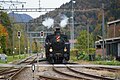 SMB Ec 4/5 11 at Bauma
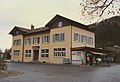 station building in 1994
 locomotive depot (2014)
 aerial view 1934
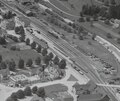 aerial view 1948
 aerial view 1953


