Beattystown Historic District
From Wikipedia, the free encyclopedia
Beattystown, New Jersey
Beattystown Historic District | |
 | |
  Beattystown Historic District  Beattystown Historic District  Beattystown Historic District | |
| Location | Junction of New Jersey Route 57 and Kings Highway Beattystown, New Jersey |
|---|---|
| Coordinates | 40°48′49″N 74°50′34″W / 40.81361°N 74.84278°W |
| Area | 35 acres (14 ha) |
| Architectural style | Greek Revival, Stick/eastlake |
| NRHP reference No. | 90001449[1] |
| NJRHP No. | 2770[2] |
| Significant dates | |
| Added to NRHP | September 28, 1990 |
| Designated NJRHP | August 10, 1990 |
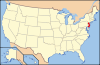
The Beattystown Historic District is a 35-acre (14 ha) historic district in the village of Beattystown in Mansfield Township of Warren County, New Jersey, United States. The district was added to the National Register of Historic Places on September 28, 1990 for its significance in architecture, commerce, industry, and settlement pattern from 1762 to 1929. It includes 32 contributing buildings.[3]
Beattystown was founded around 1762 with the establishment of the George Beatty Mill along the Musconetcong River. The former Presbyterian Church, now Skylands Unitarian Universalist Fellowship, was built around 1882 and features Eastern Stick style. The Iron Ore Scale House was built in the 1880s for the Shield Iron Ore mines. The brick Johnson General Store was built around 1830. The four-story stone S.B. Fisher Grist Mill, also known as the Beattystown Mill, was built around 1800–1810.[3]