Blind Department Building and Dow Hall, State School for the Blind
From Wikipedia, the free encyclopedia
Blind Department Building and Dow Hall, State School for the Blind | |
Formerly listed on the U.S. National Register of Historic Places | |
 The Blind Department Building – originally the home of Alexander Faribault – built in 1856 | |
   | |
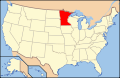
| Location | Faribault, Minnesota |
|---|---|
| Coordinates | 44°17′12.02″N 93°15′36.21″W / 44.2866722°N 93.2600583°W |
| Built | 1874 |
| Architect | Waite & Kingsley; Monroe & Shiere |
| Architectural style | Classical Revival, French Second Empire |
| NRHP reference No. | 90001092[1] |
| Significant dates | |
| Added to NRHP | July 25, 1990 |
| Removed from NRHP | November 7, 2016 |
Blind Department Building and Dow Hall, State School for the Blind were two buildings that were part of the Minnesota State Academy for the Blind, a public school administered by the state in Faribault, Minnesota, United States. The two structures, Dow Hall and the Blind Department Building, were significant components of a system of state-administered special education for the physically and mentally disabled segments of the population.[2] Both buildings have been demolished, and their listing was removed from the National Register of Historic Places in 2016.[3]