Cicurina baronia
From Wikipedia, the free encyclopedia
| Cicurina baronia | |
|---|---|
Scientific classification  | |
| Domain: | Eukaryota |
| Kingdom: | Animalia |
| Phylum: | Arthropoda |
| Subphylum: | Chelicerata |
| Class: | Arachnida |
| Order: | Araneae |
| Infraorder: | Araneomorphae |
| Family: | Cicurinidae |
| Genus: | Cicurina |
| Species: | C. baronia |
| Binomial name | |
| Cicurina baronia Gertsch, 1992 | |

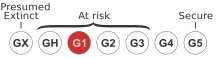
Cicurina baronia is a rare species of spider in the family Cicurinidae known by the common name Robber Baron cave meshweaver. The species is endemic to the San Antonio, Texas area of the United States. It is one of nine species deemed the Bexar County Invertebrates, as all nine are found in similar cave environments in the central region of Texas.[2] These species range in size from one millimetre to one centimetre. They are also eyeless or essentially eyeless and pale in coloration.
The Bexar County Invertebrates are troglobites, species which spend their entire lives in subterranean environments, inhabiting karst limestone caves and mesocaverns. Currently, these species have only been found in the karst areas in Bexar county, which were deemed critical habitats to the species in a 2012 ruling.[3] C. baronia specifically has only been positively identified in the Robber Baron Cave and one other cave in Alamo heights (Bexar County Distribution). Nutrient sources in this environment include leaf litter, animal droppings, and animal carcasses, making the cave ecosystem very dependent on the habitat on the surface. Troglobites also require stable temperatures and high humidity, with the cave temperature typically being close to the annual surface temperature but with much less variation. Relative humidity in the caves is normally near 100%, and relative temperature is 71°F (around 22°C).[citation needed]