Glomel
Commune in Brittany, France
From Wikipedia, the free encyclopedia
Glomel (French pronunciation: [ɡlɔmɛl]; Breton: Groñvel) is a commune in the Côtes-d'Armor department in Brittany in northwestern France. The town is also home to the Guerphelès andalusite mine, the largest andalusite mining site in Europe.

Glomel
Groñvel | |
|---|---|
The church and main road of Glomel | |
 Location of Glomel | |
  Glomel  Glomel | |
| Coordinates: 48°13′25″N 3°23′42″W | |
| Country | France |
| Region | Brittany |
| Department | Côtes-d'Armor |
| Arrondissement | Guingamp |
| Canton | Rostrenen |
| Intercommunality | Kreiz-Breizh |
| Government | |
| • Mayor (2023–2026) | Bernard Trubuilt[1] |
Area 1 | 79.93 km2 (30.86 sq mi) |
| Population (2023)[2] | 1,440 |
| • Density | 18.0/km2 (46.7/sq mi) |
| Time zone | UTC+01:00 (CET) |
| • Summer (DST) | UTC+02:00 (CEST) |
| INSEE/Postal code | 22061 /22110 |
| Elevation | 134–307 m (440–1,007 ft) |
| 1 French Land Register data, which excludes lakes, ponds, glaciers > 1 km2 (0.386 sq mi or 247 acres) and river estuaries. | |
Population
Historical population | |||||||||||||||||||||||||||||||||||||||||||||||||||||||||||||||||||||||||||||||||||||||||||||||||||||||
|
| ||||||||||||||||||||||||||||||||||||||||||||||||||||||||||||||||||||||||||||||||||||||||||||||||||||||
 | |||||||||||||||||||||||||||||||||||||||||||||||||||||||||||||||||||||||||||||||||||||||||||||||||||||||
| Source: EHESS[3] and INSEE (1968–2020)[4] | |||||||||||||||||||||||||||||||||||||||||||||||||||||||||||||||||||||||||||||||||||||||||||||||||||||||
Inhabitants of Glomel are called glomelois in French.
Geography
Geology
The geology of Glomel is renowned for its exceptionally rich andalusite deposit, known for having the highest andalusite content in the world. This unique mineral, prized for its high-temperature resistance, has been extracted at the Guerphalès mine since 1970. The site, operated by Imerys, plays a crucial role in the global andalusite market, producing 65,000 tonnes annually, which accounts for 20-25% of global output.[5][6]
Map

Breton language
In 2008, 25.47% of primary school children attended bilingual schools.[7]
Gallery
Churches
 The parish church
 The church Saint Corentin in Trégornan village
 Chapel Saint Conogan
 Chapel Sainte Christine
 Ossuary in Trégornan village


Civil heritage
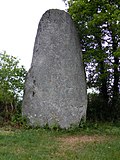 Standing stone in village centre
 Coatcouraval castle
 The village hall
 The big trench (canal de Nantes à Brest)


