Harvard Extension School
Extension school of Harvard University
From Wikipedia, the free encyclopedia
Harvard Extension School (HES) is the continuing education school of Harvard University, a private Ivy League research university in Cambridge, Massachusetts, United States. Established in 1910, it is one of the oldest liberal arts and continuing education schools in the United States. Part of the Harvard Faculty of Arts and Sciences, HES offers both part-time, open-enrollment courses, as well as degrees primarily for nontraditional students. Academic certificates and a post-baccalaureate pre-medical certificate are also offered.

| |
| Motto | Veritas |
|---|---|
Motto in English | "Truth" |
| Type | Private extension school |
| Established | 1910[1] |
Parent institution | Harvard University |
| Dean | Nancy Coleman[2] |
| Undergraduates | 795[3] |
| Postgraduates | 3,100[3] |
| Location | , US |
| Campus | Urban |
| Website | extension |
 | |
Established by then-university president A. Lawrence Lowell,[4][5] HES was commissioned to extend[6] education, equivalent in academic rigor to traditional Harvard programs, to non-traditional and part-time students, as well as lifelong learners.[7][8] Under the supervision of the Harvard Faculty of Arts and Sciences,[9] HES offers over 900 courses spanning various liberal arts and professional disciplines, offered in on-campus, online, and hybrid formats. These courses are generally available to both its matriculated students and to the general public.
Degrees earned through the Harvard Extension School are formally conferred by Harvard University under the authority of the Faculty of Arts and Sciences. They include the Bachelor of Liberal Arts (ALB) and Master of Liberal Arts (ALM). Harvard Extension School degree recipients are Harvard alumni.
History
The school was founded in 1910 by Harvard president A. Lawrence Lowell who built on his work with the Lowell Institute. He wanted to tether his work to a "proper university" and serve the "many people in our community, who have not been to college, but who have the desire and the aptitude to profit by so much of a college education as, amid the work of earning their living, they are able to obtain."[10] It was designed to serve the educational interests and needs of the Greater Boston community,[11] particularly those "who had the ability and desire to attend college, but also had other obligations that kept them from traditional schools".[7]
.jpg)
James Hardy Ropes, Extension's first dean, said that "our aim will be to give the young people of Boston who have heretofore been prevented from securing a college education the same instruction they would receive were they undergraduates at Harvard [College]".[12] He added that "many persons who wish that they had a college education will be able to get gradually an effective substitute for it--in some respects more effective than the ordinary college education because of the greater eagerness and maturity of such students" .
In the early years, a commission composed of several Boston area schools ran the courses, though it was largely a Harvard-run program.[13][14][15] Early faculty included Charles Townsend Copeland, William Yandell Elliott, William L. Langer, Oscar Handlin, Perry Miller, John Kenneth Galbraith, and Frank M. Carpenter.[16] During the 1920s, affiliates traveled around New England to teach courses offsite.[17] While they were primarily aimed at teachers, courses were offered whenever 40 or more students expressed an interest.[17] Professors traveled on a weekly basis to places as far away as Yonkers, New York,[17] some 200 miles away.
Lowell's bequest limited tuition to no more than "two bushels of wheat". During the Great Depression, this amounted to roughly $5 per semester course.[18] Several years after his retirement, president Lowell wrote that the Extension courses "have given a service to the public ... which seems to me of the utmost importance."[19] In his will, John Lowell asked his successors to develop courses "more erudite and particular corresponding to the age".[13] By the 50th anniversary of the Commission of Extension in 1960, more than 1,400 courses had taught to over 85,000.[20]
In the 2010s, more than 100 years after its founding, the Extension School's classes were described as "surprisingly affordable"[21] and the school itself was said to be a "thriving institution."[22]
The Extension School currently offers two degrees (and has offered these degrees since 1979): the Bachelor of Liberal Arts in Extension Studies (ALB) and the Master of Liberal Arts in Extension Studies (ALM).[8] From 1911 to 1933, the school offered an Associate in Arts, and from 1933 to 1960, it offered an Adjunct in Arts.[8] Both were considered the equivalent of a bachelor's degree.[8] From 1971 to 2014, the school offered an Associate of Arts in Extension Studies (AA), the equivalent of a two-year degree.[8]
Leadership
Deans
The dean of the extension school is also the Dean of the Harvard Division of Continuing Education, who works under and reports directly to the Dean of Harvard Faculty of Arts and Sciences. There have been seven deans in the school's history[23] and three are alumni of Harvard College:
- James Hardy Ropes, Chairman of Commission on Extension Courses, Dean of University Extension, 1910–1922
- Arthur F. Whittem, Chairman of Commission on Extension Courses, Director of University Extension, 1922–1946
- George W. Adams, Chairman of Commission on Extension Courses, Director of University Extension, 1946–1949
- Reginald H. Phelps, Chairman of Commission on Extension Courses, Director of University Extension, 1949–1975
- Michael Shinagel, Director of Continuing Education and University Extension, 1975–1977, and Dean of Continuing Education and University Extension, 1977–2013
- Huntington D. Lambert, Dean of Continuing Education and University Extension, 2013–2019[a]
- Nancy Coleman, Dean of the Division of Continuing Education, 2020–present[25]
Accreditation and partnerships
Harvard University is accredited by the New England Commission of Higher Education.[26]
Harvard Business School Online's Credential of Readiness (CORe) program can be counted for Extension School undergraduate academic credit on a pass fail basis.[27][28]
The graduate program in Museum Studies has a partnership with the Smithsonian Institution.[29] The partnered courses include two active learning weekends in Washington, D.C.[29] Harvard Extension School has collaborated with Massachusetts Institute of Technology Micromasters program[30] for Management, Sustainability, and Development Practice Masters degree program.[30][31]
Academics
| Year | Courses offered |
|---|---|
| 1910[1] | 16 |
| 1915–15[1] | 24 |
| 1918–19[1] | 33 |
| 1921–22[1] | 22 |
| 1922–23[32] | 27 |
| 1923–24[32] | 29 |
| 1951–52[1] | 30 |
| 1953–54[13] | 32 |
| 1956–57[1] | 37 |
| 1959–60[1] | 56 |
| 1962–63[1] | 70 |
| 1971–72[1] | 144 |
| 1974–75[1] | 135 |
| 1975–76[1] | ~200 |
| 1979–80[1] | 316 |
| 1980–81[1] | 335 |
| 1981–82[1] | 398 |
| 1983–84[1] | 480 |
| 1984–85[1] | 527 |
| 1986–87[1] | 575 |
| 1999–2000[1] | 584 |
| 2016[33] | ~800 |
| 2018[26] | [b] |
| 2019[34] | >900 |
Part of the Harvard Faculty of Arts and Sciences, Harvard Extension School offers more than 900 on-campus and online courses, most of which have open enrollment.[35] The number of courses offered has continuously grown over the school's history.
Students may enroll full or part-time, and classes may be taken on campus, via distance-learning, or both. In order to earn an academic degree, students must complete a minimum number of on-campus-only credits at Harvard.[c] Since the school's inception, it has only graduated less than two out of every thousand (0.2%) of its students.[36] As of 2009, nearly 13,000[37] have graduated with degrees.[d][37]
In August 2018, Grossman Library, located in Sever Hall, merged with the larger Harvard College Library system,[39] giving non-degree students access to the Harvard Library, including electronic resources and select computer facilities.[40] Those registered for a course at the Extension School may also access writing tutorials at the Writing Center as well as assistance with math and related courses at the Math Question Center.[40][41][42] Career services and academic advising are offered through the school's Career and Academic Resource Center.[40][43]
Ropes, the school's first dean, said that "our aim will be to give the young people of Boston who have heretofore been prevented from securing a college education the same instruction they would receive were they undergraduates at Harvard."[12] The Harvard Undergraduate Council found in a 2020 study of Extension courses that 156 were identical or nearly identical to courses at Harvard College and 95 were equivalent or similar, while 344 were unique to the Extension School.[44][45] A New York Times guidebook stated that professors said some courses were "virtually identical."[46][47] As of the 2022-2023 academic year, courses for undergraduate credit at the Extension School were $1,980 and courses for graduate credit were $3,100.[48]
A number of on-campus Harvard courses are recorded and offered to Extension students online. For these courses, office hours and other student support are typically available through live or asynchronous software. The majority of instructors at the Extension School, 52%, are Harvard affiliates; 48% are faculty from peer schools and industry professionals.[33] Nobel laureate Roy J. Glauber has taught Extension courses.[46]
Special student
Extension degree candidates may also apply for "Special Student status" to enroll for up to two courses per semester in Harvard College, Harvard Graduate School of Arts and Sciences, or another Harvard Graduate School.[49]
Pre-medical program
A pre-medical program was established at the Extension School in 1980.[50] Students who successfully complete the program are eligible for sponsorship and a committee letter of support in their applications to medical school.[51][52]
Distance education
Harvard Extension was a pioneer in distance education.[26] Beginning on December 5, 1949, courses were offered on the Lowell Institute's new radio station. New Englanders could go to college six nights a week at 7:30 in their living rooms simply by tuning into courses on psychology, world history, and economics.[53] The first course on radio was by Peter A. Bertocci of Boston University.
The radio courses proved to be so successful that when the television station WGBH went on the air in October 1951 they began broadcasting an Extension class every weekday at 3:30 and 7:30.[54] The first course, offered by Robert G. Albion, was on European Imperialism.[55] In the late 1960s, three of the televised courses were offered in the Deer Island Prison.[56] Students who watched the courses on television could attend six "conferences" and take a mid-term and a final exam at Harvard in order to gain credit for the class.[55]
As of 2014[update], distance-learning courses at Harvard Extension School are offered in two formats: asynchronous video courses (lectures are recorded and uploaded within 24 hours of on-campus class meetings); and live web-conference courses (courses are streamed live, and typically allow for synchronous participation from students via a secondary online platform).
The first online courses were offered in 1997.[33] Between 2013 and 2016, the number of online classes grew from 200 to more than 450.[33]
Degree programs


| Year | Associate | Bachelor's | Master's | References |
|---|---|---|---|---|
| 1913–1933 | 120 | n/a | n/a | [1][α] |
| 1934–1936 | 24 | n/a | n/a | [1][α] |
| 1937–1952 | 78 | n/a | n/a | [1][α] |
| 1953 | 6 | n/a | n/a | [1][α] |
| 1954–1962 | 57 | n/a | n/a | [1][α] |
| 1963 | n/a | 14 | n/a | [1] |
| 1964 | n/a | 22 | n/a | [1] |
| 1966 | n/a | 35 | n/a | [1] |
| 1967 | n/a | 31 | n/a | [1] |
| 1968 | n/a | 48 | n/a | [1] |
| 1971 | n/a | 38 | n/a | [1] |
| 1972 | 44 | 54 | n/a | [1] |
| 1975 | 37 | 42 | n/a | [1] |
| 1976 | <82 | <82 | n/a | [1][β] |
| 1980 | n/a | ? | 1 | [1] |
| 1981 | n/a | ? | 3 | [1] |
| 1982 | n/a | 91 | 15 | [1] |
| 1985 | n/a | <158 | <158 | [1][β] |
| 1987 | n/a | <143 | <143 | [1][β] |
| 2000 | <226 | <226 | <226 | [1][β] |
| 2008 | 7 | 111 | 91 | [1] |
| 2013 | <645 | <645 | <645 | [34][β] |
| 2014 | 5 | 152 | 539 | [57] |
| 2016 | 8 | 148 | 627 | [58] |
| 2017 | 7 | 144 | 706 | [59] |
| 2018 | 4 | 153 | 890 | [60] |
| 2019 | 3 | 159 | 962 | [61][34] |
| 2020 | 0 | 166 | 1,070 | [62] |
| 2022 | 0 | 192 | 1,287 | [63][β] |
To be eligible to apply to the Extension School's degree programs, students must "earn [their] way in" by passing the Test of Critical Reading and Writing Skills as well as completing two or three designated admission classes with a B or better.[33] In 2016, then-Dean Huntington D. Lambert said that 32% of those who want to pursue an undergraduate degree (ALB) earn the grades necessary for admission, making admissions "very selective."[33] If the admission requirements are met, acceptance is not guaranteed but very likely. About 85% of those admitted successfully earn their degree (ALB).[33]
ALB students may graduate cum laude, but magna and summa cum laude are not offered. Extension students may earn the Dean's List Academic Achievement Award upon graduation based on a high GPA (at least 3.5 for ALB, 3.8 for ALM).[64] Many courses are offered online, but a degree cannot be earned entirely online as students are required to take classes on campus before earning their degree.[33]
Students who wish to earn degrees must be formally admitted by the Admissions Committee.[65] Admitted degree candidates are granted full privileges to Harvard's libraries, facilities, and student resources, as well as access to Harvard's museums and academic workshops.[66] As of 2019–20, an undergraduate degree cost about $58,800, and a graduate degree cost about $28,400–$34,080.[35]
Of the over 30,000 students enrolled in the Extension School,[67][26] 850 are admitted degree candidates for the Bachelor of Liberal Arts in Extension Studies (ALB) and 3,063 are admitted degree candidates for the Master of Liberal Arts in Extension Studies (ALM).[3]
Bachelor of Liberal Arts (ALB)
The undergraduate curriculum requires expository writing, quantitative reasoning, foreign language, moral reasoning, upper-level coursework, and an area of concentration.[68] The expository writing class is known as a "gatekeeper course" as it will typically "determine whether [students] are prepared for the intensive and demanding curriculum."[65]
Once admitted as an ALB degree candidate, students must successfully complete 128 credits[68] (Harvard courses are typically 4 credits each) and maintain good academic standing to meet graduation requirements.[69] Upon admission into the ALB program, students may petition to transfer up to a maximum of 64 credits from other accredited post-secondary institutions, but at least 64 credits must be completed at Harvard.[69] Students select one of three "areas of concentration" which are humanities, science, and social sciences.[69]
ALB degree candidates are also required to complete a minimum of 16 on-campus-only credits at Harvard;[70] students must also complete a minimum of 12 writing-intensive credits and earn a minimum of 52 credits in courses that are taught by Harvard instructors.[68] In addition to a concentration, degree candidates have the option to pursue one of twenty "fields of study" (similar to majors).[71] In order to successfully complete a field of study, students must earn a B− or higher in 32 Harvard credits in one field, and maintain a B average in the field.[69] Students may also complement their degree with up to two minors.[71]
Undergraduate admissions
Undergraduate degree programs require pre-admission courses as well as a formal application process.[72] Students must also hold a "high school diploma or its equivalent [which] must have been earned at least five years prior to enrolling in any ALB degree-applicable courses."[73] Students applying for degree candidacy must complete three 4-credit liberal arts courses at Harvard with at least a B grade in each, and maintain a minimum 3.0 cumulative GPA. One of these three pre-admission courses must be EXPO E-25.[68] To enroll in this course, students must either pass a placement test, which measures critical reading and writing skills, or enroll in EXPO E-15 (a course that acts as a precursor to EXPO E-25).[72] Students failing to earn at least a B in a class can retake it once. Those who meet all these criteria are then eligible to apply for admission into the school's undergraduate degree programs.
Graduate programs (ALM)
The Master of Liberal Arts (ALM) encompasses over 20 fields of study across the liberal arts and professional disciplines. Subjects range from traditional humanities and social sciences (such as Anthropology, English, History, and Psychology) to specialized professional and STEM programs (including Biotechnology, Data Science, Cybersecurity, Management, and Sustainability).[74] All ALM candidates must complete 12 courses—48 credit hours—to earn their degree. Most fields of study require students to complete either an in-depth thesis or a capstone project, which is typically crafted under the direction of an instructor or faculty member holding a teaching appointment in the Harvard Faculty of Arts and Sciences.[75]
Graduate admissions
Application to a graduate degree program requires an accredited four-year bachelor's degree (or foreign equivalent), passing the Test of Critical Reading and Writing Skills, the completion of two or three designated pre-admission courses with grades of B or higher, and a cumulative grade-point average of 3.0. One of the pre-admission courses must be the "proseminar" course for the intended area of study, which is akin to a traditional research methods course.[72] Some disciplines have additional specified pre-admission coursework, while others have specific coursework that is required before submitting a master's thesis proposal (biology and psychology students must take a specific graduate statistics course). In addition, several programs require supplemental application materials; for instance, Creative Writing and Literature ALM candidates must submit original manuscripts.[76] Students who meet these criteria are then eligible to submit an application for admission into the graduate degree programs (ALM).
A student who fails to earn a grade of B after twice enrolling in the proseminar course—often considered a "gatekeeper" course—will be denied admission indefinitely.[77]
Degree naming convention
The formal titles of the Harvard University undergraduate and graduate degrees are Baccalaureus in Artibus Liberalibus (ALB) and Magister in Artibus Liberalibus (ALM). On a diploma, the degree is officially conferred by Harvard University as "Bachelor of Liberal Arts in Extension Studies" or "Master of Liberal Arts in Extension Studies." The specific area of focus (e.g., Management) is designated as the "Field of Study."
Over the years, there have been efforts by faculty and students to remove the phrase "in Extension Studies" from the school's degrees. In 2009 and 2010, a faculty committee proposed renaming the school and dropping the phrase, but the proposal was rejected due to concerns that the new degree titles would be too similar to those offered by Harvard College and the Graduate School of Arts and Sciences.[78] Since then, students have continued to advocate for degree names that reflect their specific fields of study, organizing rallies in 2016, 2022, and 2023.[79][80][81] Although former Dean Huntington D. Lambert publicly agreed with the students' concerns in 2019,[82] the official degree titles remain unchanged; however, students' official transcripts do reflect their specific areas of academic concentration or fields of study.
Privileges and demographics
Students who graduate with a degree from the Extension School become part of the Harvard Alumni Association. Extension students have dedicated study spaces, conferences rooms, and access to the dining hall in Lehman Hall.[83] Alpha Sigma Lambda, the national honor society for nontraditional students, has a Harvard chapter.[84] There is a student government body for the Harvard Extension School which participates in the Harvard Graduate Council.[85] Admitted degree candidates have access to many of the same student privileges of other Harvard alumni, such as access to athletic facilities, libraries, and museums.[86]
The Extension School primarily serves working professionals and adult learners. As of 2026, the average age of the student body is 32, with students representing all 50 U.S. states and over 110 countries.[87] The student body is generally divided between individuals taking single courses for professional enrichment and those formally pursuing a degree.[33][26]
Historically, the student body has included a wide range of educational backgrounds. In 2000, the school enrolled over 14,000 students; at that time, 75% of enrolled students already held a bachelor's degree and more than 1,700 were Harvard employees using the Tuition Assistance Program.[88][65] While the school occasionally allowed high-school-aged minors to enroll during the early 2000s,[89][90][23] it has since implemented strict age requirements to focus exclusively on adult learners. The Extension School now requires that a high school diploma or its equivalent is earned at least five years prior to enrolling in any courses applicable to its undergraduate degree.[91][92]
The Extension School enrolls thousands of international students each year.[93] While international degree candidates must meet the same on-campus residency requirements as domestic students, the Extension School itself does not issue F-1 student visas for its part-time fall and spring semesters. Instead, international students typically fulfill these residency requirements by obtaining short-term F-1 visas through Harvard Summer School to attend intensive on-campus sessions.[93][65]
Student life
Harvard Extension School degree students can work as faculty aides and research assistants for instructors at the university.[94][95] They can also run for elections in the Harvard Graduate Council[96][97] and participate in Harvard Innovation Labs activities.[94] The Harvard Extension Student Association has three student clubs[98] and five different societies:[99] the Psychological Student Society,[100] the Creative Writing & Literature Student Society, the Industrial Organizational Psychology Student Society,[101] the Global Development Practice Student Society, and the Veteran Student Society.
Notable people
Alumni
- Notable alumni include:


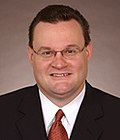 Bradley Jones Jr. (ALB), Minority Leader of the Massachusetts House of Representatives
 Clarence DeMar (AA), Olympic Winner
 Chanda Rubin (ALB), Professional tennis player


 Christopher Rufo (ALM), Activist
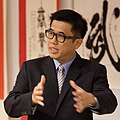 William Kwok (ALM), Martial Artist
.jpg)
.jpg)


.jpg)


_(21607419076).jpg)
.jpg)


.jpg)


Faculty
- Notable present and past Harvard Extension faculty include:


![A. Lawrence Lowell,[page needed] 22nd President of Harvard University](//upload.wikimedia.org/wikipedia/commons/thumb/b/b0/Abott_Lawrence_Lowell_by_John_Singer_Sargent_1923.jpeg/120px-Abott_Lawrence_Lowell_by_John_Singer_Sargent_1923.jpeg)
![John Kenneth Galbraith[page needed]](//upload.wikimedia.org/wikipedia/commons/thumb/6/64/John_Kenneth_Galbraith_1982.jpg/120px-John_Kenneth_Galbraith_1982.jpg)
![William L. Langer[page needed]](//upload.wikimedia.org/wikipedia/commons/thumb/7/7b/William_L_Langer_1946.jpg/120px-William_L_Langer_1946.jpg)
![Josiah Royce[page needed]](//upload.wikimedia.org/wikipedia/commons/thumb/a/af/Josiah_Royce.jpeg/120px-Josiah_Royce.jpeg)
![William Hocking[page needed]](//upload.wikimedia.org/wikipedia/commons/thumb/5/5f/William_Ernest_Hocking_%281873%E2%80%931966%29.png/120px-William_Ernest_Hocking_%281873%E2%80%931966%29.png)


![A. Lawrence Lowell,[page needed] 22nd President of Harvard University](#/media/File:Abott_Lawrence_Lowell_by_John_Singer_Sargent_1923.jpeg)
![John Kenneth Galbraith[page needed]](#/media/File:John_Kenneth_Galbraith_1982.jpg)
![William L. Langer[page needed]](#/media/File:William_L_Langer_1946.jpg)
![Josiah Royce[page needed]](#/media/File:Josiah_Royce.jpeg)
![William Hocking[page needed]](#/media/File:William_Ernest_Hocking_(1873–1966).png)


Notes
- Approximately 600 of the courses were offered online.
- n.b. These requirements vary for each degree, from 4 classes in residency for the ALB or the ALM/Biology, two semesters residency requirement for the general ALM, and up to 50% residency requirement for the ALM/Management. It is therefore not possible to receive an academic degree solely through distance learning.
- The degree graduates at Harvard Extension School are both recognized and considered to be alumni of the Harvard Extension Alumni Association (HEAA) and Harvard Alumni Association (HAA) The degree holders have their name recorded in HAA list and directory. The degrees ALB and ALM are directly issued by Harvard Faculty of Arts and Sciences. The Harvard Extension School is one among 13 schools that make Harvard University.[38]
- MajGen Michael F. Fahey earned ALM in Management and was an enrolled student from 2008 to 2012.
- Attended and earned a Professional Graduate Certificate from Harvard Extension School.
- Attended, did not graduate.
- Timothy Colton teaches "GOVT" at Harvard Extension School for both undergraduate credit and graduate credit.
- Michael Sandel teaches "GOVT E-1035" and "GOVT E-1045" at Harvard Extension School for both undergraduate credit and graduate credit.
- Harry Lewis teaches "CSCI E-121" and "CSCI E-20" at Harvard Extension School for both undergraduate credit and graduate credit.