John McComb Jr.
American architect (1763–1853)
From Wikipedia, the free encyclopedia
John McComb Jr. (October 17, 1763 – May 25, 1853) was an American architect who designed many landmarks in the 18th and 19th centuries. Between 1790 and 1825, McComb was New York City's leading architect.[1]
John McComb Jr. | |
|---|---|
| Born | October 17, 1763. New York City, U.S. |
| Died | May 25, 1853 (aged 89) New York City, U.S. |
Resting place | Green-Wood Cemetery |
Early life and education
McComb Jr. was born on October 17, 1763, in New York City and was of Scottish ancestry.[2] In 1783, McComb began working with his father, John McComb Sr., a well known architect and surveyor. In 1790, he began working independently[3] and John Jay spoke highly of his work to Alexander Hamilton.[4] McComb would later design Hamilton's home, the Grange. In general, McComb worked in the Federal style.
McComb died in 1853, and is interred at Green-Wood Cemetery in Brooklyn, New York.
Work
- Old Cape Henry Light (1792), first lighthouse totally authorized by the federal government.
- Montauk Point Lighthouse (1796)
- Station Eatons Neck Lighthouse (1798)
- Gracie Mansion (1799)[5]
- St. Mark's Church in-the-Bowery (1799)
- Hamilton Grange (1802)[5]
- New York City Hall (1803)[6]
- St. John's Chapel (New York City) (1803, demolished 1918)
- Old Queens building at Rutgers University (1808)
- Castle Clinton (1808)
- Washington Hall (1809)
- Alexander Hall, Princeton Theological Seminary (1815)
Gallery
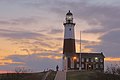 Montauk Point Lighthouse (1796)
 New York City Hall (1803)
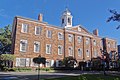 Old Queens at Rutgers University (1808)
 Alexander Hall, Princeton Theological Seminary (1815)


.jpg)