Kadayif (pastry)
Middle Eastern dessert
From Wikipedia, the free encyclopedia
Kadayif (Arabic: قطائف) is a sweet spun Middle Eastern pastry popular in the Balkans and Levant, used for various Middle Eastern desserts.

Kadayif strings in a bakery | |
| Alternative names | Kadayıf Kadaifi Kataifi Cataife |
|---|---|
| Type | Dessert |
| Place of origin | Middle East |
| Associated cuisine | Levantine, Balkanic, Arabic, Turkish, Greek, Armenian |
| Serving temperature | Warm |
| Main ingredients |
|
| Variations | Multiple |
Preparation
Kadayif is made from fine dough threads ("string kadayif") with a filling of milled almonds or walnuts and sugar syrup. This filling is seasoned with vanilla sugar and then wrapped in the dough threads. After baking and cooling, it is soaked in lemon sugar syrup.[1]
Etymology and history
Kadayif comes from the plural of the Arabic word “qatifah” (Arabic: قطيفة), which means velvet. The same ingredient is called “kunafa” (Arabic: كنافة) in Arabic, which refers to another dessert similar to kadayıf but stuffed with cheese.[2] The name first appeared in an Ottoman translation of the Arabic cookbook Kitab al-Tabikh translated by Muhammed bin Mahmud Şirvani, a 15th-century Ottoman physician.[2] According to oral tradition in Diyarbakır, the first kadayif vendor in the city was an Armenian shop owner named Agop.[3]
A version filled with walnuts or pistachios flavored with cinnamon was traditionally served by the Sephardic Jewish community of Jerusalem during Rosh Hashanah and Purim.[4]
Varieties of kadayif and its usage
There are many recipes and desserts using Kadayif with some of them being documented in the first Ottoman printed cookbook, Melceü't-Tabbâhîn.[5]
- Kadayif Pudding[6]
- Knafeh[7]
- Erzurum Dolma[8]
- Dubai chocolate[9]
- Burma Kadayif[10]
- Tash Kadayif[11]
- Sheki halva
- Othmalliyya[12][13]
See also
Gallery
 Kunefe
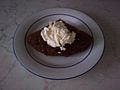 Ekmek Kadayif
 Burma Kadayif
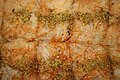 Tel Kadayif
 Yassi Kadayif
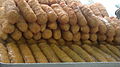 Erzurum Dolma
 Kadayif Pudding


.jpg)
