Kapurthala State
Princely state of India
From Wikipedia, the free encyclopedia
Kapurthala State was a kingdom and later princely state of the Punjab Province of British India. Ruled by Ahluwalia Sikh rulers, spread across 510 square miles (1,300 km2). According to the 1901 census the state had a population of 314,341 and contained two towns and 167 villages.[1] In 1930, Kapurthala became part of the Punjab States Agency and acceded to the Union of India in 1947.

Princely State under the British Raj (1857–1947)
Kapurthala State | |||||||||
|---|---|---|---|---|---|---|---|---|---|
| 1846–1947 | |||||||||
Flag
 Coat of arms
| |||||||||
_(cropped).jpg) Detail of Kapurthala State, from a map of Punjab, Delhi, and the Punjab States of British India, published in the 'Imperial Gazetteer of India' (Vol. XXVI, Atlas; 1931 revised edition; plate no. 34) | |||||||||
| Status | Princely State under the East India Company (1846–1857) Princely State under the British Raj (1857–1947) | ||||||||
| Historical era | New Imperialism | ||||||||
• Established | 1846 | ||||||||
• Part of the Punjab States Agency | 1930 | ||||||||
• Accession to the Indian Union | 1947 | ||||||||
| Area | |||||||||
| 1901 | 1,320 km2 (510 sq mi) | ||||||||
| Population | |||||||||
• 1901 | 314,341 | ||||||||
| |||||||||
| Today part of | Punjab, India | ||||||||


In colonial India, Kapurthala State was known for its communal harmony, with its Sikh ruler Jagatjit Singh building the Moorish Mosque for his Muslim subjects.[2] At the time of the Indian independence movement, the ruler of the Kapurthala State opposed the partition of India and advocated for a united, secular country.[3]
History
Origin
After the Muslim conquest of Punjab, his descendants migrated to the Jaisalmer area, where they came to be known as Kalal tribe. After Alauddin Khalji's conquest of Jaisalmer, some of the former ruling Kalchuri Kalal tribe people migrated to Tarn Taran district. In the 17th century, they joined Guru Hargobind's army. Ganda Singh of this family raided Lahore, whose governor Dilawar Khan persuaded him to join the Lahore army, and assigned him the fief of Ahlu and some other villages. Ganda Singh Kalal's son Sadhu (or Sadho) Singh Kalal lived in Ahlu, because of which the family came to be known as Ahluwalia. The descendants of Sadhu Singh Kalal through his son Gopal Singh Kalal (who was the grandfather of Jassa Singh Kalal) established the royal family of Kapurthala.[4] The British administrator Lepel Griffin (1873) dismissed this account as spurious.[4] The Sikh author Gian Singh, in his Twarikh Raj Khalsa (1894), wrote that the Ahluwalia family adopted the Kalal caste identity much before Sadhu Singh.[5]
The ruling dynasty of Kapurthala originated in the Ahluwalia misl. The Ahluwalia misl rose to prominence under Jassa Singh Ahluwalia,[6][7] who was the first person to use the name "Ahluwalia". Originally known as Jassa Singh Kalal, he styled himself as Ahluwalia after his ancestral village of Ahlu and belonged to the Kalal community.[8] He is regarded as the founder of the Kapurthala State.[9]
Establishment
In 1774, Jassa Singh Kalal conquered Kapurthala from Rai Ibrahim Bhatti, however the town had a different unrecorded name.[10][11] In December 1779, Jassa Singh embarked on a decisive campaign to assert his authority over Kapurthala. This strategic region, nestled along the left bank of the River Beas, had been under the control of Rae Ibrahim Bhatti. Rae Ibrahim's failure to pay the annual tribute of one lakh rupees, which had been overdue for some time, sparked Jassa Singh's action. Furthermore, Ibrahim's construction of 13 forts around the town, including the strategically located Rae-ka-kot near Afghan colonies, raised concerns about his growing power.[12]
Jassa Singh had previously demonstrated his military prowess by capturing Rae-ka-kot in 1770 with the help of Murar Singh and Shaikh Karimulilah. He then appointed Chait Singh as the thanadar of the region. However, tensions escalated in 1777 when Jassa Singh's son-in-law, Mohar Singh, was killed by a gunshot from one of the forts near Kapurthala. Despite Ibrahim's apologies and claims of innocence, Jassa Singh demanded justice and eventually decided to take over Kapurthala.[12]
Upon arriving at Kapurthala, Jassa Singh's forces clashed with Rae Ibrahim's, and the Bhatti chief retreated to the main fort. Jassa Singh set up camp at Shaikhpur village, while his cousin, Kanwar Bhag Singh, successfully captured several surrounding villages. These villages included: Andresa, Dialpur, Bholath, Bhoian, Bohal, Brahmwal, Chakoke, Dainwind, Dala, Dhaliwal, Dhilwan, Hamira, Karael, Khakhrain, Kularan, Lakhanki, Lohian, Mullanwal, Nadali, Parveznagar, Ramidi, Sidhwan, and Wadalli. Rae Ibrahim soon realized the futility of resistance and sued for peace. He sent a horse as a gift and dispatched his officials, Diwan Lahori Mal and Bora Mal, to negotiate terms.[12]
Jassa Singh agreed to let Rae Ibrahim leave safely with his family and belongings. He also provided him with a place to live and a fixed allowance, demonstrating his magnanimity. In the end, Jassa Singh Ahluwalia would rename the city Kapurthala after his predecessor Nawab Kapur Singh, who was an influential and respected Sikh leader at the time as well as a mentor to Jassa Singh Ahluwlia,[13] Kapurthala became the headquarters of Kanwar Bhag Singh and it would become the capital of the Ahluwalia misl. Jassa Singh continued to reside at Fatehabad, solidifying his leadership and the Ahluwalia misl's dominance in the region.[12]
Subjugation
_of_Punjab_Province,_British_India,_published_in_'The_Panjab,_North-West_Frontier_Province_and_Kashmir'_(1916).jpg)
Even after other misls lost their territories to Ranjit Singh's Sikh Empire, the emperor permitted the descendants of Jassa Singh to retain their estates. After the British took over the Sikh territories in 1846, Jassa Singh's descendants became the ruling family of the Kapurthala State.[14]
Demographics
| Religious group |
1881[15][16][17] | 1891[18] | 1901[19] | 1911[20][21] | 1921[22] | 1931[23] | 1941[24] | |||||||
|---|---|---|---|---|---|---|---|---|---|---|---|---|---|---|
| Pop. | % | Pop. | % | Pop. | % | Pop. | % | Pop. | % | Pop. | % | Pop. | % | |
Islam  |
142,974 | 56.6% | 170,557 | 56.91% | 178,326 | 56.73% | 152,117 | 56.73% | 160,457 | 56.44% | 179,251 | 56.59% | 213,754 | 56.49% |
Hinduism  [a] [a] |
82,900 | 32.82% | 89,463 | 29.85% | 93,652 | 29.79% | 61,426 | 22.91% | 58,412 | 20.55% | 64,319 | 20.31% | 61,546 | 16.27% |
Sikhism  |
26,493 | 10.49% | 39,493 | 13.18% | 42,101 | 13.39% | 54,275 | 20.24% | 64,074 | 22.54% | 72,177 | 22.79% | 88,350 | 23.35% |
Jainism  |
214 | 0.08% | 169 | 0.06% | 226 | 0.07% | 205 | 0.08% | 228 | 0.08% | 27 | 0.01% | 380 | 0.1% |
Christianity  |
35 | 0.01% | 8 | 0% | 39 | 0.01% | 107 | 0.04% | 1,100 | 0.39% | 983 | 0.31% | 1,667 | 0.44% |
Buddhism .svg) |
1 | 0% | 0 | 0% | 3 | 0% | 0 | 0% | 0 | 0% | 0 | 0% | 0 | 0% |
Zoroastrianism  |
0 | 0% | 0 | 0% | 4 | 0% | 3 | 0% | 4 | 0% | 0 | 0% | 6 | 0% |
Judaism  |
N/a | N/a | 0 | 0% | 0 | 0% | 0 | 0% | 0 | 0% | 0 | 0% | 0 | 0% |
| Others | 0 | 0% | 0 | 0% | 0 | 0% | 0 | 0% | 0 | 0% | 0 | 0% | 12,677 | 3.35% |
| Total population | 252,617 | 100% | 299,690 | 100% | 314,351 | 100% | 268,133 | 100% | 284,275 | 100% | 316,757 | 100% | 378,380 | 100% |
| Note: British Punjab province era district borders are not an exact match in the present-day due to various bifurcations to district borders — which since created new districts — throughout the historic Punjab Province region during the post-independence era that have taken into account population increases. | ||||||||||||||
Royal dynasty
List of rulers
| No. | Name
(Birth–Death) |
Portrait | Reign | Ref. |
|---|---|---|---|---|
| Sardars | ||||
| 1 | Jassa Singh Ahluwalia (1718–1783) |
 |
1777 – 20 October 1783 | [25][26] |
| 2 | Bhag Singh Ahluwalia (1747–1801) |
 |
20 October 1783 – 10 July 1801 | [citation needed] |
| Rajas | ||||
| 3 | Fateh Singh Ahluwalia (1784–1837) |
 |
10 July 1801 – 20 October 1837 | [27][28][29] |
| 4 | Nihal Singh (1817–1852) |
 |
20 October 1837 – 13 September 1852 | [citation needed] |
| 5 | Randhir Singh (1831–1870) |
 |
13 September 1852 – 12 March 1861 | [26] |
| Raja-i Rajgan | ||||
| – | Randhir Singh (1831–1870) |
|
12 March 1861 – 2 April 1870 | [26] |
| 6 | Kharak Singh (1850–1877) |
 |
2 April 1870 – 3 September 1877 | [citation needed] |
| 7 | Jagatjit Singh (1872–1949) |
 |
3 September 1877 – 12 December 1911 | [26] |
| Maharajas | ||||
| – | Jagatjit Singh (1872–1949) |
|
12 December 1911 – 15 August 1947 | [26] |
| Titular | ||||
| – | Jagatjit Singh (1872–1949) |
|
15 August 1947 – 19 June 1949 | [26] |
| 8 | Paramjit Singh | _(cropped).jpg) |
[citation needed] | |
| 9 | Sukhjit Singh |  |
[citation needed] | |
Crown Princes
- Tikka Raja Shatrujit Singh[3]
Dewan / Ministers of Kapurthala State
- Dewan Banna Mal Gautam (Manager Of Oudh Estates of Maharaja Kapurthala)[citation needed]
- Dewan Mathra Dass (Private Secretary)[citation needed]
- Dewan Ramjas Dhir[citation needed]
- Dewan Acchru Mal Gautam (Revenue Minister) s/o Dewan Banna Mal[citation needed]
- Dewan Durga Dass Gautam[citation needed]
- Dewan Ambika Parshad Gautam (Accountant General)[citation needed]
- Dewan Mohabbat Rai[citation needed]
- Dewan Abdul Hamid (Prime Minister)[citation needed]
- Dewan Shiv Narayan Randev (Chief Secretary Of Kapurthala State)[citation needed]
- Sirdar Bhagat Ram Randev (Chief Judge)[citation needed]
- Sirdar Dwarka Dass Randev, Bar At Law S/O Dewan Shiv Narayan Randev (Assistant Manager Oudh and Last Chief Justice Of Kapurthala State)[citation needed]
- Dewan Hari Chand Chopra (Finance Minister)[citation needed]
- Dewan Saudagar Mal[citation needed]
- Dewan Badrinath[citation needed]
- Dewan Surendranath[citation needed]
- G.T Fisher (Chief Minister)[citation needed]
- Dewan Sureshwar Dass (Home Minister)[citation needed]
- Dewan Ajudhia Dass (Revenue Minister)[citation needed]
- Sirdar Suchet Singh[citation needed]
- Sirdar Kishan Singh[citation needed]
- Dewan Raj Kumar Chopra (Chief Justice)[citation needed]
- Dewan Jermany Dass[citation needed]
- Dewan Kuljass Rai[citation needed]
Orders of chivalry
The Royal House of Kapurthala awards three orders of chivalry; these knighthoods include:[citation needed]
- Nishan-i-Shahi, awarded in three classes (founded by Maharaja Jagatjit Singh Bahadur in 1898)[citation needed]
- Nishan-i-Iftikhar, awarded in three classes (founded by Maharaja Jagatjit Singh Bahadur in 1914)[citation needed]
- Nishan-i-Askari, awarded in three classes (founded by Maharaja Jagatjit Singh Bahadur in 1927)[citation needed]
The decoration of the Nishan-i-Iftikhar includes the coat of arms of Kapurthala State.[30]
Gallery
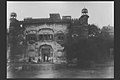 Qila Jallow Khana, Kapurthala State
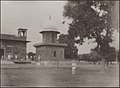 Old Baradari at Shalimar Garden, Kapurthala State
 Photograph of the State Gurdwara of Kapurthala State during a thanksgiving service
 Old court complex, Kapurthala State
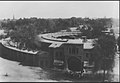 Photograph of Buggy Khana, Kapurthala State


See also
Notes
- 1931-1941: Including Ad-Dharmis
