| Name |
Image |
Year (CE) |
Period |
Neighborhood |
Notes |
| Amr ibn al-As Mosque | 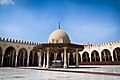 | 642 | Rashidun | Fustat
30°0′37″N 31°13′59″E | The oldest mosque in Africa; although the building has been rebuilt and modified many times after its foundation.[2][3] |
| Mosque of Ibn Tulun | 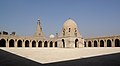 | 884 | Abbasid | Sayeda Zainab
30°01′44″N 31°14′58″E | The oldest mosque in the city surviving in its original form, and the largest mosque in Cairo in terms of land area.[4] |
| Al-Azhar Mosque | 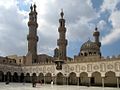 | 969 | Fatimid | El-Hussein
30°02′45″N 31°15′46″E | National mosque[5] |
| Jami al-Qarafa Mosque | | 976 | Fatimid | Al-Qarafa
| Founded by Al-Sayyida al-Mu'iziyya and her daughter, Sitt al-Malik[6] |
| Al-Hakim Mosque |  | 1013 | Fatimid | Al-Mu'izz Street
30°03′16″N 31°15′50″E | Named in honour of al-Ḥākim bi-Amr Allāh[7][8] |
| Lulua Mosque | 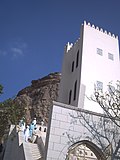 | c. 1015 | Fatimid | Muqattam Hills
30°01′11″N 31°16′05″E | Exact date of establishment is disputed;[9][10] extensively rebuilt in 1998. |
| Juyushi Mosque |  | 1085 | Fatimid | Muqattam Hills
30°01′19″N 31°16′07″E | Described as a mashhad[1]: 163–164 |
| Aqmar Mosque |  | c. 1126 | Fatimid | Al-Mu'izz Street
30°03′06″N 31°15′43″E | An important monument of Fatimid architecture and of historic Cairo due to the exceptional decoration of its exterior façade and the innovative design of its floor plan.[11] |
| Mashhad of Sayyida Ruqayya |  | 1133 | Fatimid | al-Khalifa
30°01′32″N 31°15′7″E | One of the few and most important Fatimid-era preserved mausoleums in Cairo[12] |
| Al-Hussein Mosque |  | 1154 | Fatimid | El-Hussein
30°2′52″N 31°15′47″E | One of the holiest Islamic sites in Egypt, with an eclectic mix of architectural styles.[13] |
| Al-Salih Tala'i Mosque |  | 1160 | Fatimid | Al-Darb al-Ahmar
30°02′32″N 31°15′28″E | Named in honour of Tala'i ibn Ruzzik, and is the last major Fatimid monument to have been built and survived.[1]: 124–126 [14] |
| Mosque of al-Zahir Baybars | 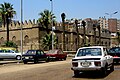 | 1269 | Mamluk | al-Husayniya
30°03′44″N 31°15′48″E | Named in honour of al-Zahir Baybars al-Bunduqdari[15] |
| Qalawun Mosque | 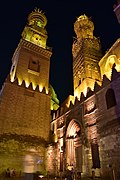 | 1285 | Mamluk | Al-Mu'izz Street
(Bayn al-Qasrayn)
30°02′58″N 31°15′39″E | An expanisive religious complex that includes a bimaristan (hospital), madrasa, mausoleum, and mosque, built by and named in honour of Sultan al-Mansur Qalawun[1]: 219–224 [16] |
| Madrasa of al-Nasir Muhammad |  | 1303 | Mamluk | Al-Mu'izz Street
(Bayn al-Qasrayn)
30°02′59″N 31°15′40″E | A madrasa and mausoleum named in honour of al-Nasir Muhammad ibn Qalawu[1]: 225–226 |
| Khanqah of Baybars (II) al-Jashankir |  | 1310 | Mamluk | al-Gamaliyya
30°03′6″N 31°15′50″E | It is the oldest khanqah, or convent, that has survived in modern Cairo; named in honour of Baybars II[17] |
| Al-Nasir Muhammad Mosque |  | 1318 | Mamluk | Cairo Citadel
30°01′45″N 31°15′39″E | Named in honour of Al-Nasr Muhammad[18][19] |
| Madrasa of Amir Sunqur Sa'di |  | 1321 | Mamluk | Al-Darb al-Ahmar
30°01′59″N 31°15′14″E | Established as a madrasa and mausoleum, later repurposed as a Mevlevi Sufi takiyya, and in the 20th century, as an Islamic museum[1]: 134–135 [20] |
| Mosque of Amir al-Maridani | 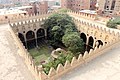 | 1339 | Mamluk | Al-Darb al-Ahmar
30°02′10″N 31°15′36″E | Built by Amir Altinbugha al-Maridani, with significant help from Sultan al-Nasir Muhammad[21] |
| Aqsunqur Mosque |  | 1347 | Mamluk | Al-Darb al-Ahmar
30°02′10″N 31°15′36″E | Built by Shams ad-Din Aqsunqur and named in his honour; the site contains the mausoleum of Aqsunqur and his sons[11] |
| Shaykhu Mosque and Khanqah | 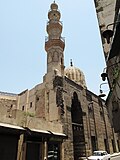 | 1349 | Mamluk | Al-Saleeba Street
30°01′50″N 31°15′11″E | A mosque and khanqah, completed in 1349 and 1355 respectively, founded by Sayf al-Din Shaykhu al-Nasiri, a Grand Emir.[16][22] |
| Mosque of Amir al-Sayf Sarghatmish |  | 1356 | Mamluk | Al-Saleeba Street
30°01′49″N 31°15′05″E | A madrasa, mosque, and mausoleum founded by Sayf al-Din Sarghatmish al-Nasiri.[16][23] |
| Mosque-Madrasa of Sultan Hasan |  | 1362 | Mamluk | Salah al-Din Square
30°01′57″N 31°15′25″E | Also known as the Mosque of Sultan Hassan[4]: 125–129 |
| Madrasa of Umm al-Sultan Sha'ban |  | 1369 | Mamluk | Al-Darb al-Ahmar
30°02′14″N 31°15′34″E | Built by Sultan al-Ashraf Sha'ban in honour of his mother, Khawand Baraka[1] |
| Mosque-Madrasa of Sultan Barquq |  | 1386 | Mamluk | Al-Mu'izz Street
(Bayn al-Qasrayn)
30°03′1″N 31°15′41″E | Founded by Sultan al-Zahir Barquq and comprises a mosque, madrasa, mausoleum, and khanqah[24][25] |
| Mahmud al-Kurdi Mosque | 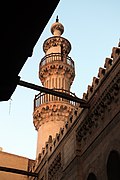 | 1395 | Mamluk | Al-Darb al-Ahmar
30°02′28″N 31°15′27″E | Founded by Mahmud al-Kurdi[1] |
| Amir Jamal al-Din al-Ustadar Mosque | 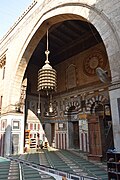 | 1407 | Mamluk | Al-Tambakshiya Street
30°03′03″N 31°15′48″E | Founded by Jamal al-Din al-Ustadar |
| Khanqah of Faraj ibn Barquq |  | 1411 | Mamluk | Northern Cemetery
30°02′57″N 31°16′44″E | Founded by an-Nasir Faraj ibn Barquq, considered one of Cairo's finest Mamluk architecture buildings[16]: 231–237 [1]: 281–283 |
| Mosque of Qanibay al-Muhammadi | 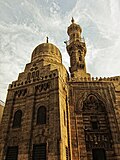 | 1413 | Mamluk | Al-Saleeba Street
30°01′51″N 31°15′15″E | Founded by Qanibay al-Muhammadi[26] |
| Mosque of Sultan al-Muayyad |  | 1421 | Mamluk | Al-Mu'izz Street
30°02′35″N 31°15′27″E | Founded by Al-Mu'ayyad Sayf ad-Din Shaykh and comprises a mosque and madrasa[16][27] |
| Al Ashraf Mosque |  | 1424 | Mamluk | Al-Mu'izz Street
30°02′51″N 31°15′28″E | Founded by Sultan Al-Ashraf Al-Barsbay and comprises a mosque, madrasa, mausoleum, and khanaqah[28]: 215–217 |
| Khanqah-Mausoleum of al-Ashraf Barsbay |  | 1432 | Mamluk | Northern Cemetery
30°2′51″N 31°16′38″E | Founded by Sultan Al-Ashraf Al-Barsbay and comprises a mausoleum, khanqah and mosque[29] |
| Mosque of Taghribardi | 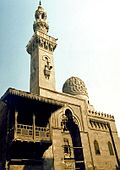 | 1440 | Mamluk | Al-Saleeba Street
30°01′50″N 31°15′05″E | Founded by Amir Taghribird and comprises a mosque, madrasa, and khanaqah[30] |
| Funerary complex of Sultan Qaytbay | 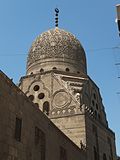 | 1472 | Mamluk | Northern Cemetery
30°02′38″N 31°16′30″E | Founded by al-Ashraf Qaytbay and comprises a mosque, former madrasa, mausoleum and residential structures, that is featured on the E£1 banknote[31]: 244 |
| Amir Qijmas al-Ishaqi Mosque | 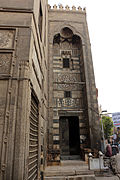 | 1481 | Mamluk | Al-Darb al-Ahmar
30°02′10″N 31°15′36″E | Founded by Sayf al-Din Qijmas al-Ishaqi; also known as the Abu Hurayba Mosque[32] |
| Amir Khayrbak Funerary Complex | 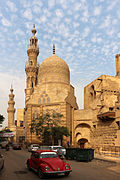 | 1502 | Mamluk | Al-Darb al-Ahmar
30°02′10″N 31°15′36″E | The mausoleum was completed in 1502; and the mosque-madrasa completed in 1520[33] |
| Mosque of Qani-Bay | 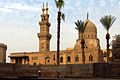 | 1503 | Mamluk | Salah al-Din Square
30°01′56″N 31°15′28″E | Founded by Qani-Bay al-Sayfi;[34] featured on the E£200 banknote |
| Sultan Al-Ghuri Complex | 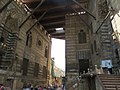 | 1503 | Mamluk | Al-Mu'izz Street
30°2′46″N 31°15′36″E | Founded by Qansuh al-Ghuri; western part remains an active mosque, with the eastern part, a former khanqah-mausoleum, now a tourist site[35] |
| Demerdash Mosque | 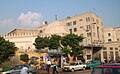 | 1523 | Ottoman | Al-Wayli
30°04′31″N 31°16′38″E | Named in honour of Abu Abdullah Muhammad ibn Al-Amir, known as Shaykh Demerdash, who is buried in the mosque.[36] |
| Sulayman Pasha Mosque | 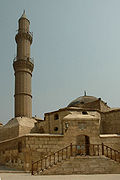 | 1528 | Ottoman | Cairo Citadel
30°03′29″N 31°13′44″E | Founded by Hadim Suleiman Pasha and named in his honour; contains the grave and shrine of Sariat al-Jabal[37] It is the first mosque established in Egypt in Ottoman architectural style.[38] |
| Al-Mahmoudia Mosque |  | 1567 | Ottoman | Salah al-Din Square
30°01′54″N 31°15′28″E | Founded by Mahmud Pasha, contains his grave, and named in his honour[39] |
| Sinan Pasha Mosque |  | c. 1571 | Ottoman | Boulaq, Downtown
30°03′44″N 31°13′46″E | Founded by Koca Sinan Pasha and named in his honour[11]: 161-162 |
| Al-Burdayni Mosque |  | 1629 | Ottoman | Al-Dawoudia
30°01′34″N 31°15′14″E | Founded by Kareem al-din al-Bardayni and named in his honour[40] |
| Mosque of Abu al-Dhahab |  | 1774 | Ottoman | El-Hussein
30°02′46″N 31°15′42″E | Founded by Muhammad Bey Abu al-Dhahab and named in his honour[1]: 200–202 |
| Muhammad Ali Mosque |  | 1830 | Ottoman | Cairo Citadel
30°01′43″N 31°15′35″E | Founded by Muhammad Ali and named in his honour[41] |
| Mosque-Sabil of Sulayman Agha al-Silahdar |  | 1839 | Ottoman | Muizz Street
30°03′09″N 31°15′43″E | Contains a mosque, sabil, and kuttab, located at the beginning of Burjouan alley[42] |
| Al-Sayyida Nafisa Mosque | 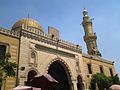 | 1897 | Ottoman | Northern Cemetery
30°01′21″N 31°15′08″E | Present structure was built on the site of a 9th-century mosque-mausoleum[1]: 147–148 |
| Al-Rifa'i Mosque |  | 1911 | Ottoman | Salah al-Din Square
30°9′17″N 31°18′37″E | Also serves as the royal mausoleum of Muhammad Ali's family[43] |
| Sayyidah Zainab Mosque | 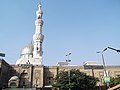 | 1940 | Modern | Al-Saleeba Street
30°1′54″N 31°14′31″E | Present structure was built on the site of an undated mausoleum; renovations in 1547 and 1768; rebuilt in 1940[44] |
| Sayeda Aisha Mosque |  | 1971 | Modern | Salah al-Din Square
30°01′29″N 31°15′24″E | Present structure built on the site of a 14th-century mosque-madrasa; renovated in 1762; rebuilt in 1971[45] |
| Rabaa al-Adawiya Mosque |  | c. 1970s | Modern | Nasr City
30°04′00″N 31°19′33″E | Location of the August 2013 Rabaa massacre where the mosque was partially destroyed;[46] and subsequently rebuilt |
| Al-Fath Mosque |  | 1990 | Modern | Ramses Square, Downtown
30°03′35″N 31°14′46″E | The 130 m-tall (430 ft) minaret in the third largest minaret in the world[47] |
| Al-Rahman al-Rahim Mosque |  | 2009 | Modern | Salah Salem, Abbassiya
30°03′41″N 31°16′59″E | |
| Islamic Cultural Center | | 2022 | Modern | New Administrative Capital | Capacity for 137,000 worshippers; completed at a cost of E£800 million[48] |


.jpg)


.jpg)


.jpg)


