Marrickville Council
Former local government area in New South Wales, Australia
From Wikipedia, the free encyclopedia
Marrickville Council was a local government area located in the Inner West region of Sydney, Australia. It was originally created on 1 November 1861 as the "Municipality of Marrickville". On 12 May 2016, Marrickville Council was merged with Ashfield and Leichhardt councils into the newly formed Inner West Council.[2]

Marrickville Council | |||||||||||||
|---|---|---|---|---|---|---|---|---|---|---|---|---|---|
Location in Metropolitan Sydney | |||||||||||||
 | |||||||||||||
| Coordinates: 33°54′S 151°09′E | |||||||||||||
| Country | Australia | ||||||||||||
| State | New South Wales | ||||||||||||
| Region | Inner West | ||||||||||||
| Established | 1 November 1861 | ||||||||||||
| Abolished | 12 May 2016 | ||||||||||||
| Council seat | Marrickville (1861–1948) Petersham (1948–2016) | ||||||||||||
| Area | |||||||||||||
• Total | 17 km2 (6.6 sq mi) | ||||||||||||
| Population | |||||||||||||
| • Total | 76,500 (2011 census)[1] | ||||||||||||
| • Density | 4,500/km2 (12,000/sq mi) | ||||||||||||
| |||||||||||||
The area was bounded by Leichhardt to the north, the City of Sydney to the east and north-east, the City of Botany Bay to the south-east, Rockdale to the south, Canterbury to the west, and Ashfield to the north-west. It covers an area of approximately 17 square kilometres (6.6 sq mi). The area is roughly bounded by Parramatta Road to the north, King Street and the Princes Highway to the east, the Cooks River and Alexandra Canal to the south, and New and Old Canterbury Roads to the west.
While the area's background was traditionally working-class, which made the area a stronghold for the Australian Labor Party, several waves of immigration and a continuing trend of gentrification substantially influenced the demographics and character of the area, increasing the number of independents and Greens on the council.[3][4] The last mayor of Marrickville Council was Cr. Sam Iskandar of the Labor Party.
In December 2021, a majority of voters in Inner West Council voted in favour of reversing the 2016 merger and separating the three pre-existing councils of Ashfield, Leichhardt and Marrickville.[5]
Suburbs and localities
The suburbs and localities within the former Marrickville Council area were:
- Camperdown (with parts located within the City of Sydney)
- Dulwich Hill
- Enmore
- Lewisham
- Marrickville
- Mascot (minor part) (most parts located within the City of Botany Bay)
- Newtown (with parts located within the City of Sydney)
- Petersham
- St Peters
- Stanmore
- Sydenham
- Tempe
History
Based on artefacts found near the Cooks River and Alexandra Canal, it is believed that the area has been occupied for at least 7,000 years. The area was originally occupied by the Cadigal clan of the Darug people who spoke the Eora language.[6] Their name for most of the present day local government area was Bullanaming.[7]
European settlement of the area began very soon after the arrival of the First Fleet in 1788. The first land grant was made in 1789, and by 1809 all the land had been granted. In the 1830s, the district consisted of five large estates, including Thomas Chalder's estate named Marrick after his home town in North Yorkshire. At this point, the area was still quite rural in nature.
Following the subdivision of these estates, municipalities were formed in Marrickville (1 November 1861), Camperdown (1862), Newtown (1862), St Peters (1871) and Petersham (1872).[8] The first Marrickville council, consisting of six councillors elected proportionately, was elected on 9 December 1861 at the Stanmore Hotel.[9]
The population of the inner west increased greatly from the beginning of the 20th century, peaking at roughly 113,000 in 1948. It was in this year that the State Government introduced the Local Government (Areas) Act 1948, and Marrickville Municipal Council was enlarged by merging with St Peters and Petersham on 1 January 1949. The Camperdown and Newtown municipalities had already been merged with the City of Sydney, however in 1968 a boundary readjustment added parts of these areas to Marrickville.[6]
The area's background was traditionally working-class, making Marrickville Council a stronghold for the Australian Labor Party, and Labor Party ructions often affected the politics of the council itself. In the 1980s, a toxic culture in inner-city party branches and inter-factional disturbances, which led to the assault of NSW Legislative Council member, Peter Baldwin, at his house in Marrickville, affected Marrickville Council most particularly, with a party committee recommending its dismissal in July 1980.[10][11]
Although initially opposed as an extreme act, particularly by Minister for Local Government, Lin Gordon, when five Labor aldermen, Barry Jones, Margaret Newman, Jack Passaris, Ken Brennan and Grahame Watson, resigned from the council in December 1982, alleging that they had been "bashed out of office" and detailing "five years of threats and intimidation" (Newman and Brennan had both been assaulted in their own homes days before), Gordon finally took action.[12][13][14] On 14 December 1982, Gordon dismissed Marrickville Council and appointed the former Shire Clerk of Gunnedah and Walgett, Alexander Trevallion as Administrator.[15][16] Council remained under administration, which included debates over an amalgamation with Leichhardt Municipality, until elections were held on 22 September 1984.[17][18]
Israel boycott
On 14 December 2010, Greens councillor Cathy Peters moved a motion to support the international Boycott, Divestment and Sanctions against Israel.[19] This motion was supported by Greens, Labor and one independent councillor, including the mayor at the time, Fiona Byrne. The motion was widely condemned by politicians from both sides of politics including Foreign Minister Kevin Rudd, then Premier Kristina Keneally and federal Greens leader, Bob Brown.[20] The move received support from Nobel Peace Prize Laureates Archbishop Desmond Tutu[21] and Mairead Maguire.[22] On 14 April 2011, it was revealed that the boycott would cost Marrickville ratepayers A$3.4 million if implemented. The boycott also meant the council would have to replace goods from companies such as Hewlett-Packard, Holden, Volvo and Motorola amongst others.[23]
New South Wales Liberal Premier Barry O'Farrell threatened to use powers under the Local Government Act 1993 to sack the council if it did not rescind its resolution for the boycott.[24] At a council meeting on 19 April 2011, members of the community were invited to express their opinions, and after a three hour debate the motion was rescinded.[25] Byrne did not seek re-election, and in September 2011, Morris Hanna became the new mayor after Labor supported his candidacy and his name was pulled out of the hat in the tie breaker. He is an independent who fought against the BDS campaign.[26]
Amalgamation
A 2015 review of local government boundaries recommended that the Marrickville Council merge with the Municipality of Ashfield and the Municipality of Leichhardt to form a new council with an area of 35 square kilometres (14 sq mi) and support a population of approximately 186,000.[27] The merger was implemented on 12 May 2016.
Demographics
At the 2011 Census, there were 76,500 people in the Marrickville local government area, of these 49.5% were male and 50.5% were female. Aboriginal and Torres Strait Islander people made up 1.5% of the population. The median age of people in the Marrickville Council area was 36 years. Children aged 0 – 14 years made up 14.7% of the population and people aged 65 years and over made up 10.4% of the population. Of people in the area aged 15 years and over, 35.1% were married and 10.9% were either divorced or separated.[1]
Population in the Marrickville Council area between the 2001 Census and the 2006 Census decreased by 0.99% and in the subsequent five years to the 2011 Census, population growth was 6.53%. When compared with total population growth of Australia for the same periods, being 5.78% and 8.32% respectively, population growth in the Marrickville local government area was lower than the national average.[28] The median weekly income for residents within the Manly Council area was higher than the national average.[1][29]
Compared to the national average, at the 2011 Census, Marrickville Council area had a high proportion of households (34.1%) where two or more languages are spoken (national average was 20.4%); and a low proportion (62.3%) where English only was spoken at home (national average was 76.8%).[1]
| Selected historical census data for Marrickville local government area | |||||
|---|---|---|---|---|---|
| Census year | 2001[28] | 2006[29] | 2011[1] | ||
| Population | Estimated residents on Census night | 72,529 | 71,813 | 76,500 | |
| LGA rank in terms of size within New South Wales | |||||
| % of New South Wales population | 1.11% | ||||
| % of Australian population | 0.39% |  0.36% 0.36% |  0.36% 0.36% | ||
| Cultural and language diversity | |||||
| Ancestry, top responses | English | 19.5% | |||
| Australian | 17.9% | ||||
| Irish | 9.2% | ||||
| Scottish | 6.0% | ||||
| Greek | 4.9% | ||||
| Language, top responses (other than English) | Greek | 7.2% | 6.4% | 5.5% | |
| Vietnamese | 5.1% | 4.1% | 3.7% | ||
| Arabic | 3.7% | 2.9% | 2.3% | ||
| Portuguese | 3.1% | 2.4% | 2.0% | ||
| Cantonese | 2.3% | 2.0% | 1.7% | ||
| Religious affiliation | |||||
| Religious affiliation, top responses | No religion | 19.5% |  24.0% 24.0% | 32.7% | |
| Catholic | 27.1% | 25.6% | 23.5% | ||
| Anglican | 10.1% | 9.4% | 8.2% | ||
| Eastern Orthodox | 9.7% | 8.6% | 7.5% | ||
| Buddhism | 6.6% | 5.5% | 5.1% | ||
| Median weekly incomes | |||||
| Personal income | Median weekly personal income | A$595 | A$772 | ||
| % of Australian median income | 127.7% | 133.8% | |||
| Family income | Median weekly family income | A$1,160 | A$1,964 | ||
| % of Australian median income | 113.0% | 132.6% | |||
| Household income | Median weekly household income | A$1,460 | A$1,605 | ||
| % of Australian median income | 124.7% | 130.1% | |||
Council


Final composition and election method
Marrickville Municipal Council was composed of twelve councillors elected proportionally as four separate wards, each electing three councillors. All councillors were elected for a fixed four-year term of office, while the mayor and deputy mayor being elected by the councillors at the first meeting of the council. The last election was held on 8 September 2012, and the makeup of the council after that election was as follows:[30][31][32][33]
| Ward | Councillor | Party | Notes | |
|---|---|---|---|---|
| Central Ward[30] | Max Phillips | The Greens | ||
| Sam Iskandar | Labor | Mayor 2008–2010, 2015–2016. Elected Marrickville Ward, Inner West Council. | ||
| Victor Macri | Independent | Mayor 2012–2013[34] Elected Marrickville Ward, Inner West Council. | ||
| North Ward[31] | Sylvie Ellsmore | The Greens | ||
| Jo Haylen | Labor | Mayor 2013–2014. MP for Summer Hill, 2015. | ||
| Mark Gardiner | Independent | Liberal until September 2014. Mayor 2014–2015[35] | ||
| South Ward[32] | Chris Woods | Labor | ||
| David Leary | The Greens | |||
| Morris Hanna | Independent | Mayor 2011–2012, Deputy Mayor 2014–2015 | ||
| West Ward[33] | Emanuel Tsardoulias | Labor | Deputy Mayor 2012–2013. Died November 2014.[36] | |
| Melissa Brooks | The Greens | |||
| Rosana Tyler | Liberal | |||
| Daniel Barbar | Labor | Elected at by-election on 15 November 2014[37] | ||
Mayors
| Chairman | Party | Term | Notes | |
|---|---|---|---|---|
| Gerald Halligan | Independent | December 1861 – February 1864 | [38] | |
| John Russell Jones | Independent | February 1864 – 22 February 1865 | [39] | |
| William Amner | Independent | 22 February 1865 – February 1866 | [40] | |
| Gerald Halligan | Independent | February 1866 – February 1867 | [41] | |
| Samuel Payten | Independent | February 1867 – 13 February 1868 | [42] | |
| Mayor | Party | Term | Notes | |
| Charles St Julian | Independent | 13 February 1868 – 3 February 1870 | [43][44] | |
| Joseph Graham | Independent | 3 February 1870 – 17 February 1871 | [45] | |
| Charles St Julian | Independent | 17 February 1871 – 13 February 1872 | [46] | |
| Charles Teeson | Independent | 13 February 1872 – 12 February 1873 | [47] | |
| Joseph Graham | Independent | 12 February 1873 – 9 February 1875 | [48][49] | |
| Rollo Albert Cape | Independent | 9 February 1875 – 17 February 1877 | [50][51] | |
| Robert Pfoeffer | Independent | 17 February 1877 – February 1879 | [52][53][54] | |
| Thomas Henry Alcock | Independent | 12 February 1879 – 13 October 1880 | [55][56] | |
| Joseph Graham | Independent | 13 October 1880 – 16 February 1882 | [57][58] | |
| Henry John Chisholm | Independent | 16 February 1882 – 16 February 1884 | [59][60] | |
| William Shaw | Independent | 16 February 1884 – 8 February 1887 | [61][62][63] | |
| Joseph Graham | Independent | 8 February 1887 – 15 February 1888 | [64] | |
| Charles Moyes | Independent | 15 February 1888 – 14 February 1889 | [65] | |
| Joseph Graham | Independent | 14 February 1889 – 13 February 1890 | [66] | |
| William Henry Smith | Independent | 13 February 1890 – 12 February 1891 | [67] | |
| Joseph Graham | Independent | 12 February 1891 – 11 February 1892 | [68] | |
| Alexander Hamilton Scouller | Independent | 11 February 1892 – 16 February 1894 | [69][70] | |
| Joshua Jeremiah Farr | Independent | 16 February 1894 – 14 February 1895 | [71] | |
| George Alfred Morehouse | Independent | 14 February 1895 – 10 February 1896 | [72] | |
| Richard McCoy | Independent | 10 February 1896 – 12 February 1897 | [73] | |
| James Gould | Independent | 12 February 1897 – 10 February 1898 | [74] | |
| William Robson Benson | Independent | 10 February 1898 – 16 February 1899 | [75] | |
| William Wycliffe Clarke | Independent | 16 February 1899 – 20 March 1900 | [76] | |
| Henry Archdall Langley | Independent | 20 March 1900 – 14 February 1901 | [77] | |
| Joshua Percy Josephson | Independent | 14 February 1901 – 12 February 1902 | [78][79] | |
| William Thomas Henson | Independent | 12 February 1902 – 12 February 1903 | [80][81] | |
| Thomas Hillard England | Independent | 12 February 1903 – 16 February 1905 | [82][83] | |
| James Gould | Independent | 16 February 1905 – 15 February 1906 | [84] | |
| William Thomas Henson | Independent | 15 February 1906 – February 1909 | [85][86][87][88] | |
| William Henry Osgood | Independent | February 1909 – February 1911 | [89][90] | |
| Joseph Thornley | Independent | February 1911 – February 1914 | [91][92] | |
| Benjamin Richards | Independent | February 1914 – February 1915 | [93] | |
| John Ness | Independent | February 1915 – 13 February 1919 | [94][95] | |
| Benjamin Richards | Independent | 13 February 1919 – December 1921 | [96][97] | |
| Henry James Morton | Independent | December 1921 – 17 December 1924 | [98][99][100] | |
| William Henry Wicks | Independent | 17 December 1924 – 16 December 1925 | [101] | |
| Edward Mackey | Independent | 16 December 1925 – December 1926 | [102] | |
| Milton Jarvie | Independent | December 1926 – 15 December 1927 | [103] | |
| Benjamin Richards | Independent | 15 December 1927 – 19 December 1929 | [104][105] | |
| Henry James Morton | Civic Progress Party | 19 December 1929 – December 1930 | [106] | |
| Robert Richard Allison | December 1930 – December 1931 | [107] | ||
| Frank Broome Wright | December 1931 – 20 December 1932 | |||
| Frederick Rushton | 20 December 1932 – December 1933 | [108][109] | ||
| Robert Richard Allison | December 1933 – December 1934 | |||
| Henry James Morton | December 1934 – 30 December 1935 | [110] | ||
| Harold Douglas Marr | 30 December 1935 – December 1936 | [111][112] | ||
| William John Ness | Independent | December 1936 – December 1937 | [113][114] | |
| Henry Thomas Braddock | Citizens Party | December 1937 – December 1938 | [115] | |
| Robert Richard Allison | Civic Progress Party | December 1938 – December 1939 | [116] | |
| Harold Douglas Marr | December 1939 – December 1940 | [117][118] | ||
| Frank Broome Wright | December 1940 – December 1941 | [119] | ||
| Francis Buckley | Labor | December 1941 – December 1943 | [120][121] | |
| Donald Cochrane | December 1943 – 12 December 1944 | [122] | ||
| William Murray | 12 December 1944 – 3 December 1946 | [123][124] | ||
| Robert Richard Allison | Civic Progress Party | 3 December 1946 – 15 December 1948 | [125][126] | |
| Gilbert Barry | 15 December 1948 – 6 December 1949 | [127] | ||
| Bruce James McAdam | Independent | 6 December 1949 – December 1950 | [128] | |
| William Maggs | December 1950 – December 1951 | [129] | ||
| Leslie Arthur Scutts | Independent | December 1951 – 2 December 1952 | [130] | |
| Norm Ryan | Labor | 2 December 1952 – December 1953 | [131] | |
| William Murray | December 1953 – 7 December 1954 | [132] | ||
| Albert Edward Murdock | 7 December 1954 – 7 December 1956 | [133] | ||
| Arthur Poole | 7 December 1956 – December 1957 | [134] | ||
| William Edgar Kendrick | December 1957 – December 1958 | |||
| John Friel Laxton | December 1958 – December 1959 | |||
| Joseph John Fitzgerald | Labor | December 1959 – 5 December 1962 | ||
| C. Stratton | 5 December 1962 – December 1964 | [135][136] | ||
| Tom Foster | Labor | December 1968 – December 1971 | [137] | |
| John Harrison | Labor | – 14 December 1982 | [138] | |
| Alexander Martin Trevallion (Administrator) | 14 December 1982 – 26 January 1983 | [18] | ||
| Colin Gallimore Saunders (Administrator) | 26 January 1983 – 25 July 1983 | [139] | ||
| Alexander Martin Trevallion (Administrator) | 25 July 1983 – 22 September 1984 | [140] | ||
| Barry Jones | Labor | September 1984 – September 1991 | ||
| Barry Cotter | September 1991 – September 2004 | [141] | ||
| Morris Hanna | Independent | September 2004 – September 2005 | ||
| Sam Byrne | Greens | September 2005 – September 2006 | ||
| Morris Hanna | Independent | September 2006 – 25 September 2007 | ||
| Dimitrios Thanos | Independent | 25 September 2007 – September 2008 | ||
| Sam Iskandar | Labor | September 2008 – September 2010 | ||
| Fiona Byrne | Greens | September 2010 – September 2011 | [142] | |
| Morris Hanna | Independent | September 2011 – September 2012 | [143] | |
| Victor Macri | Independent | September 2012 – September 2013 | ||
| Jo Haylen | Labor | September 2013 – September 2014 | ||
| Mark Gardiner | Independent | September 2014 – September 2015 | [144] | |
| Sam Iskandar | Labor | September 2015 – 12 May 2016 | [145] | |
Notable councillors
- John Adamson, Alderman 1944–1948, MP for Concord 1950–1953.
- Sylvia Hale, Councillor 1995–2004, Greens MLC 2003–2010.
- Leo McLeay, Alderman 1971–1977, MHR for Grayndler 1979–1993, MHR for Watson 1993–2004, Speaker of the House of Representatives 1989–1993.
- Penny Sharpe, Councillor 2004–2008, MLC 2005–present
- Sir Bertram Stevens, Alderman 1925–1927, Premier 1932–1939.
- Carmel Tebbutt, Councillor 1993–1998, Deputy Mayor 1995–1998, MP for Marrickville 2005–2015, Deputy Premier of NSW 2008–2011.
- Jo Haylen, MP for Summer Hill 2015–present
Housing
The suburbs within the Marrickville area are generally characterised by Victorian-era terraces, semi-detached houses and other varieties of urban federation housing. These houses gained popularity among renovators as the suburbs became gentrified in the late 20th century.[146] Detached housing, wider streets and larger blocks of land are more common in the suburbs further from the city, such as Dulwich Hill and parts of Marrickville.
Several medium density apartment blocks were constructed in the area in the 1960s and 1970s. Since the 1980s, modern infill development has tended to be sympathetic with traditional streetscapes.[146]
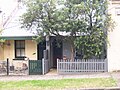 Modest single-storey terraces in Camperdown
 House in the suburb of Marrickville
 Sympathetic infill development in Camperdown
 Restored house in Petersham


Parks

The Marrickville area has 88 parks and reserves of various sizes within its boundaries. Major sporting grounds include Henson Park, home of the Newtown Jets rugby league club, and Petersham Park, where Sir Donald Bradman scored his first century in grade cricket.[147]
Tempe Lands, 10 hectares of parkland at the south-western corner of LGA, was redeveloped by Marrickville Council in 2003 on the site of a former rubbish tip at a cost of A$17.5 million. The parklands feature sporting fields, a golf driving range, and a constructed saltmarsh and ephemeral wetlands area for wildlife.[148]
Other major parks in the area include Enmore Park, Camperdown Park, Marrickville Park, Steel Park and Camperdown Memorial Rest Park. There are also substantial parklands surrounding the Cooks River.[149] After the completion of the airport's third runway in the mid-1990s, the Commonwealth Government controversially purchased and demolished 152 residential properties in the worst-affected parts of Sydenham. The newly vacant land, which is located not under the approach path of the third runway but under the approach/departure path for runway 16R/34L, became Sydenham Green, a public park covering 4.5 hectares. A series of oversized 'living room' sculptures (lamp, chairs and fireplace) decorate the park, paying homage to the homes that formerly occupied the site.[150]
Sister cities
Marrickville Council had sister city relations with the following cities:[151]
 Bethlehem, West Bank, since 2007
 Funchal, Madeira Islands, Portugal, since 1996
 Keelung, Taiwan, since 1989
 Kos, Greece, since 1990
 Larnaca, Cyprus, since 2005
 Safita, Syria, since 2005
 Zonnebeke, Belgium, since 2007


The following cities have also signed agreements to formalise relationships with Marrickville:
 6th of October City, Egypt

