Nairobi Agreement, 1999
From Wikipedia, the free encyclopedia
| Type | Bilateral peace agreement |
|---|---|
| Context | Northern Uganda conflict |
| Signed | December 8, 1999 |
| Location | Nairobi, Kenya |
| Effective | December 8, 1999 |
| Signatories | President Yoweri Museveni (Uganda) President Omar al-Bashir (Sudan) |
| Parties |  Uganda Uganda Sudan Sudan |
| Languages | English, Arabic |
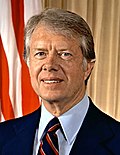
The Nairobi Agreement, 1999 was a bilateral peace accord signed by Presidents Yoweri Museveni of Uganda and Omar al-Bashir of Sudan in Nairobi, Kenya, on 8 December 1999.[1] The agreement was brokered by former U.S. President Jimmy Carter and was designed to provide critical impetus for resolving the northern Uganda conflict, particularly the insurgency led by the Lord's Resistance Army (LRA).[2][3]
The agreement emerged from the complex regional dynamics that had characterized the northern Uganda conflict since the mid-1980s. The Lord's Resistance Army, led by Joseph Kony, had been conducting an insurgency against the Ugandan government, with the group allegedly receiving support from Sudan as part of broader regional proxy conflicts. The conflict had become infamous for widespread atrocities, including the systematic abduction and use of child soldiers, making it one of Africa's most brutal and protracted insurgencies.[1]
The Sudanese government's alleged support for the LRA was part of a broader pattern of regional destabilization, with various countries in the region supporting proxy forces against their neighbors. Uganda, in turn, had been supporting the Sudan People's Liberation Army (SPLA) in southern Sudan, creating a complex web of cross-border insurgencies that required diplomatic intervention.[1][4]
Terms and provisions
Representatives from the Government of Uganda and the Government of Sudan met at The Carter Center in Atlanta July 17-19 to assess progress toward implementing the December 1999 Nairobi Agreement calling for the restoration of diplomatic relations between their two countries. The stated intent of the Nairobi Agreement was to establish a framework for regional cooperation in ending the northern Uganda conflict. The agreement committed both governments to ceasing support for rebel groups operating against each other and to actively work toward peace in the region.[5] Specifically, Sudan agreed to stop providing sanctuary and support to the LRA, while Uganda committed to ending its support for the SPLA and other Sudanese rebel groups.[6][7]
The agreement also established mechanisms for monitoring compliance and created a framework for ongoing diplomatic dialogue between the two countries. Both presidents committed to regular consultations and the establishment of joint committees to oversee implementation of the agreement's provisions.[6][7]
When the Nairobi Agreement was signed, there was real expectation that the accord would provide the critical impetus for resolving the northern Uganda conflict.[7]
Implementation and challenges
Despite the initial optimism surrounding the agreement, implementation proved problematic from the outset. According to peace researcher Patrick Oguru Otto, the attempts to implement the December 1999 Nairobi Agreement faced significant problems and experienced gradual erosion over time.[1] The challenges included insufficient monitoring mechanisms, continued cross-border insurgent activities, and the complex nature of the conflicts that extended beyond simple bilateral relations.[1][8]
The agreement's failure to achieve its stated objectives contributed to the continued escalation of the northern Uganda conflict throughout the early 2000s. The period from 2002 to 2006 saw some of the most intense fighting of the entire conflict, with the LRA continuing to operate from bases in southern Sudan despite the formal commitments made in the Nairobi Agreement.[8]