Nomura Art Museum
Museum in Kyoto, Japan
From Wikipedia, the free encyclopedia
Nomura Art Museum (野村美術館, Nomura Bijutsukan) opened near Nanzen-ji in Kyoto, Japan, in 1984. The sukiya-style building has two rooms for displaying exhibits and there is also a chashitsu. The collection, based on that built up by financier Tokushichi Nomura II, comprises some 1,700 works (paintings, calligraphic works, Noh masks, Noh costumes, and tea utensils), including seven Important Cultural Properties and nine Important Art Objects.[1][2][3]

| Nomura Art Museum | |
|---|---|
野村美術館 | |
| |
 Interactive map of the Nomura Art Museum area | |
General information | |
| Location | 61 Nanzenji, Shimokawara-chō, Sakyō-ku, Kyoto, Kyoto Prefecture, Japan |
| Coordinates | 35°00′47″N 135°47′36″E |
| Opened | 1984 |
| Website | |
| Official website | |
Important Cultural Properties
The Museum's seven Important Cultural Properties are Tempest by Sesson Shūkei,[4] Ki no Tomonori from the series Thirty-Six Poetry Immortals formerly in the Satake Collection,[5] calligraphic works by or attributed to Ki no Tsurayuki,[6] Seisetsu Shōchō,[7] and Shūhō Myōchō (宗峰妙超),[8] the poetry collection Sanuki no Nyūdō-Shū,[9] and Box for a Noh mask with plovers in maki-e.[10]
 Tempest by Sesson Shūkei
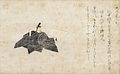 Ki no Tomonori, one of the Thirty-Six Poetry Immortals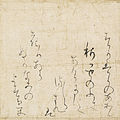

 Shūhō Myōchō bokuseki
 Sanuki no Nyūdō-Shū
.jpg)
.jpg)
.jpg)
.jpg)
.jpg)
.jpg)

