Oderberg
Town in Brandenburg, Germany
From Wikipedia, the free encyclopedia
Oderberg (German: [ˈoːdɐbɛʁk] ⓘ) is a town in the district of Barnim, in Brandenburg in northeastern Germany. It is situated 16 km east of Eberswalde, and 27 km southwest of Schwedt, close to the border with Poland, and in close vicinity of Berlin.

Oderberg | |
|---|---|
Aerial view of the town center | |
 Coat of arms | |
Location of Oderberg
within Barnim district 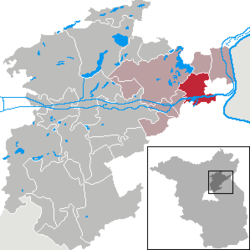 | |
 Location of Oderberg | |
  Oderberg  Oderberg | |
| Coordinates: 52°52′00″N 14°03′00″E | |
| Country | Germany |
| State | Brandenburg |
| District | Barnim |
| Municipal assoc. | Britz-Chorin-Oderberg |
| Government | |
| • Mayor (2024–29) | Martina Hähnel[1] |
| Area | |
• Total | 36.12 km2 (13.95 sq mi) |
| Elevation | 5 m (16 ft) |
| Population (2024-12-31)[2] | |
• Total | 1,981 |
| • Density | 54.84/km2 (142.0/sq mi) |
| Time zone | UTC+01:00 (CET) |
| • Summer (DST) | UTC+02:00 (CEST) |
| Postal codes | 16248 |
| Dialling codes | 033369 |
| Vehicle registration | BAR |
| Website | www |
Overview
History
,_Brandenburg_-_Stadtansicht_(Zeno_Ansichtskarten).jpg)
A Slavic tribal territory in the early medieval period, it was conquered by Henry the Fowler in c. 929–934.[3] The Slavs regained independence from the Saxons during the Slavic revolt of 983.[3] Afterwards the area was conquered by Polish rulers Bolesław I the Brave and Bolesław III Wrymouth.[3]
In 1319, the town was captured by Henry II, Lord of Mecklenburg.[4] In 1320, it was captured by the Duchy of Pomerania, however, it was eventually lost by Pomerania in September 1321.[5] Afterwards it passed to the Margraviate of Brandenburg, and from 1373 to 1415 it was part of the Bohemian (Czech) Crown.
From 1701, Oderberg was part of the Kingdom of Prussia, and from 1871 also the German Empire. From 1815 to 1947, it was administratively located in the Province of Brandenburg. During World War II, there were three forced labour subcamps of the Stalag III-C prisoner-of-war camp in the town.[6] After World War II, it was part of East Germany until 1990, administratively located within the State of Brandenburg from 1947 to 1952, Bezirk Frankfurt from 1952 to 1990 and since 1990 again of Brandenburg.
Demography

Oderberg: Population development within the current boundaries (2020)[7] | |||||||||||||||||||||||||||||||||||||||||||||||||||||||||||||||||||||||||||||||||||||||||||||||||||||||||||||||||||||||||||||||||||||||||||||||
|
|
| |||||||||||||||||||||||||||||||||||||||||||||||||||||||||||||||||||||||||||||||||||||||||||||||||||||||||||||||||||||||||||||||||||||||||||||
Gallery
 Town hall
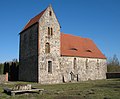 Church in Neuendorf
 Saint Nicholas Church
 Museum


Notable people
- Pauline Staegemann (1838–1909), socialist, feminist and trade unionist.
