Pacific Biological Laboratories
From Wikipedia, the free encyclopedia
Pacific Biological Laboratories | |
 The Pacific Biological Laboratories of Ed Ricketts, on Cannery Row, Monterey, California.
 | |
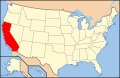
  Location in the Monterey Peninsula | |
| Location | 800 Cannery Row, Monterey, California |
|---|---|
| Coordinates | 36°37′1″N 121°53′59″W / 36.61694°N 121.89972°W |
| Area | less than one acre |
| Built | 1937 |
| Architect | Oneweiler |
| NRHP reference No. | 94001498 [1] |
| Added to NRHP | December 29, 1994 |
Pacific Biological Laboratories, abbreviated PBL, was a biological supply house that sold preserved animals and prepared specimen microscope slides, many of which were of maritime aquatic species, to schools, museums, and research institutions. It was located in a building on what is now Monterey's Cannery Row on Monterey Bay in Monterey County, California.
The building, activities, and business were fictionalized as "Western Biological Laboratory" by John Steinbeck in his novel Cannery Row, as was a character based on one of its founders, Ed Ricketts.[2] After a 1936 fire Steinbeck invested in the laboratory and owned half its stock.
Catalog
The company was started by Ed Ricketts with his college roommate and business partner Albert Galigher in 1923. Originally located in Pacific Grove at 165 Fountain Avenue,[3][4] the lab was moved to 740 Ocean View Avenue, Monterey, California, around January, 1930,[5] where Ricketts became sole owner. Today, that location is 800 Cannery Row. As a result of marital problems between Ricketts and his first wife Anna, the lab served as Ricketts's home for some time beginning in 1936.[6]
On November 25, 1936, a fire broke out at the Del Mar Cannery next to the lab (site of today's Monterey Bay Aquarium) and most of the contents of the laboratory were destroyed. Ricketts’ manuscript for Between Pacific Tides survived the fire as it had already been sent to Stanford University for publication. It was Steinbeck who saved the lab financially after the fire with the purchase of half the company's stock.[7]
The onset of World War II led to the decline of the commercial operation of the lab. However, specimens collected and distributed by PBL remain in the collections of Museums throughout the United States, including the Field Museum in Chicago, the Smithsonian Institution, the California Academy of Sciences, the American Museum of Natural History, the Museum of Comparative Zoology at Harvard University and the Museum of Zoology at Lund University in Sweden.[5]
The lab became a meeting place for intellectuals, artists, and writers, including Bruce Ariss, Joseph Campbell, Henry Miller, John Steinbeck, Lincoln Steffens, and Francis Whitaker.
Ricketts produced his first scientific publication, a catalog of marine biological specimens recorded in photographs and drawings. Originally meant for advertisement it may well have been the first record of Monterey Bay intertidal species.[8]