Periodic annual increment
From Wikipedia, the free encyclopedia
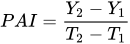
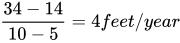
In forestry, periodic annual increment (PAI) is the change in the size of a tree between the beginning and ending of a growth period, divided by the number of years that was designated as the growing period.[1] For sigmoid growth, the graph of PAI increases rapidly and then quickly declines, approaching zero. PAI may go negative if a tree loses volume due to damage or disease. Periodic annual increment is commonly used instead of current annual increment as a basis for computing growth per cent. Growth per cent indicates the rate of increase with relation to the wood capital required for its production, this is usually based on a single year's growth.[2]