Poverty gap index
Measurement of poverty intensity
From Wikipedia, the free encyclopedia
The poverty gap index is a measure of the degree of poverty in a country. It is defined as "extent to which individuals on average fall below the poverty line, and expresses it as a percentage of the poverty line."[1]
The poverty gap index is an improvement over the poverty measure head count ratio, which simply counts all the people below a poverty line in a given population and considers them equally poor.[2] Poverty gap index estimates the depth of poverty by considering how far the poor are from that poverty line on average.[3]
The poverty gap index sometimes referred to as 'poverty gap ratio' or 'pg index' is defined as an average of the ratio of the poverty gap to the poverty line.[4] It is expressed as a percentage of the poverty line for a country or region.[5]
Significance
The most common method measuring and reporting poverty is the headcount ratio, given as the percentage of the population that is below the poverty line. For example, The New York Times in July 2012 reported the poverty headcount ratio as 11.1% of American population in 1973, 15.2% in 1983, and 11.3% in 2000.[6] One of the undesirable features of the headcount ratio is that it ignores the depth of poverty; if the poor become poorer, the headcount index does not change.[7]
Poverty gap index provides a clearer perspective on the depth of poverty. It enables poverty comparisons. It also helps provide an overall assessment of a region's progress in poverty reduction and the evaluation of specific public policies or private initiatives.[8]
Calculation
The poverty gap index (PGI) is calculated as,[5]
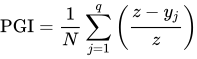
or
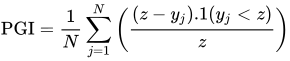
where is the total population, is the total population of poor who are living at or below the poverty line, is the poverty line, and is the income of the poor individual . In this calculation, individuals whose income is above the poverty line have a gap of zero.


By definition, the poverty gap index is a percentage between 0 and 100%. Sometimes it is reported as a fraction, between 0 and 1. A theoretical value of zero implies that no one in the population is below the poverty line. A theoretical value of 100% implies that everyone in the population has zero income. In some literature, poverty gap index is reported as while the headcount ratio is reported as .[9]


Features
The poverty gap index can be interpreted as the average percentage shortfall in income for the population, from the poverty line.[5]
If you multiply a country's poverty gap index by both the poverty line and the total number of individuals in the country you get the total amount of money needed to bring the poor in the population out of extreme poverty and up to the poverty line, assuming perfect targeting of transfers. For example, suppose a country has 10 million individuals, a poverty line of $500 per year, and a poverty gap index of 5%. Then an average increase of $25 per individual per year would eliminate extreme poverty. $25 is 5% of the poverty line. The total increase needed to eliminate poverty is US$250 million—$25 multiplied by 10 million individuals.
The poverty gap index is an important measure beyond the commonly used headcount ratio. Two regions may have a similar head count ratio, but distinctly different poverty gap indices. A higher poverty gap index means that poverty is more severe.
The poverty gap index is additive. In other words, the index can be used as an aggregate poverty measure, as well as decomposed for various sub-groups of the population, such as by region, employment sector, education level, gender, age, or ethnic group.
Limitations
The poverty gap index ignores the effect of inequality between the poor. It does not capture differences in the severity of poverty amongst the poor. As a theoretical example, consider two small neighborhoods where just two households each are below the official poverty line of US$500 income per year. In one case, household 1 has an income of US$100 per year and household 2 has an income of US$300 per year. In second case, the two households both have annual income of US$200 per year. The poverty gap index for both cases is same (60%), even though the first case has one household, with US$100 per year income, experiencing a more severe state of poverty. Scholars, therefore, consider poverty gap index as a moderate but incomplete improvement over poverty head count ratio.[10]
Scholars such as Amartya Sen suggest poverty gap index offers a quantitative improvement over simply counting the poor below the poverty line, but remains limited at the qualitative level. Focusing on precisely measuring income gap diverts the attention from qualitative aspects such as capabilities, skills and personal resources that may sustainably eradicate poverty. A better measure would focus on capabilities and consequent consumption side of impoverished households.[11] These suggestions were initially controversial, and have over time inspired scholars to propose numerous refinements.[2][12][13][14]
Related measures
The Foster–Greer–Thorbecke metric is the general form of the PGI. The formula raises the summands to the power alpha, so that FGT0 is the headcount index, FGT1 the PGI and FGT2 the squared PGI.

Squared poverty gap index, also known poverty severity index or , is related to poverty gap index. It is calculated by averaging the square of the poverty gap ratio. By squaring each poverty gap data, the measure puts more weight the further a poor person's observed income falls below the poverty line. The squared poverty gap index is one form of a weighted sum of poverty gaps, with the weight proportionate to the poverty gap.[9]

Sen index, sometimes referred to , is related to poverty gap index (PGI).[2][15] It is calculated as follows:


where, is the head count ratio and is the income Gini coefficient of only the people below the poverty line.


Watts index, sometimes referred to , is related to poverty gap index (PGI).[15] It is calculated as follows:

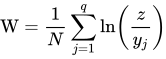
The terms used to calculate are same as in poverty gap index (see the calculation section in this article).
Poverty gap index by country
The following table summarizes the poverty gap index for developed and developing countries across the world.
| Country | Poverty line ($/month)[a] | Head count ratio (%) | Poverty gap index (%) | Year |
|---|---|---|---|---|
 Albania Albania | 52 | 22.9 | 14.18 | 2020 |
 Angola Angola | 38 | 54.31 | 29.94 | 2000 |
 Argentina[b] Argentina[b] | 38 | 0.92 | 0.65 | 2010 |
 Armenia Armenia | 38 | 1.28 | 0.25 | 2008 |
 Australia Australia | 959 | 12.4 | 2.93 | 2010 |
 Austria Austria | 1024 | 6.6 | 1.81 | 2010 |
 Azerbaijan Azerbaijan | 38 | 0.43 | 0.14 | 2008 |
 Bangladesh Bangladesh | 38 | 43.25 | 11.17 | 2010 |
 Belarus Belarus | 38 | 0.1 | 0.1 | 2008 |
 Belgium Belgium | 930 | 8.8 | 1.80 | 2010 |
 Belize Belize | 38 | 12.21 | 5.52 | 1999 |
 Benin Benin | 38 | 47.33 | 15.73 | 2003 |
 Bhutan Bhutan | 38 | 10.22 | 1.81 | 2007 |
 Bolivia Bolivia | 38 | 15.61 | 8.64 | 2008 |
 Bosnia and Herzegovina Bosnia and Herzegovina | 38 | 0.04 | 0.02 | 2007 |
 Botswana Botswana | 38 | 31.23 | 11.04 | 1993 |
 Brazil Brazil | 350 | 3.91 | 3.62 | 2015 |
 Burkina Faso Burkina Faso | 38 | 44.6 | 14.66 | 2009 |
 Burundi Burundi | 38 | 81.32 | 36.39 | 2006 |
 Cambodia Cambodia | 38 | 22.75 | 4.87 | 2008 |
 Cameroon Cameroon | 38 | 9.56 | 1.2 | 2007 |
 Canada Canada | 1056 | 12.1 | 2.96 | 2010 |
 Cape Verde Cape Verde | 38 | 21.02 | 6.05 | 2001 |
 Central African Republic Central African Republic | 38 | 62.83 | 31.26 | 2008 |
 Chad Chad | 38 | 61.94 | 25.64 | 2002 |
 Chile Chile | 38 | 1.35 | 0.69 | 2009 |
 China[c] China[c] | 38 | 16.25 | 4.03 | 2005 |
 Colombia Colombia | 38 | 8.16 | 3.78 | 2010 |
 Comoros Comoros | 38 | 46.11 | 20.82 | 2004 |
 Costa Rica Costa Rica | 38 | 3.12 | 1.79 | 2009 |
 Cote d'Ivoire Cote d'Ivoire | 38 | 23.75 | 7.5 | 2008 |
 Czech Republic Czech Republic | 515 | 5.8 | 1.37 | 2010 |
 Denmark Denmark | 955 | 5.3 | 1.29 | 2010 |
 Djibouti Djibouti | 38 | 18.84 | 5.29 | 2002 |
 Dominican Republic Dominican Republic | 38 | 2.24 | 0.52 | 2010 |
 Congo, Dem. Rep. Congo, Dem. Rep. | 38 | 87.72 | 52.8 | 2005 |
 Congo, Rep. Congo, Rep. | 38 | 54.1 | 22.8 | 2005 |
 Ecuador Ecuador | 38 | 4.6 | 2.1 | 2010 |
 Egypt Egypt | 38 | 1.69 | 0.4 | 2008 |
 Estonia Estonia | 38 | 8.9 | 4.4 | 2009 |
 Ethiopia Ethiopia | 38 | 39 | 9.6 | 2005 |
 Fiji Fiji | 38 | 5.9 | 1.1 | 2009 |
 Finland Finland | 875 | 7.3 | 1.48 | 2010 |
 France France | 861 | 7.1 | 1.44 | 2010 |
 Gabon Gabon | 38 | 4.8 | .9 | 2005 |
 Gambia Gambia | 38 | 33.6 | 11.7 | 2003 |
 Germany Germany | 918 | 11 | 3.67 | 2010 |
 Georgia Georgia | 38 | 15.3 | 4.6 | 2008 |
 Ghana Ghana | 38 | 28.6 | 9.9 | 2006 |
 Greece Greece | 720 | 12.6 | 3.36 | 2010 |
 Guatemala Guatemala | 38 | 13.5 | 4.7 | 2006 |
 Guinea Guinea | 38 | 43.3 | 15. | 2007 |
 Guinea-Bissau Guinea-Bissau | 38 | 48.9 | 16.6 | 2002 |
 Guyana Guyana | 38 | 8.7 | 2.8 | 1998 |
 Haiti Haiti | 38 | 61.7 | 32.3 | 2001 |
 Honduras Honduras | 38 | 17.9 | 9.4 | 2009 |
 Hungary Hungary | 407 | 7.1 | 1.66 | 2010 |
 Iceland Iceland | 942 | 7.1 | 2.55 | 2010 |
 Ireland Ireland | 934 | 14.8 | 3.08 | 2010 |
 India India | 38 | 32.7 | 7.5 | 2010 |
 Indonesia Indonesia | 38 | 18.1 | 3.3 | 2010 |
 Iran Iran | 38 | 1.45 | 0.34 | 2005 |
 Iraq Iraq | 38 | 2.8 | 0.42 | 2007 |
 Italy Italy | 700 | 11.4 | 3.08 | 2010 |
 Jamaica Jamaica | 38 | 0.21 | 0.02 | 2004 |
 Japan Japan | 950 | 14.9 | 5.17 | 2010 |
 Jordan Jordan | 38 | 0.12 | 0.03 | 2010 |
 Kazakhstan Kazakhstan | 38 | 0.11 | 0.03 | 2009 |
 Kenya Kenya | 38 | 43.4 | 16.9 | 2005 |
 Kyrgyzstan Kyrgyzstan | 38 | 6.4 | 1.5 | 2008 |
 Laos Laos | 38 | 44 | 12.1 | 2002 |
 Latvia Latvia | 38 | 0.14 | 0.1 | 2008 |
 Lesotho Lesotho | 38 | 43.4 | 20.8 | 2003 |
 Liberia Liberia | 38 | 83.8 | 40.9 | 2007 |
 Lithuania Lithuania | 38 | 0.16 | 0.1 | 2008 |
 Luxembourg Luxembourg | 1511 | 8.1 | 1.62 | 2010 |
 Macedonia Macedonia | 38 | 0.29 | 0.04 | 2008 |
 Madagascar Madagascar | 38 | 81.3 | 43.3 | 2010 |
 Malawi Malawi | 38 | 73.9 | 32.3 | 2004 |
 Maldives Maldives | 38 | 1.48 | 0.14 | 2008 |
 Mali Mali | 38 | 50.4 | 16.4 | 2010 |
 Mauritania Mauritania | 38 | 23.4 | 6.8 | 2008 |
 Mexico Mexico | 192 | 18.4 | 6.97 | 2010 |
 Micronesia Micronesia | 38 | 31.2 | 16.3 | 2000 |
 Moldova Moldova | 38 | 0.39 | 0.08 | 2010 |
 Montenegro Montenegro | 38 | 0.12 | 0.08 | 2008 |
 Morocco Morocco | 38 | 2.5 | .54 | 2007 |
 Mozambique Mozambique | 38 | 59.6 | 25.1 | 2008 |
 Namibia Namibia | 38 | 31.9 | 9.5 | 2004 |
 Nepal Nepal | 38 | 24.8 | 5.6 | 2010 |
 Netherlands Netherlands | 1168 | 7.7 | 1.61 | 2010 |
 New Zealand New Zealand | 803 | 10.8 | 3.63 | 2010 |
 Nicaragua Nicaragua | 38 | 11.9 | 2.4 | 2005 |
 Niger Niger | 38 | 43.6 | 12.4 | 2008 |
 Nigeria Nigeria | 38 | 68 | 33.7 | 2010 |
 Norway Norway | 1109 | 6.8 | 2.00 | 2010 |
 Pakistan Pakistan | 38 | 21 | 3.5 | 2008 |
 Panama Panama | 38 | 6.6 | 2.1 | 2010 |
 Papua Papua | 38 | 35.8 | 12.3 | 1996 |
 Paraguay Paraguay | 38 | 7.2 | 3. | 2010 |
 Peru Peru | 38 | 4.9 | 1.3 | 2010 |
 Philippines Philippines | 38 | 18.4 | 3.7 | 2009 |
 Poland Poland | 338 | 14.6 | 5.20 | 2010 |
 Portugal Portugal | 512 | 12.9 | 3.74 | 2010 |
 Romania Romania | 38 | 0.41 | 0.19 | 2009 |
 Russia[19] Russia[19] | 61 | 14.3 | 5.09 | 2006 |
 Rwanda Rwanda | 38 | 63.2 | 26.6 | 2011 |
 São Tomé and Príncipe São Tomé and Príncipe | 38 | 28.2 | 7.9 | 2001 |
 Senegal Senegal | 38 | 33.5 | 10.8 | 2005 |
 Serbia Serbia | 38 | 0.26 | 0.17 | 2009 |
 Sierra Leone Sierra Leone | 38 | 53.4 | 20.3 | 2003 |
 Slovakia Slovakia | 368 | 8.1 | 2.07 | 2010 |
 South Africa South Africa | 38 | 13.8 | 2.3 | 2009 |
 South Korea South Korea | 809 | 14.6 | 5.26 | 2010 |
 Spain Spain | 749 | 14.1 | 4.51 | 2010 |
 Sri Lanka Sri Lanka | 38 | 7 | 1 | 2007 |
 Sudan Sudan | 38 | 19.8 | 5.5 | 2009 |
 Suriname Suriname | 38 | 15.5 | 5.9 | 1999 |
 Swaziland Swaziland | 38 | 40.6 | 16. | 2010 |
 Sweden Sweden | 863 | 5.3 | 1.31 | 2010 |
 Syria Syria | 38 | 1.71 | 0.2 | 2004 |
 Switzerland Switzerland | 1148 | 8.7 | 3.37 | 2010 |
 Tajikistan Tajikistan | 38 | 6.6 | 1.2 | 2009 |
 Tanzania Tanzania | 38 | 67.9 | 28.1 | 2007 |
 Thailand Thailand | 38 | 0.37 | 0.05 | 2009 |
 East Timor East Timor | 38 | 37.4 | 8.9 | 2007 |
 Togo Togo | 38 | 38.7 | 11.4 | 2006 |
 Trinidad and Tobago Trinidad and Tobago | 38 | 4.2 | 1.1 | 2008 |
 Tunisia Tunisia | 38 | 1.35 | 0.28 | 2005 |
 Turkey Turkey | 211 | 17.5 | 5.76 | 2010 |
 Turkmenistan Turkmenistan | 38 | 24.8 | 7 | 1998 |
 Uganda Uganda | 38 | 38.01 | 12.2 | 2009 |
 Ukraine Ukraine | 38 | 0.06 | 0.04 | 2009 |
 United Kingdom United Kingdom | 1027 | 8.3 | 2.06 | 2010 |
 United States[d] United States[d] | 1232 | 17.1 | 6.55 | 2010 |
 Uruguay Uruguay | 38 | 0.2 | 0.07 | 2008 |
 Venezuela Venezuela | 38 | 6.6 | 3.7 | 2006 |
 Vietnam Vietnam | 38 | 16.9 | 3.8 | 2008 |
 Yemen Yemen | 38 | 17.5 | 4.2 | 2005 |
 Zambia Zambia | 38 | 68.5 | 37 | 2006 |
See also
Notes
- This is on purchasing power parity basis, international dollar adjusted for inflation to 2005; To convert to $ per day income, divide by 30.4; for annual income multiply by 12.
- This data is for urban population only.
- This data is for rural population of China.
- The U.S. defines its poverty line on a dynamic basis and household size. As an example, for a family of 4 in a household, the poverty line was about $1,838 per month.