Radical 70
Chinese character radical
From Wikipedia, the free encyclopedia
Radical 70 or radical square (方部) meaning "square" is one of the 34 Kangxi radicals (214 radicals in total) composed of 4 strokes.

| 方 | |
|---|---|
Radical 70 (U+2F45)
| |
| 方 (U+65B9) "square" | |
| Pronunciations | |
| Pinyin: | fāng |
| Bopomofo: | ㄈㄤ |
| Gwoyeu Romatzyh: | fang |
| Wade–Giles: | fang1 |
| Cantonese Yale: | fōng |
| Jyutping: | fong1 |
| Pe̍h-ōe-jī: | hong |
| Japanese Kana: | ホウ hō (on'yomi) かた kata (kun'yomi) |
| Sino-Korean: | 방 bang |
| Names | |
| Chinese name(s): | 方字旁 fāngzìpáng |
| Japanese name(s): | 方偏/かたへん katahen 方偏/ほうへん hōhen 方/ほう hō |
| Hangul: | 모 mo |
| Stroke order animation | |
| |
In the Kangxi Dictionary, there are 92 characters (out of 49,030) to be found under this radical.
方 is also the 94th indexing component in the Table of Indexing Chinese Character Components predominantly adopted by Simplified Chinese dictionaries published in mainland China.
Evolution
 Oracle bone script character
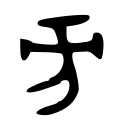 Bronze script character
 Large seal script character
 Small seal script character


Derived characters
Sinogram
The radical is also used as an independent Chinese character. It is one of the kyōiku kanji or kanji taught in elementary school in Japan.[1] It is a second grade kanji.[1]
