Urawa Red Diamonds
Association football club in Japan
From Wikipedia, the free encyclopedia
The Urawa Red Diamonds (浦和レッドダイヤモンズ, Urawa Reddo Daiyamonzu) or simply Urawa Reds (浦和レッズ, Urawa Rezzu), also known as Mitsubishi Urawa Football Club from April 1992 to January 1996, are a professional football club in the city of Saitama, part of the Greater Tokyo Area in Japan, who play in the J1 League, the top tier of Japanese football.

Red Devils (赤い悪魔, Akai Akuma)
Saitama, Japan
| ||||
| Full name | Urawa Red Diamonds | |||
|---|---|---|---|---|
| Nicknames | Reds (レッズ, Rezzu) Red Devils (赤い悪魔, Akai Akuma) | |||
| Founded | 1950 as Mitsubishi Motors FC | |||
| Stadium | Saitama Stadium 2002 Saitama, Japan | |||
| Capacity | 63,700 | |||
| Owner | Mitsubishi Heavy Industries | |||
| Chairman | Makoto Taguchi | |||
| Manager | Cho Kwi-jae | |||
| League | J1 League | |||
| 2025 | J1 League, 7th of 20 | |||
| Website | urawa-reds.co.jp | |||
|
| ||||


The club's name comes from the former city of Urawa, now part of Saitama, and pre-professional era parent company Mitsubishi, whose logo consists of three red diamonds, one of which remains within the current club badge.
Urawa Reds are one of the most successful clubs in the country and various domestic titles winning 1 J1 League title including a joint-record 8 Emperor's Cups, 2 J.League Cup and 5 Japanese Super Cup. Continentally, Urawa Reds became a 3 time AFC Champions League winner cementing their place in history as Asian champions (most recently in 2022) . The club also won the J.League Cup / Copa Sudamericana Championship in 2017. Internationally, Urawa Reds has made three appearances in the FIFA Club World Cup with their best results being in the 2007 edition finishing in third place.
History
Mitsubishi Heavy Industries established a football club in 1950[1] in Kobe and moved the club to Tokyo in 1958. In 1965 it formed the Japan Soccer League (JSL) along with today's JEF United Chiba, Kashiwa Reysol, Cerezo Osaka, Sanfrecce Hiroshima and three other clubs who have since been relegated to regional leagues ("Original Eight"[a]).
Mitsubishi first won the JSL championship in 1969, as a break in Mazda/Sanfrecce's dominance (and also with the fact that Toyo were in Bangkok, Thailand, competing in the Asian Club Cup); their runs up the first division were sporadic but steady until the 1980s when they fell into the Second Division. In 1990 they were promoted as JSL Division 2 champions, and thus were ready when the J-League implementation began in earnest. Urawa Red Diamonds was an original member ("Original Ten"[b]) of the J.League in 1993.
Domestic treble
Mitsubishi were the first Japanese club to complete a domestic treble, when in 1978 they won the title, the Emperor's Cup and the Japan Soccer League Cup.
Name change
The club's name was then changed to ''Mitsubishi Urawa Football Club'' from in April 1992 where their nickname was "Red Diamonds". However, in February 1996, the club's name was changed to "Urawa Red Diamonds".
The club has experienced varying degrees of success since the inception of the J-League. The team finished at the bottom of the league for the first two seasons, with an average attendance of fewer than 15,000. In 1999, they were relegated to the second tier of Japanese football once again., the club's performance has improved in years, beginning with a victory in the 2003 Nabisco Cup.
In 2006, Urawa Reds clinched their first professional league title by defeating runners-up Gamba Osaka 3–2 on December 2 in front of 63,000 supporters. This after two close calls in the previous two years. In 2005, they finished second, just one point behind champions Gamba Osaka. In 2004, they finished third in the first stage and won the second stage and qualified for the two-match J.League Championship decider, they lost on penalty shootout to Yokohama F. Marinos.
Back to back cup champion
Urawa Reds were back to back Emperor's Cup winners in 2005 and 2006. Winning the title for the first time since their establishment as a professional club, they defeated Shimizu S-Pulse 2–1 on 1 January 2006, and retained the title in 2007 with a 1–0 win over Gamba Osaka. This win also completed a league-cup double. In the 2007 tournament they were defeated at the first hurdle by J2 League outfit Ehime FC.
In 2007, despite a seemingly unassailable lead of seven points with four games remaining, Urawa Reds picked up only two points from their final four games. This run included losing at home to Kashima Antlers; the club who would leapfrog Urawa on the final day of the season to claim their fifth J.League title. Following their capitulation in the fourth round of the Emperor's Cup to J2 League outfit Ehime FC, Urawa Reds had to be content with their 2007 AFC Champions League fixtures.
AFC Champions League champions
.jpg)
Urawa Reds recorded their first prestigious cup overcoming Iranian club Sepahan 3–1 on aggregate to clinch the 2007 AFC Champions League trophy. The victory made them the first Japanese side to win the cup since the competition was reorganised from the Asian Champions Cup in 2003. In the 2007 FIFA Club World Cup of the same year, Urawa Reds became the first AFC club to finish in third place, beating Tunisian side Étoile Sportive du Sahel on penalty shootout in the third/fourth place play off.
Throughout the 2008 AFC Champions League edition, Urawa Reds attempted to win their second consecutive AFC Champions League title and progressed to the semi-finals where they were defeated by fellow J-League rivals, and eventual Champions League winners, Gamba Osaka 3–1 on aggregate.
On 8 March 2014, a banner which read "JAPANESE ONLY" was hung at one of the entrances to the stands.[2] As punishment for this racist behavior, the league match on 28 March was played behind closed doors.[3]
In the 2017 AFC Champions League edition, Urawa Reds had a good run throughout the entire tournament which saw them face Saudi Arabia club, Al-Hilal in the final which saw Urawa Reds winning the 2017 AFC Champions League final 2–1 on aggregate to clinch their 2nd trophy.
Urawa Reds managed to make their way through all the way until the 2019 AFC Champions League final facing off against Al-Hilal once again. However, the club fell in a 3–0 aggregate loss to the Saudi Arabian club.
Third time AFC Champions League champions
During the 2022 AFC Champions League, Urawa Reds had an easier run en route to the final where they faced three Southeast Asian club along the way, Singapore league champions Lion City Sailors in the group stage while they faced Malaysia league champions Johor Darul Ta'zim 5–0 in the Round of 16 and Thailand league champions BG Pathum United 4–0 in the Quarter-finals. Urawa Reds would then face Korea league champions, Jeonbuk Hyundai Motors in the semi-finals which ended up with Urawa Reds advancing to the final after winning the penalty shootout. The club faced their tournament rivals Al-Hilal for the third time in the 2022 AFC Champions League final. Urawa Red won 2–1 on aggregate, clinching their 3rd trophy.
On 19 September 2023, it was announced by JFA that Urawa Reds will not be participating in 2024 edition of Emperor's Cup following supporters clash after 0–3 lost against Nagoya Grampus in the 4th round of 2023 edition.[4]
In 2025, Urawa Reds participated in the newly revamp 2025 FIFA Club World Cup held in USA where they were drawn in Group E alongside Inter Milan, Monterrey and River Plate.
Team image

Supporters
Urawa Red Diamonds are associated with right-wing and nationalistic supporters. Since the early 2000s, sections of their ultras (particularly the "Urawa Boys" and related groups) have drawn widespread criticism for xenophobic and confrontational behaviour. These include the display of the Rising Sun Flag, anti-Korean chants, and provocative banners, both at home and away fixtures.[5] In 2008, violent clashes broke out between Urawa and Gamba Osaka supporters at Saitama Stadium, resulting in an hours-long standoff. This was, at the time, considered the most serious act of fan violence in Japanese football history.[6] In 2010, Urawa Red Diamonds were fined $50,000 after a group of their supporters directed taunts at foreign players from rival club Vegalta Sendai.[7] The club's most notorious incident occurred in March 2014, when a “Japanese Only” banner was hung at Saitama Stadium during a league fixture. The banner, widely condemned as racist, led the J.League to impose its first-ever closed-door match as punishment.[5] The incident sparked national and international backlash and prompted the formal dissolution of Urawa's supporter groups in the "Curva Est" section, though the Urawa Boys later reformed in 2018.[6]
Further problems persisted; In 2020–2022, during the COVID-19 pandemic, Urawa fans repeatedly defied public health regulations, including bans on singing, chanting, and mandatory mask-wearing. The club was fined ¥20 million and warned that future infractions could lead to match forfeitures or points deductions.[6] In August 2023, after a 3-0 Emperor's Cup loss to Nagoya Grampus, over 70 Urawa supporters invaded the pitch, tearing down barriers and clashing with security and rival fans. The Japan Football Association (JFA) described it as a collective riot and imposed a ban on Urawa from the 2024 Emperor's Cup. Eighteen individuals were banned from matches, and the club was accused of failing to rein in supporters over many years.[6]
In total, since 2000, Urawa Red Diamonds have been sanctioned at least 11 times for serious supporter misconduct,[6] including fines, official warnings, spectator bans, and competition suspensions. The club has been repeatedly criticised for tolerating and enabling its most fervent ultras, often portraying disciplinary action as an attack on fan culture rather than confronting extremist behaviour directly.[6]
Rivalries
Saitama derby
Urawa Red Diamonds has a local derby with Omiya Ardija, from Ōmiya-ku, Saitama city. They first met in the 1987 Emperor's Cup, with Mitsubishi defeating NTT Kanto by 5 to 0 at Nishigaoka National Stadium. The derby first took place in the JSL Second Division in the 1989–90 season, and it would not take place until the 2000 season when Urawa was relegated to the second tier again. In 2003 the formerly separate Omiya and Urawa cities merged to become Saitama city, and since 2005 the derby became a top-flight fixture after Omiya was promoted.
Marunouchi Gosanke
During the JSL years and into the 1990s, Urawa's main top-flight rivals were JEF United Chiba and Kashiwa Reysol, both now based in Chiba Prefecture. Because of their former parent companies' headquarters being all based in Marunouchi, Tokyo, the three clubs were known as the Marunouchi Gosanke (丸の内御三家, "Marunouchi Big Three") and fixtures among them were known as the Marunouchi derbies, although the term is falling out of use as they are now based in different prefectures and rarely play home games in Tokyo stadiums.
Others
Rivals further afield include Kashima Antlers, FC Tokyo, Yokohama Marinos, Kawasaki Frontale, and, even farther away, Gamba Osaka. Old JSL championship rivalries with Sanfrecce Hiroshima, Cerezo Osaka and Shonan Bellmare have ebbed down as those clubs had nadirs in the second tier.
Friendships
The club's supporters also have an unofficial relationship with Chinese club Shanghai Shenhua, who are known as the "Blue Devils" (complementing the "Red Devils" nickname for Urawa). The clubs' supporters will support each other in continental competition. For example, Shenhua fans will support Urawa Reds when Urawa Reds play in Shanghai against Shanghai SIPG.[8]
The connection began in 2007 following an AFC Champions League match in Shanghai, where the two groups met and developed a rapport. Since then, they have maintained contact through reciprocal visits and shared matchday gatherings. Support for Urawa from some Shenhua fans, particularly during matches involving other Chinese clubs such as Shanghai SIPG, has sparked criticism from portions of the domestic fanbase, who call Shanghai Shenhua fans "traitors" for supporting a Japanese team. Shanghai Shenhua supporters' actions have also attracted negative attention from media outlets and authorities. Nonetheless, members of the Blue Devils have continued to express support for Urawa, including by attending matches in Japan and displaying banners during local derbies. Reporters have suggested that Shanghai's support for Urawa comes from Shanghai fans wanting to reject the Beijing government and nationalistic politics in favour of regionalist pride.[9]
Mascots
The Red Diamonds have four mascots: Redia, Friendia, Schale, and Diarra. However, Redia doesn't make much appearances at Saitama Stadium, due to the club's policy of the stadium being a "place for serious competition". When he does occasionally appear at the stadium, he does not participate in any fan activities. Because of this, Reds fans dubbed him as a NEET mascot (which is an acronym for "No education, employment, or training").[10] According to the club profile, Redia and Friendia were married during a Reds fan festival in 1997. The younger twin mascots, Schale and Diarra, were born on the day the Red Diamonds won their first J. League Championship in 2006.[11]
International affiliation
The club is also notable in that former Feyenoord midfielder Shinji Ono began his professional career playing for Urawa Reds. Ono returned for the 2006 season for a second stint with the club. Urawa Reds is affiliated with German club Bayern Munich, whose nickname is also "The Reds".[12] Karl-Heinz Rummenigge, the chairman of the Bayern Munich, announced that "We have been looking for clubs which have potential ability, management stability and cordial confidence. We could fulfill the desire to affiliate with this great club, Urawa Reds."[13] Some other foreign clubs, such as Arsenal, Club Atlético Independiente, CR Flamengo, VfB Stuttgart, Manchester United, Feyenoord, Hamburger SV and Perth Glory, visited Japan and played friendly games at the Saitama Stadium.
In August 2004, Urawa Reds appeared in a pre-season four-club friendly tournament, the Vodafone Cup, at Old Trafford, the home ground of Manchester United. Urawa Reds missed a few key players, losing their first match 5–2 against the Argentinian side Boca Juniors. The second fixture against the hosts, Manchester United, was called off due to a massive electric storm. Some 800 Urawa Reds fans had travelled to the game and were later compensated.
Women's team
The club also has a women's football team, currently playing in the WE League as Urawa Reds Ladies.[14]
Stadium

Since the establishment of J.League in 1992, the club had used the Urawa Komaba Stadium as its home stadium. Due to the increasing popularity of the matches, Saitama City, owner of the stadium, expanded the seat capacity. During the renovation, the club used Ōmiya Park Soccer Stadium. In spite of the poor performance of the club, the stadium was filled with faithful supporters.
New home ground
In October 2001, Saitama Prefecture built new football-specific Saitama Stadium in Saitama city. This stadium was used as a venue for the 2002 FIFA World Cup. After the 2002 FIFA World Cup, the club gradually increased home games in Saitama Stadium and in 2003 the stadium was formally designated as the home stadium. In 2008, only two games were held at Komaba Stadium.
Facilities
Urawa Reds uses Ohara City Field for training. In addition to this facility, the club opened Redsland in 2005, which has three grass fields, one artificial turf field, one baseball field, futsal courts and tennis courts.[15] Redsland is opened to the public and club members can use the facilities at relatively cheap fees.
Kit suppliers and shirt sponsors
Sponsors
| Year | Kit manufacturer | Main sponsor |
|---|---|---|
| 1988–1999 |  Puma Puma |
No sponsors |
| 1990–1992 |  Mitsubishi Motors Mitsubishi Motors | |
| 1993–1996 | Mizuno | |
| 1997 |  Umbro Umbro | |
| 1998–2002 | Puma | |
| 2003 | Colt | |
| 2004 |  Nike Nike |
Mitsubishi Motors |
| 2005–2006 | Vodafone | |
| 2007–2012 | Savas | |
| 2013–2021 | Polus | |
| 2020 | Mitsubishi Heavy Industries | |
| 2021–present | Polus
|
Kit evolution
| Home kit - 1st | ||||
          1992 |
     1993–1994 |
     1995–1996 |
     1997 |
     1998 |
     1999–2000 |
     2001–2002 |
     2003 |
     2004 |
     2005 |
     2006 |
    2007 |
     2008 |
     2009 |
   2010 |
     2011 |
   2012 |
 2013 |
   2014 |
 2015 |
 2016 |
     2017 |
     2018 |
  2019 |
    2020 |
    2021 |
    2022 |
    2023 |
    2024 |
    2025– |
| Away kit - 2nd | ||||
     1992 |
     1993–1994 |
   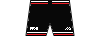  1995–1996 |
   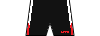  1997 |
     1998 |
     1999–2000 |
     2001–2002 |
     2003 |
     2004–2005 |
   2006–2007 |
     2008–2009 |
    2010 |
   2011 |
 2012 |
   2013 |
  2014 |
   2015 |
   2016 |
    2017 |
     2018 |
  2019 |
   2020 |
    2021 |
     2022 |
     2023 |
    2024 |
    2025– | |||
| Alternative kit - 3rd | ||||
1992 - 1993 Cup 1st |
1992 - 1993 Cup 2nd |
    1994 - 1996 Cup 1st |
    1994 - 1996 Cup 2nd |
1997 Cup 1st |
1997 Cup 2nd |
   2012 3rd |
     2013 3rd |
     2014 3rd |
  2017 3rd |
 2019 3rd |
   2020 3rd |
     2022 PSG game |
     2022 Eintracht Frankfurt game |
   2023 3rd |
   2023 ACL 2022 |
   ACL2023/24 1st FIFA 2023 1st |
 ACL 2023/24 2nd FIFA 2023 2nd |
     2024 3rd |
    2025 3rd |
Players
First-team squad
- As of 23 February 2026.[16]
Note: Flags indicate national team as defined under FIFA eligibility rules; some limited exceptions apply. Players may hold more than one non-FIFA nationality.
|
|


Out on loan
Note: Flags indicate national team as defined under FIFA eligibility rules; some limited exceptions apply. Players may hold more than one non-FIFA nationality.
|
|
Management and staff
- As of 23 February 2026[17]
| Position | Name |
|---|---|
| Sporting director | Hisashi Tsuchida |
| Interim manager | Tatsuya Tanaka |
| Assistant manager | Maiki Hayashi Nobuyasu Ikeda Masato Maesako Tomoki Hasegawa |
| Goalkeeper coach | Hitoshi Shiota |
| Physical coach | Tatsuru Ishiguri |
| Analyst | Kentaro Nagai |
Honours
As both Mitsubishi Motors (amateur era) and Urawa Red Diamonds (professional era)
| Type | Honours | Titles | Season |
|---|---|---|---|
| League | J1 League | 1 | 2006 |
| Japan Soccer League Division 1 | 4 | 1969, 1973, 1978, 1982 | |
| Japan Soccer League Division 2 | 1 | 1989–90 | |
| Cup | Emperor's Cup | 8 | 1971, 1973, 1978, 1980, 2005, 2006, 2018, 2021 |
| J.League Cup | 2 | 2003, 2016 | |
| Japanese Super Cup | 5 | 1979, 1980, 1983, 2006, 2022 | |
| JSL Cup | 2 | 1978, 1981 | |
| Continental | AFC Champions League | 3 | 2007, 2017, 2022 |
| Regional | J.League Cup / Copa Sudamericana Championship | 1 | 2017 |
Bold is for those competition that are currently active.
Records and statistics
As of 19 March 2026.
| Rank | Player | Years | Club appearance |
|---|---|---|---|
| 1 | Nobuhisa Yamada |
1994–2013 | 725 |
| 2 | Shūsaku Nishikawa |
2014–present | 529 |
| 3 | Keita Suzuki |
2000–2015 | 508 |
| 4 | Yuki Abe |
2007–2010,
2012–2022 |
502 |
| 5 | Tadaaki Hirakawa |
2002–2018 | 456 |
| 6 | Tomoaki Makino |
2012–2021 | 421 |
| 7 | Shinzō Kōroki |
2013–2024 | 420 |
| 8 | Takahiro Sekine |
2013–2017,
2019–present |
412 |
| 9 | Yōsuke Kashiwagi |
2010–2021 | 409 |
| 10 | Tomoya Ugajin |
2010–2021,
2024 |
401 |
| Rank | Player | Club appearance | Total goals |
|---|---|---|---|
| 2 | Masahiro Fukuda |
355 | 172 |
| 2 | Shinzō Kōroki |
420 | 156 |
| 3 |  Emerson Sheik Emerson Sheik |
129 | 94 |
| 4 | Yuichiro Nagai |
373 | 82 |
| 5 | Tatsuya Tanaka |
295 | 78 |
| 6 |  Edmílson Edmílson |
141 | 61 |
| 7 | Washington |
75 | 59 |
| 8 | Yuki Muto |
269 | 53 |
| 9 | Yuki Abe |
502 | 52 |
| 10 | Yōsuke Kashiwagi |
409 | 49 |
- Biggest wins:
- 9–0 vs Mitsubishi Cable Industries SC (17 December 1972)
- 9–0 vs Minebea Mitsumi (3 December 2000)
- Heaviest defeats: 1–8 vs Nagoya Grampus (29 May 1999)
- Youngest goal scorers: Takahiro Kunimoto ~ 16 years 8 days old (On 16 October 2013 vs Montedio Yamagata)
- Oldest goal scorers: Yuki Abe ~ 39 years 8 months 3 days old (On 9 May 2021 vs Vegalta Sendai)
- Youngest ever debutant: Takahiro Kunimoto ~ 16 years 8 days old (On 16 October 2013 vs Montedio Yamagata)
- Oldest ever player: Yuki Abe ~ 40 years 2 months 28 days old (On 4 December 2021 vs Nagoya Grampus)
Award winners
FIFA World Cup players
The following players have represented their country at the FIFA World Cup whilst playing for Urawa Red Diamonds:

Club captains
 Koichi Shitani (1992–1993)
- Masahiro Fukuda (1994–1997)
- Takashi Tsuchida (1998–1999)
- Shinji Ono (2000–2001)
- Masami Ihara (2001–2002)
- Hideki Uchidate (2003)
- Nobuhisa Yamada (2004–2008)
- Keita Suzuki (2009–2011)
- Yuki Abe (2012–2017)
- Yōsuke Kashiwagi (2018–2019)
- Shusaku Nishikawa (2020–2022)
- Hiroki Sakai (2023–2024)
- Takahiro Sekine (2025)
- Ryōma Watanabe (2026–present)
Former players
International capped players


Managerial history
| Name | Period | Honours |
|---|---|---|
| Hiroshi Ninomiya | 1 February 1967 – 31 January 1975 | – 1969 Japan Soccer League Division 1
– 1973 Japan Soccer League Division 1 |
| Kenzo Yokoyama | 1 February 1975 – 31 January 1984 | – 1978 Japan Soccer League Division 1
– 1982 Japan Soccer League Division 1 |
| Kuniya Daini | 1 February 1984 – 30 June 1989 | |
| Kazuo Saito | 1 July 1989 – 30 June 1992 | – 1989–90 Japan Soccer League Division 2 |
| Takaji Mori | 1 July 1993 – 31 January 1994 | |
| Kenzo Yokoyama (2) | 1 February 1994 – 31 January 1995 | |
| As Urawa Red Diamonds | ||
| Holger Osieck | 1 February 1995 – 31 December 1996 | |
| Horst Köppel | 1 February 1997 – 31 December 1998 | |
| Hiromi Hara | 1 February 1998 – 30 June 1999 | |
 Aad de Mos Aad de Mos | 1 July 1999 – 3 December 1999 | |
| Yasushi Yoshida | 4 December 1999 – 31 January 2000 | |
| Kazuo Saito (2) | 2 February 2000 – 2 October 2000 | |
| Kenzo Yokoyama (3) | 3 October 2000 – 31 January 2001 | |
| Tita | 1 February 2001 – 27 August 2001 | |
| Pita | 28 August 2001 – 31 January 2001 | |
| Hans Ooft | 1 February 2002 – 31 January 2004 | – 2003 J.League Cup |
| Guido Buchwald | 1 February 2004 – 31 January 2007 | – 2005 Emperor's Cup |
| Holger Osieck (2) | 1 February 2007 – 16 March 2008 | – 2007 AFC Champions League |
| Gert Engels | 16 March 2008 – 27 November 2008 | |
| Volker Finke | 1 February 2009 – 31 January 2011 | |
 Željko Petrović Željko Petrović | 1 February 2011 – 20 October 2011 | |
| Takafumi Hori (caretaker) | 20 October 2011 – 31 January 2012 | |
 Mihailo Petrović Mihailo Petrović | 1 February 2012 – 30 July 2017 | – 2016 J.League Cup |
| Takafumi Hori | 31 July 2017 – 2 April 2018 | – 2017 AFC Champions League |
| Tsuyoshi Otsuki | 3 April 2018 – 24 April 2018 | |
| Oswaldo de Oliveira | 25 April 2018 – 28 May 2019 | – 2018 Emperor's Cup |
| Tsuyoshi Otsuki (2) | 29 May 2019 – 22 December 2020 | |
 Ricardo Rodríguez Ricardo Rodríguez | 22 December 2020 – 30 October 2022 | – 2021 Emperor's Cup |
 Maciej Skorża Maciej Skorża | 10 November 2022 – 30 December 2023 | |
 Per-Mathias Høgmo Per-Mathias Høgmo | 1 January 2024 – 27 August 2024 | |
| Nobuyasu Ikeda (interim) | 27 August 2024 – 1 September 2024 | |
| Maciej Skorża (2) | 1 September 2024 – 28 April 2026 | |
| Tatsuya Tanaka (interim) | 28 April 2026–12 June 2026 | |
 Cho Kwi-jae Cho Kwi-jae | 17 June 2026–present | |
Season by season record
| Champions | Runners-up | Third place | Promoted | Relegated |
| Season | Div. | Teams | Pos. | Avg. Attd. | J.League Cup | Emperor's Cup | Super Cup | AFC CL | Others | |
|---|---|---|---|---|---|---|---|---|---|---|
| 1992 | – | Group stage | Semi-final | – | – | |||||
| 1993 | J1 | 10 | 10th | 11,459 | 2nd round | |||||
| 1994 | 12 | 12th | 18,475 | 3rd round | – | |||||
| 1995 | 14 | 4th | 19,560 | – | Quarter-final | |||||
| 1996 | 16 | 6th | 24,329 | Semi-final | – | |||||
| 1997 | 17 | 10th | 20,504 | Round of 16 | ||||||
| 1998 | 18 | 6th | 22,706 | Group stage | Quarter-final | |||||
| 1999 | 16 | 15th | 21,206 | Round of 16 | – | |||||
| 2000 | J2 | 11 | 2nd | 16,923 | ||||||
| 2001 | J1 | 16 | 10th | 26,720 | Quarter-final | Semi-final | ||||
| 2002 | 11th | 26,296 | Runners-up | 3rd round | ||||||
| 2003 | 6th | 28,855 | Winners | |||||||
| 2004 | 2nd | 36,660 | Runners-up | Semi-final | ||||||
| 2005 | 18 | 39,357 | Semi-final | Winners | ||||||
| 2006 | 1st | 45,573 | Quarter-final | Winners | ||||||
| 2007 | 2nd | 46,667 | Round of 16 | Runners-up | Winners | A3 | 3rd place | |||
| FIFA CWC | ||||||||||
| 2008 | 7th | 47,609 | Group stage | 5th round | – | Semi-finals | – | |||
| 2009 | 6th | 44,210 | Quarter-final | 2nd round | – | |||||
| 2010 | 10th | 39,941 | Group stage | Quarter-final | ||||||
| 2011 | 15th | 33,910 | Runners-up | |||||||
| 2012 | 3rd | 36,634 | Group stage | Round of 16 | ||||||
| 2013 | 6th | 37,100 | Runners-up | 3rd round | Group stage | |||||
| 2014 | 2nd | 35,516 | Quarter-final | – | ||||||
| 2015 | 3rd | 38,745 | Runners-up | Group stage | ||||||
| 2016 | 2nd | 36,935 | Winners | Round of 16 | – | Round of 16 | ||||
| 2017 | 7th | 33,542 | Quarter-final | Runners-up | Winners | Suruga | Winners | |||
| FIFA CWC | 5th place | |||||||||
| 2018 | 5th | 34,798 | Play-off stage | Winners | – | |||||
| 2019 | 14th | 34,184 | Quarter-final | Round of 16 | Runners-up | – | ||||
| 2020 † | 10th | 7,869 | Group stage | Did not qualify | – | |||||
| 2021 † | 20 | 6th | 8,244 | Semi-final | Winners | |||||
| 2022 | 18 | 9th | 23,617 | 3rd round | Winners | – | ||||
| 2023 | 4th | 30,509 | Runners-up | Round of 16 | – | Group stage | FIFA CWC | 4th Place | ||
| 2024 | 20 | 13th | 37,519 | Group stage | Banned[18] | |||||
| 2025 | 7th | 37,350 | Play-off stage | Quarter-final | FIFA CWC | Group stage | ||||
| 2026 | 10 | TBD | N/A | N/A | ||||||
| 2026-27 | 20 | TBD | TBD | TBD | ||||||
- Key
- Pos. = Position in league
- Attendance/G = Average home league attendance
- † 2020, 2021 seasons attendance reduced by COVID-19 worldwide pandemic
League history
Excepting two seasons in which they were in the second tier, Mitsubishi/Urawa has always competed in the top flight, thereby being the club with the most top flight seasons total.
- Mitsubishi (Amateur era)
- Urawa Red Diamonds (Professional era)
- Division 1 (J.League): 1993–99
- Division 2 (J.League Div.2): 2000
- Division 1 (J.League Div.1): 2001–
- Top scorer: Masahiro Fukuda with 152 goals
Notes
- The original clubs of the Japan Soccer League in 1965 were Mitsubishi Motors, Furukawa Electric, Hitachi, Yanmar Diesel, Toyo Kogyo, Yawata Steel, Toyota Industries and Nagoya Mutual Bank.
- The original clubs of the J.League in 1993 were Kashima Antlers, Urawa, JEF United Ichihara, Verdy Kawasaki, Yokohama Marinos, Yokohama Flügels, Shimizu S-Pulse, Nagoya Grampus Eight, Gamba Osaka and Sanfrecce Hiroshima.
