VN Karazin Kharkiv National University
Public university in Kharkiv, Ukraine
From Wikipedia, the free encyclopedia
The V. N. Karazin Kharkiv National University (Ukrainian: ХаÑкÑвÑÑкий наÑÑоналÑний ÑнÑвеÑÑиÑÐµÑ ÑÐ¼ÐµÐ½Ñ Ð.Ð. ÐаÑазÑна, romanized: Kharkivskyi natsionalnyi universytet imeni V.N. Karazina), also known as Kharkiv National University or Karazin University, is a public university in Kharkiv, Ukraine. It was founded in 1804 through the efforts of Vasily Karazin, becoming the second oldest university,[3] and the oldest continuously operating one, in modern-day Ukraine.

⢠Free Academy of Theoretical Knowledge (1920-21)
⢠Kharkiv Institute of Public Education (1920â1932) etc.
Kharkiv State University (1932â99)
ХаÑкÑвÑÑкий наÑÑоналÑний ÑнÑвеÑÑиÑÐµÑ ÑÐ¼ÐµÐ½Ñ Ð.Ð.ÐаÑазÑна | |
 University emblem | |
| Latin: Universitas Charcoviensis[1][2] | |
Former names | Imperial Kharkov University (1804â1917) ⢠Free Academy of Theoretical Knowledge (1920-21) ⢠Kharkiv Institute of Public Education (1920â1932) etc. Kharkiv State University (1932â99) |
|---|---|
| Motto | Cognoscere, Docere, Erudire (Latin) |
Motto in English | To Learn, To Educate, To Enlighten |
| Type | National university |
| Established | 29 January 1804 |
Academic affiliations | IAU, EUA, WHO |
| Rector | Tet. Kahanovska |
Academic staff | 2,256 |
| Students | 17,368 |
| Postgraduates | 500 |
| Address | 4, Svobody square, 61022 , , , |
| Campus | Urban |
| Colors | Blue & White |
| Affiliations | Ministry of Education and Science of Ukraine |
| Website | karazin.ua |
.jpg) | |
 | |
During the Russian invasion of Ukraine, all buildings were partially or fully destroyed by attacks from Russian forces.[4][5]
History
Russian Empire
On 29 January [O.S. 17 January] 1805, the Decree on the Opening of the Imperial University in Kharkov came into force. The university became the second university in the south of the Russian Empire. It was founded on the initiative of the local community with Vasily Karazin at the fore, whose idea was supported by the nobility and the local authorities. Count Seweryn Potocki was appointed the first supervisor of the university, the first rector being the philologist and philosopher Ivan Rizhsky.
In 1811, the Philotechnical Society was founded, while the Mathematical Society of Kharkov, the Historical and Philological Society of Kharkiv, the Naturalists Society, Societies of Physics, Chemistry, Law, among others, were established in the second half of the 19th century. The first periodicals in Slobozhanshchyna appear in the university around this time, including Kharkovski Ezhenedelnik (1812), Ukrainski Vestnik (1816â1819), Ukrainski Zhurnal (1824â1825), etc.
In 1839, a veterinary school, which in 1851 became an independent institute, was established at the university. By this time, the campus included laboratories, clinics, an astronomical observatory, a botanical garden and a library.
Previously, the university was autonomous with rectors being elected. However, from 1820 to 1850, all its activity was strictly controlled. Rectors were appointed by the Minister of Education, while scientific publications, and academic processes were censored.
In 1863, under a new Statute,[which?] the university became partly autonomous.
The university has been publishing Scientific Notes since 1874.
From the 19th century up to the early 20th century, the University of Kharkiv had four schools: School of Physics and Mathematics, School of History and Philology, School of Medicine, School of Law.
The university exerted great influence on school-life in Slobozhanshchyna in the first period of its existence, largely from 1805 to 1835.[citation needed]
Ukrainian SSR
From 1917 to 1920, there was a struggle between advocates of the Ukrainian statehood and Russian course. Some of the professors who opposed new political realities left. Most of the Ukrainian professors remained in Kharkiv. They continued working in the institutions founded by the Soviet government: the Academy of Theoretical Knowledge (1920â1921), Kharkiv Institute of Public Education (KhIPE, 1921â1930), Kharkiv Institute of National Economy, Institute of Physics and Chemistry, and Institute of Law. Kharkiv State University, consisting of seven schools â School of Physics and Mathematics, School of Chemistry, School of Biology, School of Geology and Geography, School of Literature and Linguistics (with Department of Philosophy), and School of Economy (with Department of Economic Geography) â was restored on their basis in 1932â1933.
In 1921, Kharkiv Medical Institute was founded based on the School of Medicine of the University of Kharkiv.[citation needed]
In 1936, the university was named after the late Russian writer Maxim Gorky (though he was not related to the university during his life). During the German-Soviet war, it was evacuated to the city of Kizilord in Kazakhstan, where it merged with the Kyiv University to form the United Ukrainian State University.[6] In 1943/44, the university returned to Kharkiv (the first academic year after the liberation of the city on 1 November 1943). In 1951, 800 university students suffered from persecution after they refused to pass exams in Russian. Court trials were held behind closed doors.[citation needed]
In 1977, the following schools were operating in the university: School of Mechanics and Mathematics, School of Physics, School of Geology and Geography, School of Economy, School of History, School of Philology, School of Foreign Languages, School of General Sciences, School of Correspondence Learning, and Night School.[citation needed]
Independent Ukraine

On 11 October 1999, Leonid Kuchma, the President of Ukraine issued a decree, in which he, "taking into consideration considerable contribution that Kharkiv State University made to training qualified specialists and to development of science" granted the status of a national university and named it after its founder, Vasyl Karazin.[citation needed]
In 2004, the university was given a twin building (the former Govorov Academy), opposite Svobody Square.[citation needed]
Russian shelling hit the building of the Faculty of Economics[7] which was subsequently destroyed by further Russian shelling.[8] On 5 March the university sports complex was partially destroyed. On 11 March â the building of the Faculty of Physics and Technology was partially destroyed and on 18 March â the Institute of Public Administration was partially ruined. As of 22 March 2022, according to the university's press service, the university had no intact buildings left.
Cultural activities
The university's printing press, which was established simultaneously with the institution's foundation in 1804, played a big role in the development of Ukrainian literature, serving as the centre of Kharkiv Romantic school. It produced many notable publications, including Izmail Sreznevsky's Zaporozhian Antiquities (1833-1838), Ivan Kotliarevsky's Natalka Poltavka (1838), The Muscovite Sorcerer (1841) and Eneida (1842), as well as works by Hryhoriy Kvitka-Osnovianenko, Petro Hulak-Artmovsky and other authors.[9]
Campuses and buildings
- Main building
- Northern building
- Central Scientific Library
- Students' Campus
Ranking
| University rankings | |
|---|---|
| Global â Overall | |
| THE World[10] | 477 (2021) |
Under the Soviet Union, the University of Kharkiv was decorated the Order of the Red Banner of Labour, the Order of the October Revolution and the Order of Peoples' Friendship.[citation needed]
| University rankings | |
|---|---|
| Global â Overall | |
| QS World[11] | 382 (2017) |
| Regional â Overall | |
| QS Emerging Europe and Central Asia[12] | 23 (2024) |
Kharkiv National University holds the second place in Ukraine in volume of publications and citations in scientific database Scopus and the Hirsch index, with the best academic results in the School of Medicine and School of Biology.
In 2017, according to QS World University Rankings, it is the best university in Ukraine and ranks as 382th university in the world. Also, in 2021, according to THE World University Rankings,[13] it is the best university in Ukraine and ranks as 477th university in the world.
Units

Departments
- School of Biology
- School of Chemistry
- School of Computer Sciences
- School of Ecology
- School of Economics
- School of International Economic Relations and Tourism
- School of Foreign Languages
- School of Medicine
- School of Geology, Geography, Recreation and Tourism
- School of History
- School Mechanics and Mathematics
- School of Law
- School of Physics
- School of Philology
- School of Philosophy
- School of Psychology
- School of Radiophysics
- School of Sociology
- Education and Research Institute of Ecology Archived 19 July 2019 at the Wayback Machine
- Education and Research Institute "Karazin Banking Institute"
- Education and Research Institute "Institute of Public Administration" Archived 4 March 2024 at the Wayback Machine
- Education and Research Institute "Karazin Business School"
- Institute of International Education for Study and Research
- Ukrainian Engineering Pedagogics Academy
Institute of High Technologies
- School of Physics and Technology
- School of Computer Science
- School of Energy Physics
Scientific institutions
- Kharkiv University History Museum
- State Natural History Museum of National University of Kharkiv
- The Museum of Archaeology
- The Museum of Astronomy (Hosted by the Institute of Astronomy)
Notable alumni and professors
- Notable alumni of Kharkiv University
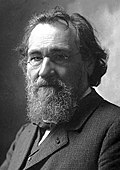


Nobel Prize winners
- Ãlie Metchnikoff (Medicine, 1908)
- Lev Landau (Physics, 1962)
- Simon Kuznets[14][15][16][17][18][19] (Economic Sciences, 1971)
Others
- Józef PiÅsudski, Chief of State of Poland, first Marshal of Poland
- Boris Gourevitch, author, activist
- Roza Sarkisyan, theatre director
- Sergiy Vilkomir, computer scientist
- Marta Fiedina, synchro swimmer
- Maria Burmaka, singer, musician
- Anton Korobov, chess Grandmaster
- Petr Shatilov, physician
Rectors


- 1805â1806, 1808â1811 Ivan Rizhsky
- 1807â1808, 1811â1813 Atanasije StojkoviÄ
- 1813â1820 Timofei Osipovsky
- 1821â1826 Vasily Dzhunkovsky
- 1826â1829, 1833â1836 Johan Christian Kroneberg
- 1829â1830 Andrej Dudrovich
- 1830â1833 Nikolai Yellinsky
- 1836â1837 Vasily Komlishinsky
- 1837â1838 Andrey Pavlovsky
- 1839â1841, 1849â1850, 1852â1853 Alexey Kunitsyn
- 1841â1849 Petro Hulak-Artemovskyi
- 1850â1852, 1872â1873 Alexander Paliumbetsky
- 1853â1859 Karl Voigt
- 1859â1862 Alexander Roslavsky-Petrovsky
- 1862â1872 Vladimir Kochetov
- 1873â1881 Adolphe Pitra
- 1881â1884 Grigory Tsekhanovetsky
- 1884â1890 Ivan Shchelkov
- 1890â1899 Mikhail Alekseyenko
- 1899â1901 Herman Lagermarck
- 1901â1905 Nikolay Kuplevasky
- 1905â1906 Ludwig Reinhard
- 1906â1911 Dmytro Bahalii
- 1912â1918 Ivan Netushil
- 1918â1919 Porfiry Pyatnitsky
- 1919â1920 Vladimir Levitsky
- 1920â1922 Anthony-Boniface Psheborskyi
- 1922â1924 Semen Strelbytskyi
- 1924â1930 Myroslav Gavrylov

Constructivist House of Projects, 1930s before the university moved to it. - 1930â1934 Yakov Bludov
- 1934â1937 Oleksiy Neforosny
- 1937â1938 Lazar Gurevich
- 1938â1941 Oleksandr Sazonov
- 1941â1942 Andriy Zhelehovskyi
- 1942â1943 Mykhailo Vetukhov
- 1943 Oleksiy Rusko
- 1943â1945 Nikolai Barabashov
- 1945â1960 Ivan Bulankin
- 1960â1966 Volodymyr Lavrushyn
- 1966â1975 Volodymyr Hotkevich
- 1975â1993 Ivan Tarapov
- 1993â1998 Svich Vasyl
- 1998â2021 Vil Bakirov
- 2021âpresent Tatyana Kaganovska

