Victor Louis
French architect
From Wikipedia, the free encyclopedia
Victor Louis (French pronunciation: [viktɔʁ lwi]; 10 May 1731, Paris – 2 July 1800, Paris) was a French architect, disqualified on a technicality from winning the Prix de Rome in architecture in 1755.[1]

Victor Louis | |
|---|---|
Victor Louis | |
| Born | 10 May 1731 Paris, France |
| Died | 2 July 1800 (aged 69) Paris, France |
| Occupation | Architect |
| Spouse | Marie-Emmanuelle Bayon Louis |
| Children | Marie-Hélène-Victoire Louis |
Life
He was born Louis-Nicolas Louis in Paris.[2] He did not adopt the name Victor until after he returned from a trip to Poland in 1765.[3] In 1770 he married the pianist and composer Marie-Emmanuelle Bayon. They had a daughter, Marie-Hélène-Victoire, in 1774.[4] A full biography of Victor Louis was published by Charles Marionneau in Bordeaux in 1881.[5]
Work
Louis' masterpiece is the Grand Théâtre de Bordeaux of 1780.[6] He also designed other theatres, including the Salle Richelieu on the rue de Richelieu (1790, later to become the home of the Comédie-Française) and the Théâtre National de la rue de la Loi (1793, demolished).[7] The Salle Richelieu was the first major building with a roof structure of iron which was selected for its fire-resistant qualities when compared with wood.[8][9] Other buildings include the Intendance in Besançon (completed 1776), the garden galleries of the Palais-Royal in Paris (1781–1784), the Salle de Beaujolais (1782–83), and the Château du Bouilh near Bordeaux (1786–1789, unfinished).[10][11]
Gallery
![Château de Filières [fr], Gommerville, 1768](//upload.wikimedia.org/wikipedia/commons/thumb/4/4a/FILIERES.JPG/120px-FILIERES.JPG) Château de Filières, Gommerville, 1768
Château de Filières, Gommerville, 1768 Grand Théâtre de Bordeaux, 1773–1780
 Central staircase of the Théâtre de Bordeaux
![Hôtel de Saige [fr], Bordeaux, 1775–1777](//upload.wikimedia.org/wikipedia/commons/thumb/0/05/H%C3%B4tel_Saige%2C_Bordeaux%2C_2020%2C_rue_Esprit_des_lois.jpg/120px-H%C3%B4tel_Saige%2C_Bordeaux%2C_2020%2C_rue_Esprit_des_lois.jpg) Hôtel de Saige, Bordeaux, 1775–1777
Hôtel de Saige, Bordeaux, 1775–1777![Intendance de Besançon [fr] (garden facade), 1771–1778](//upload.wikimedia.org/wikipedia/commons/thumb/1/13/Pr%C3%A9fecture_du_Doubs_%28fa%C3%A7ade_sur_jardin%29_%28adjusted%29.jpg/120px-Pr%C3%A9fecture_du_Doubs_%28fa%C3%A7ade_sur_jardin%29_%28adjusted%29.jpg) Intendance de Besançon (garden facade), 1771–1778
Intendance de Besançon (garden facade), 1771–1778![Château de Tauzia [fr], Gradignan, 1778](//upload.wikimedia.org/wikipedia/commons/thumb/8/8e/Ch%C3%A2teau_de_Tauzia_Gradignan_vue_parc.JPG/120px-Ch%C3%A2teau_de_Tauzia_Gradignan_vue_parc.JPG) Château de Tauzia, Gradignan, 1778
Château de Tauzia, Gradignan, 1778![Château d'Anglade [fr], Izon, 1778](//upload.wikimedia.org/wikipedia/commons/thumb/8/8a/Izon_Ch%24ateau_d%27Anglade_1.JPG/120px-Izon_Ch%24ateau_d%27Anglade_1.JPG) Château d'Anglade, Izon, 1778
Château d'Anglade, Izon, 1778 Salle Richelieu
(as designed by Louis) Auditorium of the Salle Richelieu
(as designed by Louis)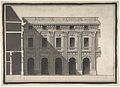 Design for the garden galleries of the Palais-Royal
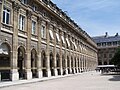 Perspective view of the garden galleries of the Palais-Royal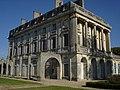
 Auditorium of the Théâtre-National
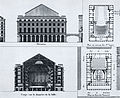 Architectural drawings of the Théâtre-National
![Château de Filières [fr], Gommerville, 1768](#/media/File:FILIERES.JPG)


![Hôtel de Saige [fr], Bordeaux, 1775–1777](#/media/File:Hôtel_Saige,_Bordeaux,_2020,_rue_Esprit_des_lois.jpg)
![Intendance de Besançon [fr] (garden facade), 1771–1778](#/media/File:Préfecture_du_Doubs_(façade_sur_jardin)_(adjusted).jpg)
![Château de Tauzia [fr], Gradignan, 1778](#/media/File:Château_de_Tauzia_Gradignan_vue_parc.JPG)
![Château d'Anglade [fr], Izon, 1778](#/media/File:Izon_Ch$ateau_d'Anglade_1.JPG)


