Vitamin D-binding protein
Mammalian protein found in Homo sapiens
From Wikipedia, the free encyclopedia
Vitamin D-binding protein (DBP), also/originally known as gc-globulin (group-specific component), is a protein that in humans is encoded by the GC gene.[5][6] DBP is genetically the oldest member of the albuminoid family and appeared early in the evolution of vertebrates.[7]

| GC | |||||||||||||||||||||||||||||||||||||||||||||||||||
|---|---|---|---|---|---|---|---|---|---|---|---|---|---|---|---|---|---|---|---|---|---|---|---|---|---|---|---|---|---|---|---|---|---|---|---|---|---|---|---|---|---|---|---|---|---|---|---|---|---|---|---|
| |||||||||||||||||||||||||||||||||||||||||||||||||||
| |||||||||||||||||||||||||||||||||||||||||||||||||||
| Identifiers | |||||||||||||||||||||||||||||||||||||||||||||||||||
| Aliases | GC, DBP, DBP/GRD3, HEL-S-51, VDBG, VDBP, Gc-MAF, GcMAF, vitamin D binding protein, DBP-maf, VDB, GC vitamin D binding protein | ||||||||||||||||||||||||||||||||||||||||||||||||||
| External IDs | OMIM: 139200; MGI: 95669; HomoloGene: 486; GeneCards: GC; OMA:GC - orthologs | ||||||||||||||||||||||||||||||||||||||||||||||||||
| |||||||||||||||||||||||||||||||||||||||||||||||||||
| |||||||||||||||||||||||||||||||||||||||||||||||||||
| |||||||||||||||||||||||||||||||||||||||||||||||||||
| |||||||||||||||||||||||||||||||||||||||||||||||||||
| |||||||||||||||||||||||||||||||||||||||||||||||||||
| Wikidata | |||||||||||||||||||||||||||||||||||||||||||||||||||
| |||||||||||||||||||||||||||||||||||||||||||||||||||


Structure
Human GC is a glycosylated alpha-globulin, ~58 kDa in size. Its 458 amino acids are coded for by 1690 nucleotides on chromosome 4 (4q11–q13). The primary structure contains 28 cysteine residues forming multiple disulfide bonds. GC contains 3 domains. Domain 1 is composed of 10 alpha helices, domain 2 of 9, and domain 3 of 4.[8]
Function
Vitamin D-binding protein belongs to the albumin gene family, together with human serum albumin and alpha-fetoprotein. It is a multifunctional protein found in plasma, ascitic fluid, cerebrospinal fluid and on the surface of many cell types.
It is able to bind the various forms of vitamin D including ergocalciferol (vitamin D2) and cholecalciferol (vitamin D3), the 25-hydroxylated forms (calcifediol), and the active hormonal product, 1,25-dihydroxyvitamin D (calcitriol). The major proportion of vitamin D in blood is bound to this protein. It transports vitamin D metabolites between skin, liver and kidney, and then on to the various target tissues.[6][9]
Beyond acting as the carrier protein for vitamin D and its metabolites, DBP also transports free fatty acids,[10] binds to actin[11] and may help prevent actin polymerization during tissue injury.[12] It also might serve as a macrophage activator, contributing to the inflammatory response by modulating T-cell activity.[13]
As Gc protein-derived macrophage activating factor it is a Macrophage Activating Factor (MAF) that has been tested for use as a cancer treatment that would activate macrophages against cancer cells.[14]
Interactive pathway map
Click on genes, proteins and metabolites below to link to respective articles. [§ 1]
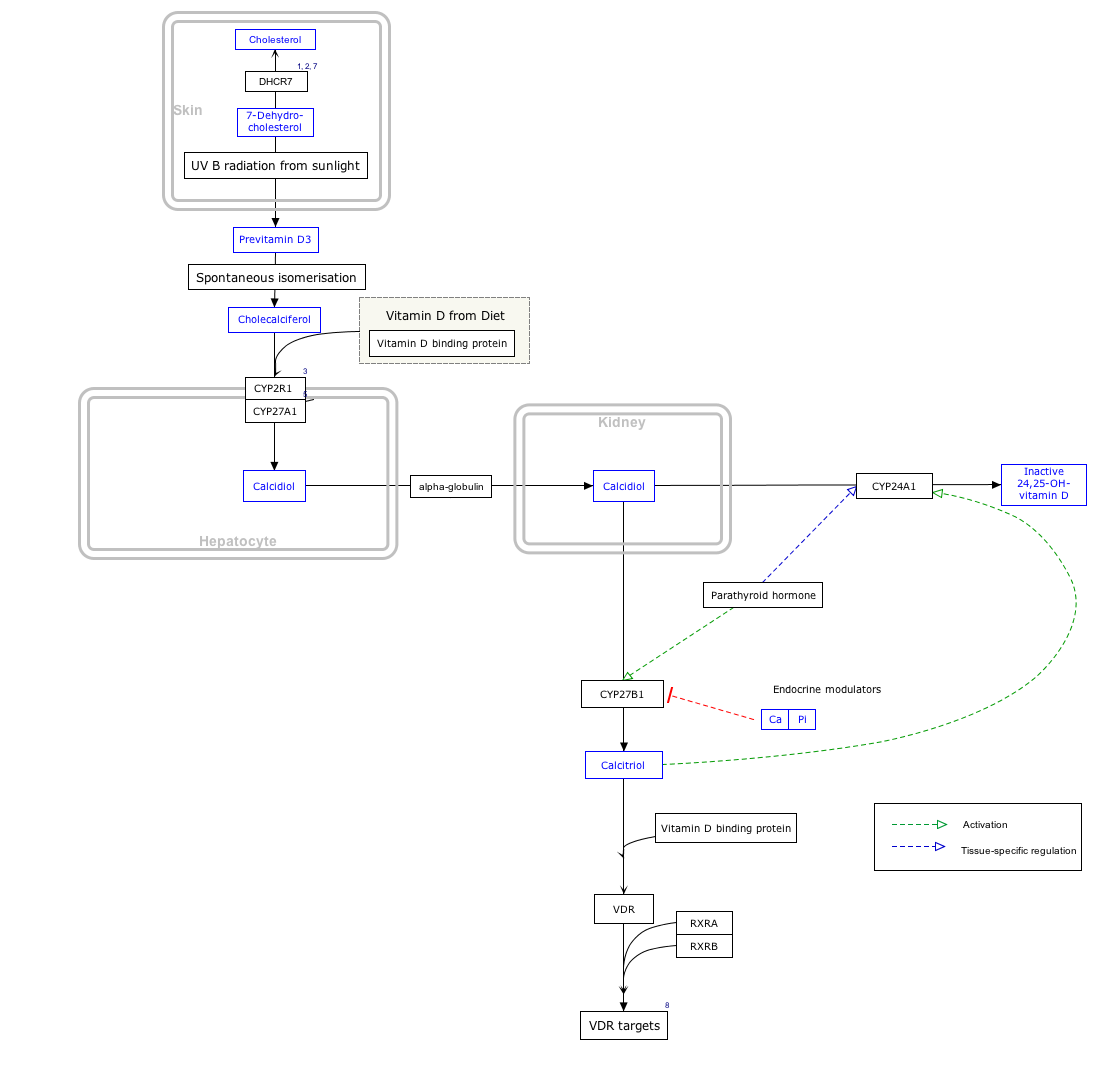
- The interactive pathway map can be edited at WikiPathways: "VitaminDSynthesis_WP1531".
Production
It is synthesized by hepatic parenchymal cells and secreted into the blood circulation.[9]
Regulation
Evolution
Phylogenetic analyses suggest that DBP diverged from ancestral albumin through gene duplication events that occurred after the separation of jawless fish (cyclostomes) from jawed vertebrates approximately 450 million years ago.[16] This timeline is supported by the apparent absence of DBP-like proteins in lampreys and hagfish, though these organisms retain vitamin D transport capability through alternative lipoprotein-mediated mechanisms.[17] DBP is found throughout jawed vertebrates, from bony fish to mammals, suggesting its evolution coincided with the development of calcified skeletons and more sophisticated calcium homeostasis requirements.[18]
Variation
Many genetic variants of the GC gene are known. They produce 6 main haplotypes and 3 main protein variants (Gc1S, Gc1F and Gc2).[19] The genetic variations are associated with differences in circulating 25-hydroxyvitamin D levels.[20] They have been proposed to account for some of the differences in vitamin D status in different ethnic groups,[21] and have been found to correlate with the response to vitamin D supplementation.[19]