Wang Hui (Qing dynasty)
Chinese landscape painter (1632–1717)
From Wikipedia, the free encyclopedia
Wang Hui (simplified Chinese: 王翚; traditional Chinese: 王翬; pinyin: Wáng Huī; 1632–1717) was a Chinese landscape painter, one of the Four Wangs. He, and the three other Wangs, dominated orthodox art in China throughout the late Ming and early Qing periods. Of the Four Wangs, Wang Hui is considered the best-known today.

Beijing, Shanghai and Taipei museums loaned works for "Landscapes Clear and Radiant: The Art of Wang Hui (1632-1717)" in 2008 at the Metropolitan Museum of Art in New York.[1][2]
Biography
Wang Hui followed in the footprints of his great-grandfathers, grandfather, father and uncles and learned painting at a very early age. He was later taught by two contemporary masters, Zhang Ke and Wang Shimin, who taught him to work in the tradition of copying famous Chinese paintings.
Gallery
 Wang Hui, A Thousand Peaks and Myriad Ravines 1693
 Wang Hui, (need title)
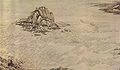 Wang Hui, Thousand miles along the Jangtse 1700
 Wang Hui, Mountains, Streams, and Autumn Trees
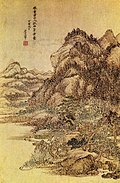 Wang Hui, Hut in the autumn rain
 Wang Hui, Fisherman Huts and Clearing Skies in Autumn
 The Beauty of Green Mountains and Rivers 1679
 Tree in Autumn and Crows, dated 1712


