William Clark Noble
From Wikipedia, the free encyclopedia
William Clark Noble | |
|---|---|
 Noble poses next to his bust of Lincoln, 1924 | |
| Born | February 10, 1858 Gardiner, Maine, US |
| Died | May 10, 1938 (aged 80) Washington, D.C., US |
| Spouse | Emile Berlin Bleecker |
| Signature | |
.png) | |
William Clark Noble (February 10, 1858 – May 10, 1938) was an American sculptor best known for his monuments.
Noble was born on February 10, 1858, in Gardiner, Maine. He was a son of Clark Noble, a ship’s captain, and Emma Freeman Noble, a descendant of Elder William Brewster, who came over on the Mayflower.[1] After his father's death at sea, his mother, older brother, and infant Clark went to live on her father's farm in Richmond, Maine.[2]
He studied with Horatio Greenough and Lorado Taft.[3] Taft, in his History of American Sculpture, remarked that Noble was one of a group of sculptors who had, "made something of a specialty of military figures."[4]
Career

Noble designed coinage for Guatemala and Panama.[5] His Guatemalan quetzal (1925)[6] and Panamanian balboa (1931)[7] each exchanged for one US dollar. In 1924, Noble was selected by the Woman's Universal Alliance to create the Mothers' Memorial to be erected in Washington, D.C., in honor of motherhood and the world's great women.[8]
He was a member of the National Arts Club and the National Sculpture Society.[9]
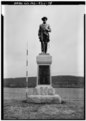
"His best-known works include the Soldiers and Sailors Monument in Newport, Rhode Island, and statues of Napoleon Bonaparte, Thomas Jefferson, and General 'Mad Anthony' Wayne for the 1904 Louisiana Purchase Exposition in St. Louis."[2]
Personal life
Noble was married three times, including his last marriage to the former Emile Berlin Bleecker. His son, William Clark Noble Jr., also became an artist.[1]
Noble died on May 10, 1938, in Washington, D.C.[1] He and his widow are buried in Mount Hope Cemetery in South Gardiner, Maine.[10]


.jpg)


