Balochi needlework
Type of handicraft made by the Baloch people
From Wikipedia, the free encyclopedia
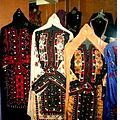
Balochi needlework (also known as Balochi embroidery; Balochi: گُد دۏچی) is a type of Balochi handicraft made by the Baloch people.[1] It is considered a heritage art, has been recognized by UNESCO, and it sells internationally.[1][2] The Baloch people are native to the Balochistan region of South and Western Asia, encompassing the countries of Pakistan, Iran, and Afghanistan.


 Balochi woman creating needlework in Iran | |
| Type | Handicraft |
|---|---|
History
The Baloch people are from the Pakistani province of Balochistan; the Iranian province of Sistan and Baluchestan; and the southern areas of Afghanistan, including Nimruz, Helmand and Kandahar provinces.[3] The exact history of Balochi needlework is unknown. One theory is Balochi needlework originated from Mehrgarh (in modern-day Pakistan), a Neolithic site and culture.[4] Another theory is it was brought from the migration of the Slavs to Balochistan approximately 200 years before the founding of Islam,[5] their traditional embroidery is called Rushnyk and contains many similarities. Another theory is the craft had developed alongside the silk production industry.[6]
Different regions of Balochi tribes have their own distinct needlework designs.[7] This craft has traditionally been created only by women, and has been passed down through the generations.[5][8][7] The stitching designs and patterning hold meaning; common motifs include arrows, "chicken feet", diamonds, and flowers.[7] Some of the designs may also incorporate other materials such as small pieces of mirror (known as shisha), different colors of thread, and/or pieces of colored fabric.[9][1] The needlework was traditionally used for decorating women's clothing,[9] however it has also been used for decorating pillows, curtains, tablecloths, and men's clothing.[10]
In 2015, the majority of the sales of Balochi needlepoint clothing happened in Pakistan and Afghanistan.[10]
In fashion
In the 1960s, Mehr Monir Jahanbani, an Iranian fashion designer, discovered Baluchi needlework and collaborated with designer Keyvan Khosrovani, to create dresses for the Queen-Empress of Iran at the time, Farah Pahlavi.[11]
- Examples of Balochi needlework styles