Bosilegrad
Town and municipality in Southern and Eastern Serbia, Serbia
From Wikipedia, the free encyclopedia
Bosilegrad (Serbian Cyrillic: Босилеград; Bulgarian: Босилеград) is a town and municipality located in the Pčinja District of southern Serbia. The municipality comprises an area of 571 km2 (220 sq mi). According to the 2022 census, the town has a population of 2,348, while the municipality has 6,065 inhabitants.[4]

Bosilegrad
| |
|---|---|
Town and municipality | |
     | |
 Flag  Coat of arms | |
 Location of the municipality of Bosilegrad within Serbia | |
| Coordinates: 42°30′N 22°28′E | |
| Country |  Serbia Serbia |
| Region | Southern and Eastern Serbia |
| District | Pčinja |
| Settlements | 37 |
| Government | |
| • Mayor | Vladimir Zaharijev (To Smo Mi) |
| Area | |
| • Town | 18.37 km2 (7.09 sq mi) |
| • Municipality | 571 km2 (220 sq mi) |
| Elevation | 696 m (2,283 ft) |
| Population (2022 census)[3] | |
| • Town | 2,348 |
| • Town density | 127.8/km2 (331.0/sq mi) |
| • Municipality | 6,065 |
| • Municipality density | 10.6/km2 (27.5/sq mi) |
| Time zone | UTC+1 (CET) |
| • Summer (DST) | UTC+2 (CEST) |
| Postal code | 17540 |
| Area code | +381(0)17 |
| Official languages | Serbian together with Bulgarian[1] |
| Website | www |
Along with Dimitrovgrad (Tsaribrod), Bosilegrad is an economic and cultural centre of Serbia's ethnic Bulgarian community.
History
Bosilegrad is a small mountain border town inside the wider region known in Serbian and Bulgarian scholarship as Krajište, Bosilegradsko Krajište, or the Kyustendil/Kraishte borderland. The modern municipality lies in the Pčinja District of south-eastern Serbia and is usually described through three connected themes: the older settlement landscape of valleys and mountain villages, the nineteenth- and early-twentieth-century shift of state borders, and the demographic contraction of a peripheral border municipality after the Second World War.[5][6]
The name of the town belongs to a wider South Slavic toponymic family of compound place-names ending in the Old Church Slavonic element -grad ('town', 'fortified settlement'), which is also present in such names as Beograd, Dimitrovgrad, or Tsargrad.[7] In the older ethnographic and antropogeographical literature, the name Bosilegrad is used both for the small market town (varošica) and for the surrounding cluster of villages forming the bosilegradski kraj, the cultural and administrative gravitating area of the Krajište sub-region.[8]
A relatively small corpus of regional studies supplies much of the basic topographic, historical and ethnographic framework for later work on Bosilegrad and its villages. The most important nineteenth- and early-twentieth-century researchers include the Czech-Austrian historian Konstantin Jireček, the Bulgarian literary historian Yordan Ivanov, the ethnographer Jordan Zahariev (whose study Kjustendilsko Krajište appeared in 1918), the geographer Rista T. Nikolić (Vlasina i Krajište, 1912), and Jovan Hadži-Vasiljević (Caribrod i Bosilegrad, 1924).[8][9] These works were collected and re-edited in the 2016 Koreni series volume Vlasina i Krajište: naselja, poreklo stanovništva, običaji, issued by Belgrade's Službeni glasnik in cooperation with the Serbian Academy of Sciences and Arts, which today serves as the principal scholarly anthology for the region.[8]
Bosilegrad also belongs to a group of small Serbian border municipalities whose contemporary identity cannot be separated from language and minority policy. The local school environment is bilingual, and both Serbian and Bulgarian Cyrillic scripts have official use in the border community.[10] The town is therefore not just a local administrative centre; it is one of the symbolic places through which Bulgaria–Serbia relations, minority rights and the memory of the 1919 border settlement are discussed.[11]
Early settlement and Ottoman-period evidence
The earliest history of Bosilegrad is difficult to reconstruct in the form of a continuous town narrative. The municipality is made up of a mountainous rural settlement network, and the historical record is usually preserved through village names, church monuments, archaeological sites and later Ottoman fiscal documentation rather than through a continuous urban chronicle. The first written data for many settlements in the present municipality come from sixteenth-century Ottoman defters, while archaeological sites and church remains are used to reconstruct earlier layers of settlement.[12]
The wider area of Krajište and the Pčinja valley belong to the central Balkan zone of long-term Slavic settlement. After the consolidation of the South Slavic population in the central Balkans during the early medieval period, the territory shifted between Byzantine, Bulgarian and Serbian political control, with church organisation moving repeatedly between the Ohrid Archbishopric, the Patriarchate of Peć and the Ecumenical Patriarchate. The very term krajište (literally "borderland") is of Old Slavic origin and was used in medieval Serbian and Bulgarian administrative practice for marcher regions where central authority was weak; the toponym therefore preserves the memory of the medieval Serbian–Bulgarian frontier.[8][13]
The church landscape is an important marker of continuity. The Church of St Nicholas in Božica, in the Bosilegrad area, is one of the oldest preserved churches in the Vlasina and Bosilegradsko Krajište region. Its building, wall painting and original iconostasis date to the first decade of the seventeenth century, placing it in the broader post-medieval Orthodox artistic world of the central Balkans.[14] For the history of Bosilegrad this monument is significant less as evidence for an urban centre than as evidence for the persistence of local Christian institutions and artistic patronage in the surrounding mountain villages during Ottoman rule.
Local history also preserves the importance of Izvor. The church of the Holy Trinity in Izvor and the school opened there in 1833 were key institutions for the Bosilegrad area, with the school described as the first educational institution of the Izvor/Bosilegrad area.[15] Such village-level institutions, founded several decades before the formal end of Ottoman rule, point to the same nineteenth-century Bulgarian National Revival processes – vernacular schooling, parish reading culture and lay literacy – that were reshaping Christian communities throughout the Sanjak of Niš and the wider Kyustendil district at this time.[16]
Nineteenth-century borderland
During the nineteenth century, the wider region was affected by the retreat of Ottoman power, the growth of new Balkan states and the rivalry of ecclesiastical and educational institutions. The competition between Serbian, Greek and Bulgarian church-school networks in the central Balkans was particularly intense in those parts of present-day eastern Serbia, western Bulgaria and northern Macedonia where dialect, ecclesiastical jurisdiction and political loyalty did not coincide. The relationship between the Principality of Serbia and the Bulgarian Exarchate, whose 1870 establishment by Ottoman firman redrew the religious map of the area, was one of the important contexts in which education, church jurisdiction and political influence interacted in the central Balkan borderlands during the 1870s.[17]
The wars of 1877–1878 brought the borderland directly into the military history of Serbia and Bulgaria. Serbian troops entered a number of south-eastern settlements in December 1877 and January 1878, including Bosilegrad, Radomir and Slivnitsa.[18] The post-war settlement laid down by the Treaty of San Stefano of March 1878 briefly assigned much of the central Balkan borderland to a large Bulgaria, but this arrangement was annulled four months later by the Treaty of Berlin, which redrew the area's borders and left Bosilegrad inside the much smaller, autonomous Principality of Bulgaria.[19] The town remained connected to the Bulgarian state space through the Serbo-Bulgarian War of 1885 and the period of the Balkan Wars in 1912–1913, and was administered as part of the Kyustendil District. In May 1917 Bosilegrad was inside the Kingdom of Bulgaria – a fact whose later use in dating the events of the Toplica Uprising makes its administrative status legally and historiographically important.[20][21]
For most of the 1880s, 1890s and the early twentieth century, Bosilegrad was therefore a small Bulgarian provincial town – a market and administrative centre for Bulgarian-speaking villages on the western edge of the Kyustendil District – rather than a Yugoslav or Serbian one. The historical region of which it was the centre is described in Bulgarian and Serbian ethnographic literature alike as part of the Šopluk/Šopsko cultural area, with a Torlakian-Šop transitional dialect that earlier nineteenth-century travellers and philologists, including Vuk Karadžić and Ami Boué, had repeatedly noted as standing between standard Serbian and standard Bulgarian.[22][8]
Cultural institutions before the First World War
The years before the First World War saw the growth of reading rooms and cultural associations in the Bosilegrad area. The first chitalishte in the area was founded in Gornja Lisina in 1909, followed by one in Donja Ljubata in 1910 and the association "Bratstvo" in Bosilegrad in 1911.[15] These institutions are important because they show that local public culture was already organised around schools, books, performance and association before the post-1919 Yugoslav border was drawn. They also typify the late phase of Bulgarian National Revival institution-building in the smaller market towns of the Kyustendil District: the chitalishte form, with its combination of public library, choir, amateur theatre, and patriotic-educational lecturing, was a defining template of Bulgarian provincial civic life in the late Ottoman and early independent period and was actively encouraged by the post-1878 Bulgarian state.[23]
The reading rooms also reveal the fragility of local cultural institutions in wartime. The Bosilegrad reading-room movement suffered destruction during the First World War, and the later interwar and wartime periods damaged book collections.[15]
The Balkan Wars and the First World War
The Balkan Wars of 1912–1913 marked a watershed in the political geography of the borderland. In the First Balkan War, a Balkan League uniting Bulgaria, Serbia, Greece and Montenegro defeated the Ottoman armies in Europe; in the Second Balkan War of June–August 1913, Bulgaria attacked its former allies and was defeated, and the Treaty of Bucharest redrew the central Balkan borders to Serbia's strategic advantage.[24] Bosilegrad and the surrounding Krajište remained inside Bulgaria after 1913, but the Bulgarian western border now ran much closer than before to the new Bulgarian–Serbian frontier line agreed at Bucharest.
In the First World War, Bulgaria entered the conflict on the side of the Central Powers in October 1915 and, together with Austria-Hungary and the German Empire, crushed the Kingdom of Serbia by the end of that year. Most of southern and eastern Serbia, including the Niš, Pirot and Vranje regions, came under Bulgarian military occupation, administered as the Military Inspection Area of Morava with its centre in Niš.[25] The Bulgarian occupation regime applied an explicit policy of "Bulgarisation", suppressing Serbian schools, language and church institutions, expelling Serbian clergy, and conscripting men of military age. Historian Milovan Pisarri has documented in detail how this policy combined with mass internment, deportations to camps inside Bulgaria, and reprisals by IMRO-affiliated paramilitary detachments operating alongside Bulgarian regular forces.[26]
The most destructive event in Bosilegrad's modern history occurred in May 1917, in the wider context of the Toplica Uprising in Bulgarian-occupied Serbia. The uprising, which lasted from 21 February to 25 March 1917, was suppressed by a combined Bulgarian–Austro-Hungarian force in which IMRO-affiliated bands under Aleksandar Protogerov and Tane Nikolov played an important repressive role. The historiography of the uprising itself has been worked out in detail by Andrej Mitrović and others, and is now treated as the only mass rebellion against occupying powers anywhere in Europe during the First World War.[27][28][29]
After the suppression of the uprising, the chetnik commander Kosta Pećanac, who had been infiltrated into Toplica by air in late 1916, withdrew from open combat. In April–May 1917 his detachment carried out a series of raids that crossed the pre-war Bulgarian frontier; the railway station at Ristovac was attacked, and on 15–16 May 1917 Pećanac's men entered Bosilegrad, then a Bulgarian district centre, and burned the town.[21][30] Pećanac then withdrew to Kosovo, at the time inside the Austro-Hungarian occupation zone, before fading from the active stage of the war until 1918.[21]
The destruction of Bosilegrad in 1917 has several long-term effects. It damaged the town's physical fabric, disrupted cultural institutions such as reading rooms and schools, and entered local memory as evidence of the insecurity of a frontier population caught between armies, irregular formations and rival national projects. According to Bulgarian historiographic accounts based on contemporary documentation, the attack on Bosilegrad and the surrounding villages caused approximately 35 civilian deaths and the destruction of the property of 317 households, with damage estimated at over 2.5 million leva of the period; this account, compiled by Angel Dzhonev of the Institute for Historical Studies of the Bulgarian Academy of Sciences, underlies the documentary exhibition The Pogrom in Bosilegrad (15–16 May 1917) that has toured Bulgarian and Serbian institutions since 2017.[31][32]
The 1917 attack also became a point of long-standing Serbian–Bulgarian disagreement, because the agents of violence, the political status of the area and the meaning of the attack are interpreted very differently in different national historiographies. Bulgarian writing tends to read the burning of Bosilegrad as an attack by Serbian irregulars on a Bulgarian civilian town beyond the active war zone; Serbian writing situates it as part of the wider chetnik response to a brutal Bulgarian occupation that included mass deportations, the Surdulica massacre of Serbian intelligentsia in 1916–1917, and the IMRO-led repression of the Toplica Uprising.[26][33]
Neuilly, the Kingdom of Serbs, Croats and Slovenes, and interwar administration
The decisive legal change came after the First World War. Under the Treaty of Neuilly-sur-Seine of 27 November 1919, Bulgaria – defeated alongside the rest of the Central Powers – accepted frontier changes in favour of the newly formed Kingdom of Serbs, Croats and Slovenes.[34][35] The Treaty obliged Bulgaria to cede some 2,500 square kilometres of territory along its western border, of which approximately 1,545 km² lay in present-day Serbia, including the Bosilegrad and Tsaribrod (later Dimitrovgrad) districts in the modern Pčinja and Pirot districts.[36] The actual handover of Bosilegrad and the surrounding Krajište to Yugoslav administration took place on 6 November 1920, when the Serbian Army occupied the ceded territories and the Bulgarian National Assembly suspended its sittings as a sign of national mourning; in Bulgarian public memory the resulting frontier became known as the "Black Border" (Černa granica).[37][15]
The interwar period is therefore the hinge between Bosilegrad's pre-1919 Bulgarian administrative context and its later Yugoslav and Serbian institutional development. Relations with Bulgaria were a major state-policy question in the first decade after the war, with the new Yugoslav state seeking to consolidate its hold over the ceded districts and Bulgaria pressing diplomatically for revision.[38] Bosilegrad was not the centre of that policy, but it was one of the border places where the practical effects of the settlement were visible in administration, schooling, language, property relations and everyday cross-border ties.
A specific feature of the interwar period in the ceded districts was the activity of the Internal Western Outland Revolutionary Organisation (IWORO, Bulgarian Vatreshna zapadnopokrajska revolyutsionna organizatsiya), founded in 1921 as a satellite of the IMRO and operating in the areas of Tsaribrod and Bosilegrad.[39] Unlike its sister organisations in Macedonia, Thrace and Dobruja, IWORO put forward an explicit "annexation" rather than "autonomy" programme, demanding the return of the ceded districts to Bulgaria, and after 1922 it carried out armed assaults on the Tsaribrod–Belgrade railway and on Yugoslav garrisons. In response, surviving chetnik veterans, with Pećanac as a leading figure, organised the Association against Bulgarian Bandits to suppress IWORO and IMRO bands in the Vardar and Western Outlands area.[40][41]
In Yugoslav administrative practice, Bosilegrad was first integrated into the regional structures of southern Serbia and from 1929 became part of the Vardar Banovina, one of the nine banovinas established under King Alexander I's royal dictatorship. In Bulgarian usage, the territories transferred from Bulgaria after the war are often called the "Western Outlands" (Zapadni pokrajnini) and are treated as a distinct historical-geographical category, while Serbian and Yugoslav administrative sources use district, county and municipal terminology and often subsume Bosilegrad into the wider category of southern Serbian frontier districts.[42]
The Second World War and socialist Yugoslavia
Bosilegrad's mid-twentieth-century history was shaped by war, post-war socialist reconstruction and the gradual concentration of administrative functions in the town. After the Axis invasion of Yugoslavia in April 1941, Tsardom of Bulgaria – which had joined the Tripartite Pact on 1 March 1941 – was permitted by Germany to occupy most of Vardar Macedonia and parts of eastern Serbia, including the Pirot district and the Western Outlands.[43] Bosilegrad was therefore reincorporated into the Bulgarian state space between April 1941 and the autumn of 1944. As elsewhere in the wartime Bulgarian zone, the occupying administration carried out an active policy of Bulgarian-language education, ecclesiastical reorganisation under the Bulgarian Orthodox Church, and the integration of local administration into Bulgarian provincial structures.[44] Some Bosilegrad cultural institutions renewed activity during this period, but collections – particularly Bulgarian-language material accumulated in interwar conditions of clandestinity – were damaged in successive wartime and post-war circumstances.[15]
After the coup of 9 September 1944 in Sofia, Bulgaria switched sides and joined the Allies, and in October 1944 the Bulgarian forces withdrew from the occupied Yugoslav territories, including the Western Outlands, which were returned to Yugoslav authority.[45] Bosilegrad and the surrounding villages thus passed once again from Bulgarian into Yugoslav administration.
After 1945, the municipality became part of the Socialist Republic of Serbia within the Federal People's (later Socialist Federal) Republic of Yugoslavia. Its history during the socialist period was less a story of rapid industrial urbanisation than of administrative consolidation, schooling, local cultural work and increasing out-migration. The official Yugoslav minority policy granted ethnic Bulgarians recognised national-minority status, with Bulgarian-language schooling, press and cultural institutions in Bosilegrad and Dimitrovgrad; tensions over this status nevertheless reappeared during the Yugoslav–Bulgarian political conflicts of 1948 and the early 1950s, when cross-border movement was severely restricted and the local Bulgarian intelligentsia faced repeated waves of suspicion.[46]
The official establishment of the modern public library tradition culminated in the founding of the town library in 1966, after earlier reading-room and school-library traditions; the library subsequently took on the name "Hristo Botev" and became responsible for an active local-history publishing programme that has been important for preserving monographs and source material on Bosilegrad's villages.[15]
The socialist decades also produced the demographic pattern that became decisive after the 1960s. Bosilegrad municipality had 18,816 inhabitants in 1948 and 8,129 in 2011, while the rural population fell even more sharply.[6] Most of the long-term population loss was caused by migration, not only by natural decrease, and Bosilegrad has been treated in the Serbian demographic literature as a municipality of extreme depopulation – a category in which it is grouped with a broader cluster of mountainous border municipalities in southeastern Serbia such as Crna Trava, Trgovište and Babušnica.[6][47]
Demography, minority status and contemporary memory
The demographic contraction of Bosilegrad is one of the clearest continuities from the socialist period to the present. The 2022 Serbian census recorded 6,065 inhabitants in Bosilegrad municipality and 2,348 in the urban settlement. In the same census table, 4,075 persons in the municipality declared Bulgarian ethnicity and 786 declared Serbian ethnicity.[48] These figures confirm the municipality's special position as a Serbian municipality with a Bulgarian ethnic majority and a small administrative centre that serves a much larger rural hinterland.
Comparative analysis of land cover and demographic dynamics in the rural border zones of Serbia has shown that Bosilegrad belongs to the most strongly depopulating cluster of municipalities in the country. Between 2002 and 2022 the population of the rural border zone fell from 941,652 to 678,447, a contraction far steeper than that of Serbia as a whole, with land-use research documenting natural reforestation of abandoned agricultural land in the Bosilegrad area as a consequence of out-migration and ageing.[49] Comparative ethnobotanical and rural-medical fieldwork in the Pčinja District, of which Bosilegrad is part, has emphasised low socio-economic development, weak infrastructure, and an ageing population dependent on small-household agriculture, with population density falling from 64 to 45 inhabitants per square kilometre between 2002 and 2011.[50]
Bosilegrad and Dimitrovgrad are the two most visible centres of the Bulgarian national minority in Serbia. Minority-rights questions have appeared both in bilateral relations and in Bulgaria's EU-related policy toward Serbia. Field research published by the Belgrade-based ISAC Fund in cooperation with the Friedrich Ebert Foundation has documented persistent local concerns over the underfunding of Bulgarian-language schooling, limited Bulgarian-language media access and weak cross-border transport links, alongside the demographic decline of the municipality, while also concluding that ethnic Bulgarians in Serbia are not subject to systematic discrimination relative to other minorities.[11] The same research underlines that the legacy of the 1917–1920 events and the Treaty of Neuilly continues to shape both the Bulgarian community's self-understanding and the way Sofia and Belgrade frame the bilateral relationship.
Local education reflects this complexity. Contemporary teaching in Bosilegrad takes place in a community characterised by bilingualism and the official use of Serbian and Bulgarian Cyrillic scripts, with bilingual signage in administrative use and a substantial portion of curriculum materials translated into Bulgarian.[10][51] Cross-border programmes funded under successive Interreg IPA Cross-border Cooperation Programmes Bulgaria–Serbia (2007–2013, 2014–2020 and 2021–2027) have channelled European Union funding into infrastructure, environmental and cultural projects in the Pčinja and Kyustendil border zone, with Bosilegrad as one of the principal Serbian beneficiary localities.[52]
In recent years, the Bosilegrad area has also become a focal point of identity-political controversy in Serbian–Bulgarian relations. Public discourse around the Šopi / Torlakian designation of the local population, the alleged promotion of a "Šopi nation" thesis by some Serbian commentators, and the handling of Bulgarian-language publications by Serbian authorities – including a 2023 incident involving the confiscation of copies of Edvin Sugarev's book Elegy for the Krajište and a criminal case against the chairman of the Cultural and Information Centre in Bosilegrad – have repeatedly drawn responses from the Bulgarian Embassy in Belgrade, the Macedonian Scientific Institute and the Bulgarian Academy of Sciences.[53][54]
Bosilegrad's recent public history is therefore marked by two simultaneous trends. On the one hand, local memory remains tied to the older settlement network, the 1917 destruction, the Neuilly border, the IWORO insurgency, the wartime Bulgarian re-occupation, and the institutions of Bulgarian-language culture. On the other hand, the municipality's practical problems are those of many peripheral Balkan border regions: population ageing, out-migration, weak investment, environmental and infrastructural concerns, and a heavy dependence on cross-border cooperation, EU pre-accession funding, and remittances from a substantial diaspora in Bulgaria, Serbia's larger urban centres, and Western Europe.[11][55]
Settlements
Aside from the town of Bosilegrad, the municipality consists of the following villages:
- Barje
- Belut
- Bistar
- Brankovci
- Bresnica
- Buceljevo
- Gložje
- Goleš
- Gornja Lisina
- Gornja Ljubata
- Gornja Ržana
- Gornje Tlamino
- Grujinci
- Doganica
- Donja Lisina
- Donja Ljubata
- Donja Ržana
- Donje Tlamino
- Dukat
- Žeravino
- Zli Dol
- Izvor
- Jarešnik
- Karamanica
- Milevci
- Mlekominci
- Musulj
- Nazarica
- Paralovo
- Ploča
- Radičevci
- Rajčilovci
- Resen
- Ribarci
- Rikačevo
- Crnoštica
Demographics
According to the 2022 census, the municipality of Bosilegrad has 6,065 inhabitants. Only 32.28% of inhabitants live in urban areas.[4]
Ethnic groups
The majority of municipality's population are Bulgarians, amounting to 72.3% of total population. Other minor ethnic groups are Serbs and Roma people. The ethnic composition of the municipality:
| Ethnic group | Population 1971[57] |
Population 1981[58] |
Population 1991[59] |
Population 2002[60] |
Population 2011[61] |
Population 2022[4] |
|---|---|---|---|---|---|---|
| Bulgarians | - | - | - | 7,037 | 5,839 | 4,075 |
| Serbs | 292 | 616 | 1,165 | 1,308 | 895 | 786 |
| Macedonians | 58 | 49 | - | 42 | 38 | 26 |
| Montenegrins | 13 | 6 | 6 | 3 | 2 | 1 |
| Romani | 13 | 10 | 3 | - | 162 | 143 |
| Muslims | 1 | 1 | 10 | - | - | - |
| Yugoslavs | 255 | 3,976 | 1,649 | 288 | 20 | 18 |
| Others | 16,675 | 9,538 | 8,811 | 1,253 | 1,173 | 1,016 |
| Total | 17,306 | 14,196 | 11,644 | 9,931 | 8,129 | 6,065 |
Gallery
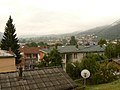 Town of Bosilegrad
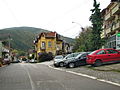 Bosilegrad town street
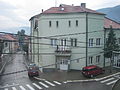 Bosilegrad town hall
 Unveiling of the monument of Bulgarian revolutionary Vasil Levski
 School in Bosilegrad
 Serbia–Bulgaria State border
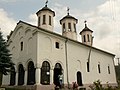 Bosilegrad Church
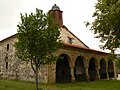 Church in Izvor, Bosilegrad
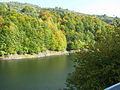 Lisinsko Lake in Bosilegrad


