Heer Ranjha
Tragic romance in Punjabi literature
From Wikipedia, the free encyclopedia
Heer Ranjha[a] (Punjabi: [ɦiɾ ɾaːnd͡ʒ(ʱ)aː]) is a classical Punjabi folk tragedy. It has many historic poetic narrations;[2] with the first one penned by Damodar Gulati in 1600s, based on a preexisting oral legend; and the most famous one, Heer, written by Waris Shah in 1766, in the form of an epic. Set in Takht Hazara and Tilla Jogian (both in Punjab, Pakistan), it follows the story of love, forced separation, and eventual simultaneous demise of two youths in the Punjabi countryside.[3]

ہیر رانجھا
ਹੀਰ ਰਾਂਝਾ
| Heer Ranjha ہیر رانجھا ਹੀਰ ਰਾਂਝਾ | |
|---|---|
Painting by Shafqat Jilani (c. 1930) depicting Ranjha (playing his flute) and Heer | |
| Folk tale | |
| Name | Heer Ranjha ہیر رانجھا ਹੀਰ ਰਾਂਝਾ |
| Mythology | Punjabi folklore |
| Region | Punjab |
| Origin Date | Late 15th century (traditionally)[1] |
| Related | |
It is one of the four popular tragic romances of the Punjab. The other three are Mirza Sahiban, Sohni Mahiwal and Sassi Punnun.[4][5][6][7][8]
History
Heer Ranjha has been written by a number of poets. The earliest known Punjabi version was composed by Damodar Gulati in the early 17th century during the reign of Akbar. According to Radha Kapuria, Gulati penned his version of the tale in 1605.[9] He claimed to be its eyewitness, likely as a poetic trope. However, the tale itself had been well known in Punjab for centuries and Damodar was not the first one to narrate it. His contemporaries Shah Hussain (1538 – 1599) and Bhai Gurdas (1551 – 1636) both have alluded to it in their kafis and vars, respectively. The most well-known version is that of Waris Shah, re-narrated in 1766, in which he stated that the story has a deeper meaning, referring to the unrelenting quest that man has towards God.[10] Mansaram Munshi produced a version of Heer Ranjha in the form of an illustrated manuscript in 1744.[9] Damodar himself dates the events narrated to 1472 CE.[1]
The earliest known Persian version of Hīr was written between 1575 and 1579 by a Tajik poet Hayat Jan Baqi Kolabi. By the time of Waris Shah there were nine versions of Hīr extant in Persian, including among others, that of Mita Chenabi (1698) and Afarin Lahori (1730).[11] About twenty renditions of Hīr in Persian are known.[12] Earliest versions in Hindi (Braj) were narrated by Hari Das Haria (c. 1520s–50s), a member of Sikh Panth community, and Gang Bhatt (c. 1580s–90s), who was associated with the court of Akbar, and wrote a verse samvād in 1565.[13] There are over fifty renditions in Punjabi itself, other than that of Damodar and Waris Shah, from Hafiz Barkhurdar Ranjha, Fazal Shah Sayyad and Ahmad Yar.
Plot

Heer (Izzat Bibi) is an extremely beautiful woman, born into a wealthy family belonging to the Sial clan of Jats,[14] while Dheedo Ranjha, who is from the Ranjha clan of Jats,[15] is the youngest of four brothers and lives in the village of Takht Hazara by the Chenab river in rural Punjab.[16][17] Being his father's favourite son, unlike his brothers who have to toil in the lands, he leads a life of ease, playing the flute ('Wanjhli'/'Bansuri'). After the death of Ranjha's father, Mauju Chaudhry, Ranjha has a quarrel with his brothers over land, and leaves his home. In Waris Shah's version of the epic, Ranjha leaves home because his brothers' wives refused to serve him food.
Eventually he arrives in Heer's village and falls in love with her. Heer's father offers Ranjha a job of herding his cattle. Ranjha, routinely, plays his flute in the fields after work and Heer becomes mesmerized by it and eventually falls in love with him. They meet each other secretly for several years until they are caught by Heer's envious uncle, Kaido, and her parents Chuchak and Malki. Heer is forced by her family and the local priest (Maulvi) to marry another man named Saida Khera, belonging to the Khera clan.[3]
Ranjha is left heartbroken. He wanders the countryside alone, until he eventually meets a Jogi (ascetic). After meeting Gorakhnath, the legendary founder of the Kanphata (pierced ear) sect of Jogis at Tilla Jogian ("Hill of Ascetics"), Ranjha becomes a jogi himself, piercing his ears and renouncing the material world. While reciting the name of the Lord, he wanders all over Punjab, eventually finding the village where Heer now lives.
The two return to Heer's village, where Heer's parents agree to their marriage – though some versions of the tale state that the parents' agreement is only a deception. On the wedding day, Kaido, Heer's uncle, poisons her food in order to punish the girl for her behaviour. Hearing this news, Ranjha rushes to aid Heer, but is too late, as she has already eaten the poison-laced food and has died. Brokenhearted once again, Ranjha eats the remaining poisoned food and dies by her side.

Heer and Ranjha are buried in Heer's hometown, Jhang. Love-smitten couples and others often pay visit to their mausoleum.[3][18][19]
Legacy and influence
Heer Ranjha is part of the Qissa genre of tragic love stories, along with tales such as Laila Majnu and Sassui Punnhun.[20]
Because its plot involves a romance opposed by family members and ends with the two lovers dying, the story is often compared to the Shakespeare play Romeo and Juliet.[21][22]
In popular culture
The epic poem has been made into several feature films and television adaptations since 1928:[23]
| Title and year of release | Type | Actors | Production Details and Music Composition |
|---|---|---|---|
| Heer Ranjha (1928)[23] | Film | Zubeida as Heer, Shehzadi, Jani Babu | Fatma Begum, Victoria Fatma Co./FCo |
| Heer Sundari (1928)[24] | Film | Janibabu, Nirasha, Master Vithal | Anand Prasad Kapoor, Sharda Film Co. |
| Heer Ranjha (Hoor-e-Punjab) (1929)[23] | Film | Salochna as Heer, Dinshaw Bilimoria as Ranjha, Jamshedji, Neelum, M. Ismail as Kaidu, Abdul Rashid Kardar as Saeda Kherra | Hakim Ram Parasad (Producer), Pesi Karani & R. S. Chaudhry (Directors), Imperial Film Company, Bombay |
| Heer Ranjha (1931)[24] | Film | Master Faqira as Ranjha, Shanta Kumari as Heer | J. P. Advani, Karishna Tone |
| Heer Ranjha (1932)[24] | Film | Rafiq Ghaznavi as Ranjha, Anwari Bai as Heer | Abdul Rashid Kardar, Hakim Ram Parasad at Lahore. Music by Rafiq Ghaznavi |
| Heer Syal (1938)[24] | Film | Eiden Bai, Haider Bandi, M. Ismail, Noor Jehan | Krishna Dev Mehra |
| Heer Ranjha (1948)[24] | Film | Mumtaz Shanti as Heer, Ghulam Mohammed as Ranjha | Wali Sahib. Music by Aziz Khan |
| Heer (1955) | Film | Swaran Lata as Heer, Inayat Hussain Bhatti as Ranjha | Nazir at Lahore. Music by Hazin Qadri, Safdar Hussain. |
| Heer (1956)[24] | Film | Nutan as Heer, Pradeep Kumar as Ranjha | Hameed Butt. Music: Majrooh Sultanpuri, lyricist, and Anil Biswas, composer |
| Heer Syal (1960)[24] | Film | Shanti Prakash Bakshi | |
| Heer Sial (1962) | Film | Bahar Begum as Heer, Sudhir as Ranjha | |
| Heer Sial (1965) | Film | Firdaus as Heer, Akmal Khan as Ranjha | Jafar Bukhari at Lahore. Music by Tanvir Naqvi, Bakhshi–Wazir. |
| Heer Ranjha (1970)[23] | Film | Firdaus as Heer, Ejaz Durrani as Ranjha | Masood Pervez at Lahore. Music by Ahmad Rahi, Khurshid Anwar |
| Heer Raanjha (1970)[23] | Film | Priya Rajvansh as Heer, Raaj Kumar as Ranjha | Chetan Anand. Music by Kaifi Azmi, Madan Mohan |
| Sayyed Waris Shah (1980)[24] | Film | Urmila Bhatt, Ajit Singh Deol, Koushalya Devi, Prema Kumari | Music by Ganpat Rao |
| Aaj Di Heer (1983)[24] | Film | Tina Ghai, Satish Kaul, Mehar Mittal, Om Shivpuri | Raj Oberoi. Music by B. N. Bali |
| Heer Ranjha (1992)[23] | Film | Sridevi as Heer, Anil Kapoor as Ranjha | Harmesh Malhotra. Music by Anand Bakshi, Laxmikant Pyarelal |
| Waris Shah: Ishq Daa Waaris (2006) | Film | Gurdas Maan, Juhi Chawla, Sushant Singh, Divya Dutta | Manoj Punj, Manjeet Maan (Sai Productions). Music by Jaidev Kumar |
| Heer Ranjha: A True Love Story (2009) | Film | Neeru Bajwa as Heer, Harbhajan Mann as Ranjha | Ksshitij Chaudhary and Harjit Singh. Music by Babu Singh Mann, Gurmeet Singh |
| Heer Ranjha (2013) | TV series | Produced for PTV Home. | Directed by Shahid Zahoor; produced by Yousuf Salahuddin |
| Heer Ranjha (2020)[25] | TV series | Amaninder Pal Singh and Sara Gurpal.
Produced for Zee Punjabi. |
In music
"Ranjha"[26] (2001) by British musician Bally Jagpal from his album "Untruly Yours" is a retelling of the Heer Ranjha story.
"Jogi"[27] (2003) by British musician Panjabi MC, featuring vocals by various Pakistani singers, including the classical/traditional artist Ghulam Ali, references the tale of Heer and Ranjha.
Ustadh Nusrat Fateh Ali Khan mentions Heer in his Qawwali Khooni Akhiyan alongside Sassui(-Punnhun), and Sohni (-Mahiwal); the folk lovers become parables for the seeker’s relationship with God — showing that true love is total, dangerous, and often fatal, but also the only path to union.
"Ranjha"[28] by Rupesh Kumar Ram from the movie Queen references the story.
"Ranjha Ranjha"[29] by Rekha Bhardwaj and Javed Ali from the movie Raavan references the story.
"Dariya" from the movie Baar Baar Dekho references the story.
Tamasha (2015) mentions their love story and includes a song starting with Heer's name.
Kuldeep Manak sings about the tale in his 2007 song Ranjha Jogi Hoya.[30]
"Khaireyan De Naal"[31] (2008) from Shafqat Amanat Ali's debut solo album,Tabeer, tells the tale of Heer Ranjha.
"Heer"[32] (2012) is a song from the 2012 Hindi film Jab Tak Hai Jaan.
"Heeriye" (2018) is a song from the 2018 Hindi film Race 3.
"Heer Ranjha" (2020) is a song and video from Indian YouTuber Bhuvan Bam wrote and sang, and has garnered more than 10 million views.
"Ranjha" (2023) by Raf Saperra is a song from the perspective of Heer longing for Ranjha's return after she is married and he has become a jogi.
Gallery
 Marriage procession of Heer by a Lahori artist
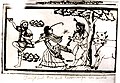 Heer Ranjha and Qaido. Gujjar Singh Saudagar Kutubfrosh. Amritsar. ca.1875
 Heer Ranjha - Two Women, Jodhpur school, watercolor, Tokyo National Museum.
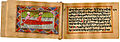 Luddan ferries Ranjha across the Chenab


