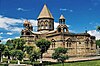
Holy Saviour Monastery of Julfa
From Wikipedia, the free encyclopedia
| Holy Saviour Monastery of Julfa | |
|---|---|
Սուրբ Ամենափրկիչ վանք (Ջուղա) | |
 Holy Saviour Monastery of Julfa | |
| Religion | |
| Affiliation | Armenian Apostolic Church |
| Rite | Armenian Apostolic |
| Ecclesiastical or organizational status | yes |
| Status | Destroyed |
| Location | |
| Location | Jugha, Nakhichevan Autonomous Republic |
 | |
| Geographic coordinates | 38°58′27″N 45°33′53″E / 38.97417°N 45.56472°E |
| Architecture | |
| Style | Armenian |
| Completed | 9th-10th century |
| Destroyed | 1997–2003 |
Holy Saviour Monastery of Julfa (Armenian: Ջուղայի Սուրբ Ամենափրկիչ վանք, St. Astvatsatsin Monastery) was an Armenian Apostolic monastery, located north-west of Jugha cemetery at the end of the gorge, 3 km away from the cemetery, on that slope of a high mountain.[1] In the southern part of the monastery, at the foot of the Magharda mountain range, the Araks River flows.
According to Mesrop Smbatyants (hy), the monastery was founded in 1271 by Baron Vahram. However, there is written information about the monastic complex prior to 1271. Holy Saviour monastery dates to the time of Khachik II. In 976 king Ashot the Merciful donated money to the monastery, according to St. Stephen Monastery documents. It is believed that the original building of the monastery complex was founded no later than the 9th to 10th centuries. According to Ayvazyan, it was founded in the 12-13th centuries.[2]