
Ketch Ranch House (Oklahoma)
Bungalow in Oklahoma, United States of America
From Wikipedia, the free encyclopedia
Ketch Ranch House or Ketch Ranch was private property located in the Wichita Mountains of Southwestern Oklahoma.[1] During the early 1920s, the forest reserve residence was established as a working ranch and vacation home for Ada May Ketch and Frank Levant Ketch who served as mayor of Ringling, Oklahoma.[2]

- Circle K Ranch (1929)
- Monte Vista Ranch (1932)
- Comanche County, Oklahoma
- Fort Sill Military Reservation
| Ketch Ranch House | |
|---|---|
 | |
 Interactive map of the Ketch Ranch House area | |
| Alternative names |
|
| General information | |
| Type | Bungalow |
| Architectural style | |
| Location |
|
| Coordinates | 34.7048714°N 98.5728528°W |
| Groundbreaking | May 1923 |
| Completed | 1924 |
| Cost | $4500.00 |
| Owner |
|
| Height | |
| Roof | Shingle |
| Technical details | |
| Material | Cobblestone |
| Floor count | One |
| Floor area | 2,146 square feet (199.4 m2) |
| Grounds | 5,145 acres (2,082 ha) |
| Design and construction | |
| Known for | Cobblestone architecture |
| Other information | |
| Number of rooms | Six |
The Wichita Mountains ranch offered a barn, guest house, smokehouse, springhouse, root cellar, and the vital rural house structure located near Blue Beaver Valley Road.[3] The nature reserve residence provided outdoor experiences with hiking, horseback riding, boating, and fishing at Ketch Lake which was close proximity being 1 mile (1.6 km) west of the Ketch Ranch House.[4]
Ada May Ketch purchased the Wichita Mountain acreage on May 8, 1923, from S.P. Thornhill through the property holdings of First National Bank of Lawton. The Ketch Ranch was developed during the economic prosperity years of the Roaring Twenties which simultaneously encompassed the creation of Oklahoma Senator Elmer Thomas's River Rock Resort better known as Medicine Park, Oklahoma.[5][6]
By 1932, the Ketch Ranch estate was affected by the Wall Street Crash of 1929. In 1934, the estate was sold on a joint extension agreement to the Monte Vista Ranch enterprise whereas the Ketch family retained the Wichita Mountains reserve residence.
On January 10, 1941, the United States government acquired the Monte Vista Ranch property through the provisions of Declaration of Taking Act and United States Constitution Fifth Amendment. The United States congressional legislation authorized the land expansion of the Fort Sill Military Reservation while protecting the United States national security given the ascension of the Axis powers of 1930s and the commencement of World War II.
Case Law and Jake L. Hamon, Sr. Estate
Frank Ketch served as the business administrator for the Jake L. Hamon Sr. estate.[7] Jake Hamon Sr. was a prominent committee member of the Republican Party where Warren Harding had appealed for Mr. Hamon to accompany his presidential cabinet as the next United States Secretary of the Interior.[8]
Mr. Hamon governed a diverse portfolio of holdings and ownership in oil and gas lease properties geographically apportioned in South Central Oklahoma. The petroleum assets were devised in the crude oil fields of Healdton, Oklahoma and Hewitt, Oklahoma.[9][10][11]
By 1920, Jake L. Hamon Properties invested in the Breckenridge oilfields of Stephens County geographically apportioned in North Texas decisively exemplary of the 1920s Texas oil boom and interwar period.[12][13][14]
During 1921, the Jake L. Hamon investments were appraised at three million U.S. dollars considering a brief eight-year period of time after discovering a prosperous 1914 blowout in the Healdton oilfield.[15]
Judicial Proceedings of Jake L. Hamon, Sr. Estate | |||||||||
|---|---|---|---|---|---|---|---|---|---|
|
Gallery
- Ketch Ranch House ~ Fort Sill Military Reservation
 Cobblestone columns at driveway entrance
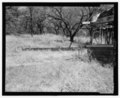 Cobblestone retaining wall at driveway entrance
 Cobblestone architecture detail of Ketch Ranch House
 Ketch Ranch House exterior structure near Medicine Park
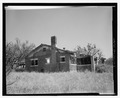 Ketch Ranch House exterior structure near Medicine Park
 Ketch Ranch House exterior structure near Medicine Park
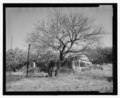 Ketch Ranch House exterior structure near Medicine Park
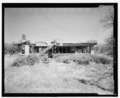 Ketch Ranch House exterior structure near Medicine Park
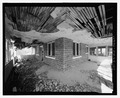 Ketch Ranch House exterior of front porch structure
 Ketch Ranch House interior of kitchen area
 Ketch Ranch House interior of bedroom area


Native American culture of Wichita Mountains
The Ketch Ranch estate was established approximately 3.75 miles (6.04 km) northeast of Craterville Park, Oklahoma.[16] Craterville Park was established after the Kiowa-Comanche-Apache land openings coinciding with Oklahoma statehood as confirmed on November 16, 1907.[17][18][19][20]

In 1907, cowboy naturalist Frank Rush, a native of Blackburn, Oklahoma, served as the superintendent of the Wichita Forest and Game Reserve.[21][22] Mr. Rush attained local and statewide recognition for the railway transport facilitation and safeguard of the near extinct American bison during October of 1907.[23][24][25]
The Plains bison herd was granted to the state of Oklahoma by the Bronx Zoological Gardens and New York Zoological Society.[26] The bison re-establishment substantiated the ecological principles of conservation in the United States while supporting habitat conservation within the nature reserve. The buffalo grazing grounds have a proximity to the Holy City of the Wichitas Historic District built by the Works Progress Administration from 1934 to 1936.[27][28][29]
The American bison collection was a species reintroduction to the native lands of the southwest Indian Territory within the Wichita National Forest federal lands during the fourth quarter of the 1907 calendar year.[30][31]
In 1924, the Apache, Comanche, and Kiowa vowed to a pledge known as the Craterville Park Covenant with Wichita National Forest Preserve curator Frank Rush.[32] The Wichita Mountains mixed grass prairie served for the local tribal pow wow events during the Craterville Park Indian Fair from 1924 to 1933.[33][34][35]
The Craterville Park Covenant
The object of this Fair will be to create self-confidence and to encourage leadership by the Indian for his people, to better his position, and to take his place on terms of equality with other races in the competitive pursuits of every day life, and a desire to accomplish the most possible for himself and his people.[36][37]
- — May 25, 1924 ~ Craterville Park at Wichita Mountains [38]
At the transition of the twentieth century, the Quanah Parker Star House was constructed due north of Cache, Oklahoma geographically being the Fort Sill military installation as modern day.[39][40] The two story wood frame dwelling was located south of the Quanah Mountain summit with Quanah Creek and West Cache Creek serving as water source being posterior of the rural western ranch house.[41][42][43] The Comanche Chief Star House was situated west of Craterville Park and Oklahoma State Highway 115 approximately 2 miles (3.2 km) north of U.S. Route 62 in Oklahoma.[44][45][46]
The Southern Plains villagers immeasurable presence cultivated a historical perspective of the tribal culture and tribal sovereignty for the last of the 19th century Plains Indians tribal chiefs.[47][48][49] During the final decade of the nineteenth century, the Southwest Oklahoma native tribes began embracing the ceremonial practices of the Native American Church while residing in the Great Plains of Southwestern Oklahoma and the Wichita Mountains.[50][51][52]
Locale of Quanah Parker Star House and Craterville Park, Oklahoma | ||
|---|---|---|
|


