Colonial architecture in Surabaya
Architectural style native to Dutch East Indies era
From Wikipedia, the free encyclopedia
Colonial architecture in Surabaya (Dutch: Soerabaja) includes the legacy of neoclassical architecture and Dutch architecture built during the Dutch East Indies era. Kota Lama (transl. Old City) in Surabaya is a tourist attraction but faces problems with the deterioration of older buildings. It includes Dutch architecture, has an Arab quarter and areas exhibiting Chinese influence.[1] Jembatan Merah is an area known for its Dutch architecture.[1]


Cosman Citroen designed a city hall in 1916 and planned the area of Ketabang. Museum Bank Indonesia, Surabaya is located in the former Bank of Java branch building. The House of Sampoerna is a museum devoted to the history of clove cigarette (kretek) manufacturing in Indonesia and is housed in a Dutch colonial building (originally an orphanage) dating to 1864.[1][2]
For many years after Indonesia became independent, the colonial buildings in the Old City were ignored. By the mid-2020s, however, that neighbourhood had come to be seen as key to boosting the city's economy by attracting tourists. In July 2024, the city formally launched a revitalised Old City, and within a few months city officials were pleased with the outcome of the revitalisation.[3]
Even though a majority of Surabayans have negative views about the Dutch colonial era, they do admire the old buildings the colonists left behind. Volunteers have turned out in droves to clean up the Old City, and young Indonesians now flock to the area for the cultural experience, or to take the perfect Instagram photo.[3] Perhaps Indonesian researchers will benefit from the book "Indische Bouwkunst" . This lists more than 2000 projects built between 1900 and 1958 – many of which in Surabaya- , as well as over 150 architects who designed them.[4] This book has been translated into Bahasa Indonesia and is available as a free download.[5]
Gallery
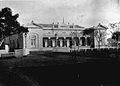 Bijeenkomsthuis (meeting house)
 Entrance portal of "De ingangspoort" (Perseverance), Royal Factory Steam and other machines in the year 1857 by F.J.H. Baijer
 Harbor office in Surabaya and memorial on the occasion of the visit of Governor General Fock (September, 1922)
 City garden (late 19th century)
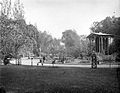 Garden in Surabaya
 "Komediegebouw" Surabaya
 Heineken Brewery in Surabaya
 Goebang train station (Surabaya Gubeng railway station)
 Post and Telegraph office
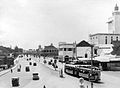 Pasar Besar in the background
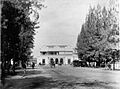 Grimm & Co. "cake palace" at Pasar Besar
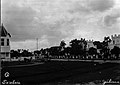 Goebang (now Gubeng district)
 Postcard of sluice
 Fountain and water carriers
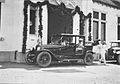 Governor General Fock visiting a school
 Hotel Embong Malang
 Kurkdjian photo studio (O. Kurkdjian & Co.)


List of buildings
| Last official name | Former names | Year | Architect | Location | Latest image | Oldest image |
|---|---|---|---|---|---|---|
| Apotik Simpang | De Simpangsche Apotheek; Toko Occasion and Toko Atal Sport[6] | 1855 (first building); 1936 (second building)[7] | Herman Smeets (first building); Henri Estourgie (second building)[7] | 7°15′47″S 112°44′28″E |  |
 |
| Balai Kota Surabaya | Gemeentehuis te Soerabaja[8][9][10]: 126 / Raadhuis te Soerabaja[11][12] / Stadhuis te Soerabaja[13][14][15] | 1927[10]: 126 [11][13][14][15][16] | Cosman Citroen[10]: 126 [11][13][14][16][17] | 7°15′33″S 112°44′50″E |  |
 |
| Balai Pemuda / Alun-Alun Surabaya | Simpang Club or Simpangsche Societeit[18][19] | 1907[19] | Willem Westmaas sr. [19] | 7°15′50″S 112°44′26″E |  |
 |
| Gedung Algemeene / Gedung Singa[20][21][22] / Gedung Aperdi[20][21][23] | Kantoor Algemeene[21][24][25] | 1901[20][21][22][23][25] | Hendrik Petrus Berlage[20][21][22][23][24][25] | 7°14′14″S 112°44′16″E | .jpg) |
 |
| Gedung Bank Mandiri KC Surabaya Niaga | Kantoorgebouw van Borsumij;[17][26] Gedung Bank Exim[26] | 1935[17][26] | Cosman Citroen[17][26] | 7°14′22″S 112°44′16″E | .jpg) |
 |
| Gedung Bank Mandiri KCP Surabaya Jembatan Merah | Kantoor Nederlandsch-Indische Handelsbank[10]: 144, 246 | 1912[10]: 144, 246 | George Elenbaas and Pieter Moojen[10]: 144, 246 | 7°14′13″S 112°44′16″E | .jpg) |
|
| Gedung Bank Mandiri KCP Surabaya Pahlawan | Kantoorgebouw Firma Lindeteves-Stokvis Soerabaia[27][28][29] / Kihatama Butai[28] / Glinding Tipis;[27][29] | 1911–1913[27][28][29] | Eduard Cuypers[27][30][31] | 7°14′37″S 112°44′20″E | .jpg) |
 |
| Gedung BNI KCP Jembatan Merah Surabaya | Kantoorgebouw van Borsumij[32][33] | 1920[32][33] | Cosman Citroen and Jan Jacob Job[32] | 7°14′09″S 112°44′12″E | .jpg) |
|
| Gedung Cerutu / Gedung Cigar[34][35] | Java Sugar Syndicate;[24][36] Bridgestone;[36] Kantor Said bin Oemar Bagil;[34][35][36][37] Kantor Bank Bumi Daya;[34][36][37] Bank Mandiri[24][34][35][36] | 1916[24][34][35][36][37] | N.V. Maatschappij Tot Exploitatie Van Het Bureau Gebroeders Knaud[24][36] | 7°14′12″S 112°44′13″E | ||
| Gedung DPMPTSP Jawa Timur | Meubelmagazijn Pröttel;[38][39] Kantoor Surabaiasch Handelsblad;[38][39] Kantor Suara Asia;[38][39] Gedung Brantas;[38] Kantor Harian Memorandum;[38] Kantor Catatan Sipil Kota Surabaya;[38] Kantor Dinas Perumahan Surabaya;[38] Gedung Penanaman Modal (BPM) Jawa Timur[38] | 1912[38] or 1920[39] | unknown | 7°14′40″S 112°44′20″E | .jpg) |
 |
| Gedung Grahadi | Residentiehuis[18][40] / Tuinhuis[40] | 1795 (constructed);[41][42] 1810 (renovated)[42] | 7°15′46″S 112°44′36″E | .jpg) |
 | |
| Gedung Maybank | Nederlands Spaarbank; Nutsspaarbank; Bank Tabungan; Bank Internasional Indonesia[24][43] | 1917[43] | Fritz Joseph Pinédo [10]: 262 , Jan Jacob Job [10]: 198 [24][43] | 7°14′17″S 112°44′14″E |  | |
| Gedung Siola / Surabaya Museum | Whiteaway Laidlaw & Co; Het Engelsche Warenhuis; Chiyoda Store; SIOLA; Ramayana Siola[44][45][46] | Unclear;[note 1] possibly 1923[45][47] | 7°15′32″S 112°44′20″E | .jpg) |
 | |
| Gereja Kelahiran Santa Perawan Maria | Onze Lieve Vrouw Geboorte Kerk / Onze Lieve Vrouwekerk[48] | 1899–1900[24][49] | Willem Westmaas sr.[24][49][50] and Muljono Widjosastro[24] | 7°14′31″S 112°44′13″E | .jpg) |
 |
| Holycow x coffee toffee | Kantor Pos Pembantu Simpang; Post shop coffee toffee[40][51] | 1932[40] | G.P.J.M. Bolsius and Landsgebouwdienst[40] | 7°15′50″S 112°44′36″E | .jpg) |
 |
| Hotel Majapahit | Oranje Hotel; Hotel Yamato; Hotel Merdeka; L. M. S. Hotel; Mandarin Oriental Hotel Majapahit[52] | 1911[52] front building 1934 [10]: 138 | Alfred Bidwell[52] Robert Deppe, Job & Sprey, frontbuilding [10]: 138 | 7°15′37″S 112°44′23″E | .jpg) |
 |
| Horison Arcadia Heritage Surabaya | Kantoor Geo Wehry;[10]: 188 [53][54][55][56] Hotel Ibis Rajawali[53][54][55][56] | 1913–1914[10]: 188 [53][54][55][56] | Marius Hulswit[10]: 188 | 7°14′11″S 112°44′12″E |  | |
| Kantor Gubernur Jawa Timur | Gouverneurskantoor van Oost-Java (incl. Residentiekantoor)[57][58] or Gouverneurs Kantoor and Residentie Kantoor;[59] Syuucho (Residency) Office[59] | 1929–1931[57][58][59] | Wijnand Lemei Jnr,[57][60] assisted by Hubert Albert Breuning and WB Carmiggelt (Landsgebouwendienst)[58][61] | 7°14′45″S 112°44′21″E | .jpg) |
 |
| Kantor Partai PDI | Kantoor Internationale Crediet- en Handelsvereeniging "Rotterdam";[24][62][63] Gedung Internatio[24][62][63] | 1927–1931[64] | Frans Ghijsels[62][63][64] | 7°14′09″S 112°44′14″E | .jpg) |
 |
| Kantor Pertamina EP Asset 4 | Sociëteit Concordia; Kantoor Bataafche Petroleum Maatschappij (BPM); Kantor Pertamina UPDN V[65][66][67] | 1843 (constructed); 1917–1918 (renovated)[66][67] | JP Emerling (construction); Cosman Citroen (1917–1918 renovation)[17][66][67] | 7°14′31″S 112°44′18″E | .jpg) |
 |
| Kantor PTPN X | Koloniale Bank[68][69] | 1927–1928[68] | Charles Prosper Wolff Schoemaker[68] | 7°14′16″S 112°44′14″E | .jpg) |
 |
| Kantor PTPN XI / Kantor Pusat PTPN XI[70] | Kantoor van de Handelsvereeniging Amsterdam;[24][10]: 136 [71] Kantor PPN;[71] Kantor PTPN[71] | 1925[10]: 136 [71] | Eduard Cuypers[24][31][10]: 136 | 7°14′17″S 112°44′05″E |  |
,_NG-1990-16-1-5.jpg) |
| Kantor telepon Surabaya Utara / Kantor Telkom Garuda | Kantor Tilpun Utara[24][64] | 1913–1914[64] | Frans Ghijsels[64] | 7°14′06″S 112°44′13″E | .jpg) |
|
| Locaāhands | Boekhandel J.W.F. Sluyter Soerabaja;[46][72][73][74][75] Van Dorp & Co;[46][74] Toko Aneka Dharma;[72] a car showroom;[72] Bank Dagang Negara;[72] Bank Bumi Daya/PT. Saver;[72][76] Kantor Yayasan Majelis Dzikir Surabaya "Nurussalam"[72] | 1925[46][72][75] | 7°15′31″S 112°44′20″E | .jpg) |
 | |
| Monumen Pers Perjuangan Surabaya / Media Center PJI-Monumen Pers[77] / Gedung Seiko[78] | Simpangsche Bazaar; De Fikkert Motorcar; Piccolo Club; Toko Nam; Toko Kwang; Kantor Antara[79][80][81][82][83] | 1886 (became store); 1904 (renovated); 1938 (demolished and rebuilt)[82] | Cor de Graaf (design 1921) [10]: 174 Bruno Nobile de Vistarini (design 1938) [10]: 304 | 7°15′39″S 112°44′22″E | .jpg) |
 |
| Museum Bank Indonesia Surabaya | De Javasche Bank; Bank Indonesia[84][85] | 1829 (constructed);[24][84][85][86][87] 1904 (demolished and rebuilt);[84] 1910 (renovated)[24][84][86][87] | Eduard Cuypers (1912 new building)[31][86][87] | 7°14′07″S 112°44′13″E | ,_2025_(03).jpg) |
 |
| Pintu Air Jagir / Dam Jagir[88][89] / Banjir Sluis[89][90] | 1916–1923 (constructed);[91][92][93] 1978 (renovated)[93][94] | HW Vrijlandt[95] | 7°18′02″S 112°44′28″E |  |
 | |
| Pos Bloc Surabaya | Hoofkantoor Soerabaja; Kantor Pos Besar Surabaya; Kantor Pos Besar Kebonrojo[24][96][97] | 1928[96][97] | G.P.J.M. Bolsius and BOW (Burgerlijke Openbare Werken)[24][96] | 7°14′34″S 112°44′15″E | .jpg) |
 |
| Toko Savelkoul | Savelkoul-winkels en andere[10]: 136 | 1935[10]: 136 | Robert Deppe, Job & Sprey[10]: 136 | 7°15′42″S 112°44′26″E |  |
 |
| Varna Culture Hotel | Magazijn Begeer van Kempen en Vos;[98] Militaire kantine Koninklijke Marine;[99] Kantor BCA KCP Tunjungan[100] | 1917–1919[17] | Cosman Citroen[17] | 7°15′34″S 112°44′21″E | .jpg) |


