Khelrtva
From Wikipedia, the free encyclopedia
| Part of a series on |
| Georgians |
|---|
.jpg) |
| Etymology • History • Kartvelian studies |
A khelrtva (Georgian: ხელრთვა, lit. 'graced by hand')[a] is a Georgian calligraphic joined-up[1] style signature, monogram or seal, originally used by the Georgian monarchs, queens consort, patriarchs, royalty and nobility,[2][3][4] universally used since the early eleventh century.[5]
Khelrtva signatures were written in one of the three Georgian scripts, mostly in Nuskhuri and Mkhedruli scripts, though the monograms particularly the royal ones were designed in Asomtavruli script. Every Georgian monarch had their own individual khelrtva and was known as საუფლოჲ ხელი[6] (sauploy kheli) literally meaning 'Hand of the Lord'. The tradition of khelrtvas is still in use in Georgia.[7]
Kings
 Khelrtva of King Bagrat IV
 Khelrtva of King George IV
 Khelrtva of King Vakhtang VI
 Khelrtva of King George XII
 Khelrtva of King Solomon II
.svg)


Queens regnant


Queens consort
 Khelrtva of Queen consort Tinatin Gurieli
 Khelrtva of Queen consort Ketevan the Martyr
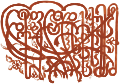 Khelrtva of Queen consort Mariam Dadiani
.svg)
.svg)
.svg)
Patriarchs
.svg)
.svg)
.svg)

Presidents, Prime Ministers, Speakers
 Khelrtva of President Salome Zurabishvili
 Khelrtva of Prime Minister Irakli Kobakhidze
 Khelrtva of Speaker Shalva Papuashvili


.svg)
