User talk:Tony Rodi
From Wikipedia, the free encyclopedia
Comments
User Fleet Lists.
Mainly involved in the maintenance of New South Wales, Australia Public Transport articles. But at times will also update other Australian articles or articles relating to other countries or Australian states but again mainly relating to Public Transport.
Joined 30 October 2014 but then a large break from 2015 to 2018. 10,681 contributions as at 23 July 2019.
Tony Rodi (talk) 00:55, 12 May 2020 (UTC) Dear editor, User Fleet Lists. Thanks for your undo and reversion on my edit. The intention was more for factual reference to material rather than self promotion. If the same links were referred to by others, would that be acceptable? My leading role in, and newspaper articles regarding the most significant cultural and historic urban developments in Australia include the Sydney Morning Herald, The Telegraph, Architectural Review Australia, Television interviews on ABC SBS and all commercial television stations in Australia, and many more media outlets. I expect that I would not be exaggerating to suggest that I am in fact, the most publicised Architect in Australia. To say so is just factual, although it may be seen as self promotion. Please accept my apologies if I have not edited according to Wikipedia requirements. I would very much appreciate your assistance in providing information that does have historical significance. Articles on related subjects outside of Wikipedia seem to be controlled by vested interests, and determined to exclude the most important details. That may have a lot to do with obscuring politically sensitive issues and corruption. Sincerely Yours Tony Rodi Tony Rodi (talk) 00:55, 12 May 2020 (UTC)
Some editors logged in or otherwise are trying to destroy the most significant Historic and cultural site articles in Australia.
Why is Wikipedia allowing this without response? Tony Rodi (talk) 20:06, 26 February 2020 (UTC)
First Fleet Landing sit and East Circular Quay. The Sydney Opera House Precinct. Tony Rodi (talk) 20:06, 26 February 2020 (UTC)
Ashbury
January 2013 - “…the whole suburb of Ashbury” became a Heritage Conservation Area.
https://www.cbcity.nsw.gov.au/development/planning-control-policies/canterbury-development-control-plan-2012-prior-to-30-january-2017
 The Heritage map
https://www.legislation.nsw.gov.au/maps/7f4de097-5304-ece6-cc55-b2dfeeb11fdd/1550_COM_HER_006_010_20130513.pdf
is located in the documents that sit with the Canterbury Local Environmental Plan 2012.  The Canterbury Local Environmental Plan 2012 was notified on the NSW legislation website on 21 December 2012 and came into force on 1st  of January 2013.  Section 6.5 and section 6.5A of the Canterbury Development Control Plan 2012, outlined the details of Ashbury’s Heritage Conservation Area.

https://en.wikipedia.org/wiki/Ashbury,_New_South_Wales


The predominant Architectural Style typifying this Sydney suburb of "Ashbury", is "Californian Bungalow".
Built in the nineteen twenties, the original allotments were occupied by single storey, single dwellings, which were designed and constructed using a variety of repeated floor plans
The architectural forms featured mostly gabled and hipped roofs, covered with unglazed red terra cotta tiles. The gables were clad in fibrous cement segmented with vertical timber strip covers. Generous verandahs and leadlight windows were also commonly featured. Timber-framed awnings with decorative timber brackets also enhanced elevations and exposed rafters, dressed-all-round, added to the character and attractiveness of the homely surrounds. External timber sills were often supported by corbelled brickwork, adding a three dimensional
protrusion of the windows externally, and the opportunity for a recessed bay internally. This could be used for flower arrangements or placement of ornaments. Awning windows with high sill heights would allow for natural ventilation, weather protection, and security all at the same time. Tuckpointing on manganese or liver coloured face bricks on front elevations was featured, whilst side elevations were finished in common bricks set in lime mortar.


Federation and Inter-war Period Architecture

Other architectural period styles include Federation,(early 20th Century), and inter-war dwellings of the nineteen thirties Some Federation Period dwellings included roughcast rendered gable faces and brick piers. Tulips were often incised in decorative timber fretwork, whilst elaborate floral leadlights were found on front and side elevations.
Prior to listing the entire suburb for heritage conservation, many of the houses were modified and added to, with little or no consideration for either scale or style of the original architecture.


Leadlight windows were designed in the Art Deco style, which is reflected in the many diverse geometric patterns, typical of the 1920s and 1930s. This manifested as a direct divergence from the floral designs of the preceding Federation Period from the first two decades of the 1900's.

This artistic approach to home design was reflected in the many variations of detailed elements defining the Australian adaptation of the Californian Bungalow. Picture rails, ceilings, leadlight windows, chimneys and chimney pots, terra cotta tiles and finials were typical elements of this style.


Inter- war Period dwellings were marked by the more austere hipped roofs, replacing gables, with leadlights being geometrical and without colour, and brickwork featuring inset textured, or herringbone designs. Some of the houses also included curved brick walls, and Art Deco ironwork of the Universal Style.
The single storey, single dwelling streetscape has been largely retained in Ashbury. Where 1st floor additions have been allowed, under the Local Government's Development Control Plan, few have been designed to compliment the original architecture.

REFERENCES
1. http://www.canterbury.nsw.gov.au/Lists/Search-Results-page?q=heritage%20conservation
2. http://ashburycommunity.org/heritage-conservation-area/
4. https://en.wikipedia.org/wiki/Ashbury,_New_South_Wales
5.https://www.legislation.nsw.gov.au/#/view/EPI/2012/673/historical2016-01-27/sch5
Tony Rodi (talk) 02:40, 4 January 2018 (UTC) https://en.wikipedia.org/wiki/Talk:Ashbury,_New_South_Wales
Talk:Ashbury, New South Wales
From Wikipedia, the free encyclopedia
Tony Rodi (talk) 05:06, 1 January 2018 (UTC)
"Ashbury, Heritage Conservation Suburb"is the title of an article written about the Heritage Federation and 1920/30s (Inter War Period) Architecture, of the Sydney suburb named Ashbury...... a name derived from the surrounding suburbs of Ashfield and Canterbury, since it is located in between. The article has been inserted as a link in the article Ashbury, New South Wales.
I have added some photos showing examples of housing types and Architectural details of the period. Canterbury Council and State Government (through Andrew Refshauge, Labor MP) have determined the suburb to hold heritage conservation status.
Tony Rodi (talk) 00:38, 4 January 2018 (UTC)The purpose of the article is to provide a glimpse into the Architectural, Social, and Environmental characteristics that define Ashbury, New South Wales. This article will be progressively updated to provide further commentary, with graphic and photographic images to illustrate a little of the Architecture and artistic elements incorporated into housing, between the beginning of the Twentieth Century and the commencement of World War 11. This was a unique period in the History of Sydney, when Art, Architecture, and Lifestyle were treated with dignity and respect in an environment which is currently under severe threat of destruction.
Notice of Prospective Report
re:- https://en.wikipedia.org/wiki/User:Rkmepm
Dear Rkmepm, Thank you for your comments on my edit on the "Bennelong Apartments" article. I will try to improve the formatting, and I hope that you will dismiss your unwarranted and unfounded bias. Tony Rodi (talk) 21:41, 26 December 2016 (UTC) Please try to be helpful, instead of promoting misinformation regarding an internationally most controversial development in Australia. My role as convenor of the Save East Circular Quay Committee, along with my association with Sydney Opera House Architect, Lionel Todd, places me in a better position to be both critical and informative regarding this issue than yourself. My supporters in this controversy included some of the most well known environmental activists in Australia, and international identities such as Cate Blanchett, Barry Humphries, U2, Bono, Helena Christensen and many more. If you think that my formatting is poor I am open to your suggestions for improvement. If you think there is any bias, you should do some in-depth research of the extensive media coverage of this issue, in Australia and internationally. This could include unprecedented international newspaper, television, radio and any other multimedia coverage of the foremost historical urban development in Australia. I'm not the one who is edit warring, I am merely clarifying information, and lest you forget, one of the most important rules of Wikipedia editing is that "there are no rules"......... as cited from Wikipedia. Tony Rodi (talk) 21:41, 26 December 2016 (UTC)
PS Dear Rkmepm Please be aware that public land worth over 375 million dollars at the time Bennelong Apartments were built on the Sydney Opera House precinct, was sold to the developers for 5 million dollars. This is not biased, it is much worse, and it's a fact. Tony Rodi (talk) 20:00, 27 December 2016 (UTC)
" Of war and peace the truth just twists / Its curfew gull just glides " Bob Dylan from "The Gates of Eden"
Tony Rodi (talk) 21:18, 22 January 2017 (UTC)
Tony Rodi (talk) 02:09, 1 January 2017 (UTC) Dear Rkmepm Your view is distorted because you refuse or unable to research the vast amount of media coverage on this issue. The == The Sydney Morning Herald == is not my own website and it is you who are providing your ignorant and perverted version of history. Grow up and do some research before blurting your contrived nonsense. A lie is a lie, even if it is out of ignorance. The references to my website graphics are freely available in newspapers and other media, if you care to do some honest research. The Sydney Opera House was built to last centuries. The Bennelong Apartments are likely to last only decades. See newspaper article Sydney Morning Herald 19th June 1999, www.smh.com. Your Sincerely Tony Rodi Tony Rodi (talk) 02:09, 1 January 2017 (UTC).
Dear Rkmepm
Here is a link to an archived website.
https://archive.is/uJtpC/b1946f8be8242e3cbfe903444ab46cb82eb85da1
Please let me know if you would like some more information on the Bennelong Apartments Controversy. A serious article would include some pertinent facts which have thus far, been omitted. This would include proposals for East Circular Quay by some of Sydney's leading architects. The battle for East Circular Quay - The Sydney Opera House Precinct, became an internationally fought urban environmental, cultural, and historic event, the most significant in Australian history since THE FIRST FLEET arrived in Sydney Cove at the commencement of European Settlement on the 26th of January, 1788.
Thank You Tony Rodi (talk) 05:42, 28 February 2017 (UTC)
Existence of God
"I have been described by one of my colleagues as a "militant agnostic" with my tagline, "I don't know, and neither do you!". I take this hard-line, fence-sitting position because it is the only position consistent with both my scientific ethos and my conscience." Brian Schmidt on "God" https://en.wikipedia.org/wiki/Brian_Schmidt A true agnostic wouldn't include "and neither do you!"
Atheism
The belief that "God", as defined by an atheist, does not exist, seems somewhat meaningless. Tony Rodi (talk) 23:50, 30 January 2017 (UTC) There is no known definition of God which is commonly accepted as a basis for belief or otherwise.
Hi Gronk Oz. Thanks for your interest. I’m just making a comment about Brian Schmidt’s assertion that if he doesn’t know whether “God” exists, then neither do you. I’m unsure whether that’s a warranted or fair comment. I've also made a comment on Atheism, or at least, atheists. But I think that Wikipedia’s article on Atheism, https://en.wikipedia.org/wiki/Atheism, covers the gist of my comment quite well, under the following subheading. Viz:- Range "Some of the ambiguity and controversy involved in defining atheism arises from difficulty in reaching a consensus for the definitions of words like deity and god. The plurality of wildly different conceptions of God and deities leads to differing ideas regarding atheism's applicability. The ancient Romans accused Christians of being atheists for not worshiping the pagan deities. Gradually, this view fell into disfavour as theism came to be understood as encompassing belief in any divinity.[43] With respect to the range of phenomena being rejected, atheism may counter anything from the existence of a deity, to the existence of any spiritual, supernatural, or transcendental concepts, such as those of Buddhism, Hinduism, Jainism, and Taoism.[44]"
I did find that the word “favour” is spelt incorrectly. i.e. “favor". Would you like to make the correction, or should I? Tony Rodi (talk) 07:56, 1 February 2017 (UTC)
@Tony Rodi: I still am not clear what change you are proposing. Looking at the sources, it seems to me that the article accurately summarizes what they say about his religious views. I am not sure how you think the ancient Romans' views on Christianity relate to this article about Brian Schmidt. Nor what atheism has to do with it; that is not mentioned in any of the sources. Perhaps if there is a reliable source where he discusses those matters, it might be worth a brief mention - do you have such sources? On your second point, I have searched this article and the word "favor" does not appear in it.--Gronk Oz (talk) 11:23, 1 February 2017 (UTC)
@Tony Rodi: oops, I got the ping wrong on my previous post. --Gronk Oz (talk) 11:25, 1 February 2017 (UTC)
Gronk Oz Sorry about the misunderstanding. The word "disfavor" appears in the article on Atheism, not on Brian Schmidt's page, and neither was there any reference to atheism. I thought my comment was relevant in view of the comments on agnosticism. I suppose that comment should have been made on the article on atheism. I actually corrected the spelling on my post, but not on the article itself. I'll get back to you when I find the link to Brian Schmidt's article that referred to him as being agnostic, and declaring he had no knowledge of "God" and that consequently, "neither do you." I found that quote when I was looking for references to Brian Schmidt's much publicised assertion that mass simply manifested from "nothing", which he then suggested was really "something". The media reported that notion by a declaration that now that we knew that existence derived from "nothing", God as a primordial creator, was no longer necessary. I did find some forums on this theory, which expressed opinions suggesting that this was "nonsensical" and "hogwash" Thanks again. Tony Rodi (talk) 19:32, 1 February 2017 (UTC)
Welcome to The Wikipedia Adventure!

- Hi Tony Rodi! We're so happy you wanted to play to learn, as a friendly and fun way to get into our community and mission. I think these links might be helpful to you as you get started.
-- 05:36, Monday, March 13, 2017 (UTC)
| Mission 1 | Mission 2 | Mission 3 | Mission 4 | Mission 5 | Mission 6 | Mission 7 |
| Say Hello to the World | An Invitation to Earth | Small Changes, Big Impact | The Neutral Point of View | The Veil of Verifiability | The Civility Code | Looking Good Together |
File:Tackling climate change threat.jpg listed for discussion

A file that you uploaded or altered, File:Tackling climate change threat.jpg, has been listed at Wikipedia:Files for discussion. Please see the discussion to see why it has been listed (you may have to search for the title of the image to find its entry). Feel free to add your opinion on the matter below the nomination. Thank you. — Train2104 (t • c) 03:07, 16 March 2017 (UTC)
File permission problem with File:Semi-Circular Quay Model.gif

Thanks for uploading File:Semi-Circular Quay Model.gif. I noticed that while you provided a valid copyright licensing tag, there is no proof that the creator of the file has agreed to release it under the given license.
If you are the copyright holder for this media entirely yourself but have previously published it elsewhere (especially online), please either
- make a note permitting reuse under the CC-BY-SA or another acceptable free license (see this list) at the site of the original publication; or
- Send an email from an address associated with the original publication to permissions-en@wikimedia.org, stating your ownership of the material and your intention to publish it under a free license. You can find a sample permission letter here. If you take this step, add {{OTRS pending}} to the file description page to prevent premature deletion.
If you did not create it entirely yourself, please ask the person who created the file to take one of the two steps listed above, or if the owner of the file has already given their permission to you via email, please forward that email to permissions-en@wikimedia.org.
If you believe the media meets the criteria at Wikipedia:Non-free content, use a tag such as {{non-free fair use}} or one of the other tags listed at Wikipedia:File copyright tags#Fair use, and add a rationale justifying the file's use on the article or articles where it is included. See Wikipedia:File copyright tags for the full list of copyright tags that you can use.
If you have uploaded other files, consider checking that you have provided evidence that their copyright owners have agreed to license their works under the tags you supplied, too. You can find a list of files you have created in your upload log. Files lacking evidence of permission may be deleted one week after they have been tagged, as described in section F11 of the criteria for speedy deletion. You may wish to read Wikipedia's image use policy. If you have any questions please ask them at the Media copyright questions page. Thank you. — Train2104 (t • c) 03:17, 16 March 2017 (UTC)
File:Semi-Circular Quay Model.gif listed for discussion
A file that you uploaded or altered, File:Semi-Circular Quay Model.gif, has been listed at Wikipedia:Files for discussion. Please see the discussion to see why it has been listed (you may have to search for the title of the image to find its entry). Feel free to add your opinion on the matter below the nomination.
ATTENTION: This is an automated, bot-generated message. This bot DID NOT nominate any file(s) for deletion; please refer to the page history of each individual file for details. Thanks, FastilyBot (talk) 23:50, 24 March 2017 (UTC)
Deletion discussion about Ashbury, Heritage Conservation Suburb
Hello, Tony Rodi,
I wanted to let you know that there's a discussion about whether Ashbury, Heritage Conservation Suburb should be deleted. Your comments are welcome at Wikipedia:Articles for deletion/Ashbury, Heritage Conservation Suburb .
If you're new to the process, articles for deletion is a group discussion (not a vote!) that usually lasts seven days. If you need it, there is a guide on how to contribute. Last but not least, you are highly encouraged to continue improving the article; just be sure not to remove the tag about the deletion nomination from the top.
Thanks,
Kb.au (talk) 01:34, 18 January 2018 (UTC)
Ashbury | |||||||||||||
|---|---|---|---|---|---|---|---|---|---|---|---|---|---|
 Peace Park | |||||||||||||
  Ashbury | |||||||||||||
| Coordinates: 33°54′11″S 151°06′59″E | |||||||||||||
| Country | Australia | ||||||||||||
| State | New South Wales | ||||||||||||
| City | Sydney | ||||||||||||
| LGAs | |||||||||||||
| Location |
| ||||||||||||
| Established | 1919 | ||||||||||||
| Government | |||||||||||||
| • State electorates | |||||||||||||
| • Federal divisions | |||||||||||||
| Population | |||||||||||||
| • Total | 3,329 (2016 census)[1] | ||||||||||||
| Postcode | 2193 | ||||||||||||
| |||||||||||||


Ashbury is a suburb in the Inner West of Sydney, in the state of New South Wales, Australia. It lies in the local government area of Canterbury-Bankstown Council[2] with some areas in the Inner West Council.[3] It is about 10 kilometres south-west of the Sydney central business district. The postcode is 2193, the same as neighbouring Canterbury.
Ashbury is mostly residential and has no commercial centre, although there are a few shops on King Street. Its major landmark is Peace Park, the highest point in the Canterbury local government area. Ashbury derived its name from the two neighbouring suburbs Ashfield and Canterbury. It is near Canterbury Park Racecourse.
History
Before the British colony at Sydney, the Ashbury area was home to the Wangal and Cadigal people, clans of the Darug tribe. After pressure from colonists, the British administration began subdividing land in the area surrounding the Sydney settlement and granting it to colonists. The first land grant in the area was 100 acres (40 ha) made to Reverend Richard Johnson (1753-1827), the colony's first chaplain.[4]
The land that extended over Ashbury was known as Canterbury Vale. When it was sold to Lieutenant William Cox in 1800, it covered 600 acres (240 ha). It was then sold to Robert Campbell (1769–1846) in 1803 when it covered 900 acres (360 ha) and then proceeded to purchase more land to Liverpool Road. The estate passed onto his son-in-law Arthur Jefferey and was eventually split up. This area then became known as Goodlet's Bush, after an early settler, John Hay Goodlet. In 1878 Goodlet had bought Canterbury House, which had been built by Arthur Jeffreys.[5]
The South Ashfield Brickworks (later called the Ashbury Brickyard) opened in 1910 from the site of what is now Peace Park. Widescale housing development of the area began in 1919. A primary school began taking students in 1924 and in 1926 changed its name from South Ashfield to Ashbury Public School, leading to the area adopting its own identity. A non-official post office was established on King St in the same year.[6]
Transport
There is no train to Ashbury but it is relatively close to both Ashfield Station on the Airport, Inner West & South Line and Canterbury Station on the Bankstown Line. Sydney Buses service Ashbury. The 491 Five Dock to Hurstville bus links Ashbury to both Ashfield and Canterbury Stations from King St. The 413 bus links Ashbury to both the City and Campsie. Route 418 links Ashbury with Burwood, Ashfield, Hurlstone Park, Marrickville, Sydenham, Mascot, Randwick and Bondi Junction via Queen street whilst the 406 connects Ashbury with Five Dock, Ashfield and Hurlstone Park via Victoria Street and Old Canterbury Road.[7]
Ashbury borders the Cooks River and offers excellent access for cyclists and walkers to the Cooks River Cycleway.
Schools
There are two schools in Ashbury. St Francis Xavier's Primary School and Ashbury Public School, which was built in 1928. Its catchment area includes students from southern Ashfield as well as Ashbury.
 Ashbury Public School
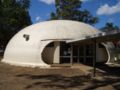 Ashbury Public School library dome


Housing
The area has a consistent subdivision pattern, building form and streetscape, largely because its development occurred over a relatively short period of time. A high standard of design and residential amenity was also achieved, and housing in this area has become increasingly sought after. Ashbury consists of character filled Federation and Californian bungalows which are under heritage conservation making the suburb highly sought after.

Heritage Architecture
January 2013 - “…the whole suburb of Ashbury” became a Heritage Conservation Area.
https://www.cbcity.nsw.gov.au/development/planning-control-policies/canterbury-development-control-plan-2012-prior-to-30-january-2017
 The Heritage map
https://www.legislation.nsw.gov.au/maps/7f4de097-5304-ece6-cc55-b2dfeeb11fdd/1550_COM_HER_006_010_20130513.pdf
is located in the documents that sit with the Canterbury Local Environmental Plan 2012.  The Canterbury Local Environmental Plan 2012 was notified on the NSW legislation website on 21 December 2012 and came into force on 1st  of January 2013.  Section 6.5 and section 6.5A of the Canterbury Development Control Plan 2012, outlined the details of Ashbury’s Heritage Conservation Area.
The predominant Architectural Style typifying this Sydney suburb of "Ashbury", is "Californian Bungalow".
Built in the nineteen twenties, the original allotments were occupied by single storey, single dwellings, which were designed and constructed using a variety of repeated floor plans
The architectural forms featured mostly gabled and hipped roofs, covered with unglazed red terra cotta tiles. The gables were clad in fibrous cement segmented with vertical timber strip covers. Generous verandahs and leadlight windows were also commonly featured. Timber-framed awnings with decorative timber brackets also enhanced elevations and exposed rafters, dressed-all-round, added to the character and attractiveness of the homely surrounds. External timber sills were often supported by corbelled brickwork, adding a three dimensional
protrusion of the windows externally, and the opportunity for a recessed bay internally. This could be used for flower arrangements or placement of ornaments. Awning windows with high sill heights would allow for natural ventilation, weather protection, and security all at the same time. Tuckpointing on manganese or liver coloured face bricks on front elevations was featured, whilst side elevations were finished in common bricks set in lime mortar.
Federation and Inter-war Period Architecture
Other architectural period styles include Federation,(early 20th Century), and inter-war dwellings of the nineteen thirties Some Federation Period dwellings included roughcast rendered gable faces and brick piers. Tulips were often incised in decorative timber fretwork, whilst elaborate floral leadlights were found on front and side elevations.
Prior to listing the entire suburb for heritage conservation, many of the houses were modified and added to, with little or no consideration for either scale or style of the original architecture.
Leadlight windows were designed in the Art Deco style, which is reflected in the many
diverse geometric patterns, typical of the 1920s and 1930s. This manifested as a direct divergence from the floral designs of the preceding Federation Period
from the first two decades of the 1900's.
This artistic approach to home design was reflected in the many variations of detailed elements defining the Australian adaptation of the Californian Bungalow. Picture rails, ceilings, leadlight windows, chimneys and chimney pots, terra cotta tiles and finials were typical elements of this style.
Inter- war Period dwellings were marked by the more austere hipped roofs, replacing gables, with leadlights being geometrical and without colour, and brickwork featuring inset textured, or herringbone designs. Some of the houses also included curved brick walls, and Art Deco ironwork of the Universal Style.
The single storey, single dwelling streetscape has been largely retained in Ashbury. Where 1st floor additions have been allowed, under the Local Government's Development Control Plan, few have been designed to compliment the original architecture.
Demographics

According to the 2016 census, there were 3,329 residents in Ashbury. 65.8% of residents were born in Australia. The most common other countries of birth were Italy 5.8%, China 2.8% and Lebanon 2.8%. 59.4% of residents spoke only English at home. Other languages spoken at home included Italian 9.3%, Greek 8.6% and Arabic 4.8%. The most common responses for religious affiliation were Catholic 40.1%, No Religion 22.1%, Eastern Orthodox 12.5%, Anglican 8.2% and Buddhism 1.4%. Overall, Christianity was the largest religious group reported (71.4%).[1]
Notable residents
The following people were either born or lived in Ashbury:
- Selina Anderson (1878-1964): first woman to stand as a candidate for the Australian House of Representatives (in 1903). She lived in Ashbury from 1928 till her death in 1964.[8]
- Rev Richard Johnson (1753-1827): first chaplain of the colony in Sydney and first landowner in Ashbury, described by Watkin Tench as "the best farmer in the country".[9]
REFERENCES
1. http://www.canterbury.nsw.gov.au/Lists/Search-Results-page?q=heritage%20conservation
2. http://ashburycommunity.org/heritage-conservation-area/
4.https://www.legislation.nsw.gov.au/#/view/EPI/2012/673/historical2016-01-27/sch5
Politics
| Voting in Ashbury since 2000 | |||||
|---|---|---|---|---|---|
| Elections | Fed01[10] | NSW03[11] | Fed04[12] | NSW07[13] | |
| Two Party Preferred Results | |||||
| Labor | 61% | nr | 63% | 72% | |
| Liberal | 39% | nr | 37% | 28% | |
| First Preference Results | |||||
| Labor | 49% | 57% | 52% | 56% | |
| Liberal | 34% | 18% | 35% | 21% | |
| Greens | 6% | 12% | 10% | 12% | |
| Democrats | 5% | nc | 2% | 4% | |
| Christian Democrats | 2% | nc | nc | 5% | |
| Unity Party | 1% | 2% | nc | nc | |
Ashbury is located in the Canterbury Ward of Canterbury-Bankstown Council.[14] Canterbury-Bankstown Council is dominated by Labor councillors. Canterbury Ward has one Labor, Liberal and Greens councillor, elected at the last council elections in 2017.[15] The mayor of Canterbury-Bankstown is Labor's Khal Asfour.[16]
Part of Ashbury is also located in the Ashfield Ward of the Inner West Council area.
For state government elections, Ashbury is in the Electoral district of Summer Hill held by Labor's Jo Haylen since 2015. For federal government elections, it is in the Division of Watson, held by Labor's Tony Burke since 2004. The table to the right shows a consistently strong Labor vote in both Federal and State elections.


