2026 in New Zealand
From Wikipedia, the free encyclopedia
The following lists events that have happened or are expected to happen during 2026 in New Zealand.
| |||||
| Decades: | |||||
|---|---|---|---|---|---|
| See also: | |||||

Incumbents
Regal and vice-regal
 Charles III
 Cindy Kiro
.jpg)
.jpg)
Government
Legislature term: 54th New Zealand Parliament.
The Sixth National Government, elected in 2023, continues.
- Speaker of the House – Gerry Brownlee
- Prime Minister – Christopher Luxon
- Deputy Prime Minister – David Seymour
- Leader of the House – Chris Bishop until 2 April 2026, then Louise Upston
- Minister of Finance – Nicola Willis
- Minister of Foreign Affairs – Winston Peters
 Gerry Brownlee
 Christopher Luxon
 David Seymour
 Chris Bishop
 Louise Upston
 Nicola Willis
 Winston Peters
.jpg)
.jpg)
_(cropped).jpg)
.png)
.png)
.jpg)
.jpg)
Other party leaders in parliament
- Labour – Chris Hipkins (Leader of the Opposition)
- Green – Marama Davidson and Chlöe Swarbrick
- ACT – David Seymour
- NZ First – Winston Peters
- Te Pāti Māori – Rawiri Waititi and Debbie Ngarewa-Packer
 Chris Hipkins
 Marama Davidson
 Chlöe Swarbrick
- David Seymour
- Winston Peters
 Rawiri Waititi
 Debbie Ngarewa‑Packer

.jpg)
_2.jpg)


Judiciary
- Chief Justice – Helen Winkelmann
- President of the Court of Appeal – Christine French
- Chief High Court judge – Sally Fitzgerald
- Chief District Court judge – Heemi Taumaunu
 Helen Winkelmann
 Christine French
.jpg)
.jpg)
Main centre leaders
- Mayor of Auckland – Wayne Brown
- Mayor of Tauranga – Mahé Drysdale
- Mayor of Hamilton – Tim Macindoe
- Mayor of Wellington – Andrew Little
- Mayor of Christchurch – Phil Mauger
- Mayor of Dunedin – Sophie Barker
 Wayne Brown
 Mahé Drysdale
 Tim Macindoe
 Andrew Little
 Phil Mauger
.jpg)
.jpg)
.jpg)
.jpg)
.jpg)
Events
January
- 1 January – Manage My Health, provider of the country's biggest patient health information portal, confirms a data breach affecting "6–7 percent of the approximately 1.8 million registered users", around 120,000 people.[1][2] The breach may have resulted from ManageMyHealth's outdated encryption software.[3] A ransom demand for $60,000, for 108 GB of data, was reportedly made by a person or group named Kazu.[3]
- 2 January:
- Members of the New Zealand Professional Firefighters Union (NZPFU) stage a one-hour strike at mid-day as part of a pay dispute with Fire and Emergency New Zealand.[4]
- The Mayoral Relief Fund is activated for Horowhenua residents in response to recent windstorm damage in late December 2025.[5]
- 3 January:
- Heavy rain causes flash flooding in Wairoa. MetService issues heavy rain and severe thunderstorm warnings in the upper and eastern North Island.[6] Overnight flooding in Tolaga Bay leads to the closure of State Highway 35 between Tolaga Bay and Okitu, and the evacuation of local residents.[7]
- Social networking website Neighbourly confirms that 150 GB of data including usernames, emails, GPS coordinates, posts and messages were stolen during a data breach that occurred on New Year's Day.[8][9]
- 5 January – The High Court of New Zealand grants an injunction filed by ManageMyHealth to prevent third parties from accessing patients' data obtained during a recent data breach. Health Minister Simeon Brown commissions a review in response to the ManageMyHealth cyber security breach.[10]
- 7 January – High Court Justice David Johnston issues an injunction preventing anyone from publishing stolen data from Neighbourly.[9]
- 8 January:
- The MV Connemara is forced to return to Wellington due to a mechanical fault with its ramp. Two hundred passengers are stranded overnight.[11]
- Fifty-five pilot whales are stranded on Farewell Spit in the upper South Island.[12]
- 9 January:
- The Department of Conservation reports that the critically endangered kākāpō started breeding previous week for the first time in four years.[13]
- A 5.4 magnitude earthquake strikes Waverley, Taranaki at a depth of 107km.[14]
- Members of the New Zealand Professional Firefighters Union stage a second one-hour strike at midday during an industrial dispute. The strike coincides with a fire in Pakuranga that destroys a grocery store.[15]
- Six pilot whales die on Farewell Spit. They were part of a pod of whales that had become stranded the previous day.[12]
- 11 January – Fifteen pilot whales restrand themselves in Farewell Spit despite efforts by Project Jonah volunteers to refloat them, with two dying overnight.[16]
- 12 January – Project Jonah volunteers euthanize the 13 remaining stranded pilot whales in Farewell Spit following five failed attempts to refloat them.[17]
- 13 January – Protesters expressing solidarity with the 2025–2026 Iranian protests gather outside the Iranian Embassy in Wellington. Police monitor the protests and arrest two people for willful damage.[18]
- 16 January – Heavy rain causes landslides in the Waioweka Gorge, trapping several commuters and leading to the closure of State Highway 2 between Mātāwai and Waioweka.[19] Police and helicopters evacuate 40 people overnight.[20]
- 18 January:
- Heavy rain causes flooding, travel disruptions and landslides in parts of the Northland Region including the Whangarei District, east and south of Kawakawa and south of the Far North District.[21]
- About 100 people march in Army Bay in the Whangaparāoa Peninsula to protest against the depletion of sea life in local rock pools by recreational fishers.[22]
- 19 January – Foreign Minister Winston Peters and Kiribati Vice-President Teuea Toatu sign a statement in Tarawa renewing New Zealand's aid assistance to Kiribati.[23]
- 20 January – A preemptive state of emergency is declared in the Whangarei District in response to an approaching heavy rain front.[24]
- 21 January:
- Christopher Luxon announces the 2026 New Zealand general election will be held on 7 November.[25][26]
- A precautionary state of emergency is declared in the Thames-Coromandel District in response to expected heavy rain and flooding.[27]
- 22 January – Several people are reported missing after a slip crashes into a Mount Maunganui camp-site, and two bodies are recovered after a slip damages a house in Welcome Bay, seriously injuring another person. Multiple roads are closed in the Thames-Coromandel District after widespread flooding and slips.[28]
- 24 January – Police confirm the deaths of six missing people during a landslip at a Mount Maunganui campsite on 22 January.[29]
- 27 January:
- New Zealand Post announces that it plans to close 142 retail stores nationwide.[30]
- Sky Network Television signs an exclusive content sharing agreement with Paramount Skydance.[31]
- 28 January:
- Cabinet minister Judith Collins announces she will retire as an MP in the middle of the year.[32]
- The Tauranga City Council evacuates 150 people in Pāpāmoa in response to a new landslip.[33]
- 29 January:
- The governing National and opposition Labour parties agree to co-sponsor new legislation targeting modern slavery despite opposition from the ACT party.[34]
- The New Zealand Parliament passes legislation formalising the New Zealand Crown's Treaty of Waitangi settlement with Ngāti Hāua; which includes NZ$19 million worth of financial redress, the return of 64 culturally-significant sites and posthumous pardons for Mātene Rita Te Whareaitu and Te Rangiātea.[35]
- 30 January – Prime Minister Christopher Luxon and Foreign Minister Winston Peters confirm that New Zealand will not join US President Donald Trump's Board of Peace, which aims to oversee the reconstruction of Gaza.[36]
- 31 January:
- EB Games shuts down all of its retail stores in New Zealand, followed by the expected closure of its distribution centre on 28 February.[37]
- The Destiny Church-affiliated The Freedoms & Rights Coalition and Eru Kapa-Kingi's Toitū te Aroha movement hold separate protests in Auckland. Police establish a cordon at the Fanshawe Street motor ramps to prevent Coalition protesters from marching onto the Auckland Harbour Bridge.[38]
- A Black Cat Cruises passenger vessel capsizes in Akaroa Harbour, leading to the evacuation of 38 passengers and three crew members. The Transport Accident Investigation Commission (TAIC) launches an investigation into the incident.[39]
February
- 1 February:
- A change to the Government's fees prescription policy comes into force. People can pay $5 co-payments for 12-monthly prescriptions instead of having to pay $5 for every single prescription.[40]
- General practitioners and nurse practitioners are able to diagnose adults with Attention Deficit Hyperactive Disorder (ADHD) and prescribe stimulant medicines.[41]
- 2 February:
- The New Zealand Government launches a new five-point student achievement grading system focusing on reading, writing and mathematics.[42]
- The Tauranga City Council votes to commission an independent external review into the Mount Maunganui landslide.[43]
- 4 February:
- Equipment failure at the Moa Point wastewater treatment plant cause 70 million litres of untreated wastewater daily to seep into Wellington's south coast waters. Local authorities issue a warning for people not to swim or collect seafood from these waters due to waste contamination.[44][45]
- Health New Zealand declares the end of the 2025 New Zealand measles outbreak, after 42 days had passed since the last confirmed case on 21 December 2025.[46]
- 5 February – The fast-track approvals panel issues a draft decision declining Trans-Tasman Resources's application to mine the South Taranaki Bight for 30 years, citing credible risks to local fauna and concerns about sediment plume and noise levels. A final decision is expected on 18 March 2026.[47]
- 9 February:
- The Court of Appeal of New Zealand begins hearing convicted Christchurch mosque shooter Brenton Tarrant's appeal against his convictions and life sentence.[48]
- Georgie Dansey is elected as a list MP for the Labour Party following the resignation of Adrian Rurawhe.[49]
- The Government announces it would build a new liquefied natural gas import facility in Taranaki, which would be funded by a levy on electricity of between $2 and $4/MWh.[50]
- 11 February:
- The Government initiates a review of the Reserve Bank of New Zealand's decisions during the COVID-19 pandemic to lower the Official Cash Rate to 0.25 and inject NZ$55 million worth of digital money into the New Zealand economy.[51]
- Former Member of Parliament Arthur Anae leads a delegation presenting a 45,000-strong petition to the New Zealand Parliament urging the Government to ease visa requirements for nationals of Pacific Islands countries. The delegation is received by Winston Peters.[52]
- 12 February:
- Health New Zealand abandons plans to charge market rates for hospital car parks.[53]
- Flight attendants affiliated with the Flight Attendants' Association of New Zealand and E tū unions launch a two-day strike, affecting several Air New Zealand flights.[54]
- 13 February:
- MetService issues an orange heavy rain warning for the Bay of Plenty east of Ōpōtiki and the Gisborne District north of Tolaga Bay. A yellow heavy rain warning is issued for the rest of the North Island.[55]
- The Hastings District Council issues an evacuation order for residents of the Clifton Motor Camp's campground near Cape Kidnappers due to a high landslide risk.[56]
- Food manufacturing company Talley's Group lodges an appeal at the Court of Appeal against a High Court ruling dismissing its defamation case against broadcaster TVNZ.[57]
- 14 February:
- 80 people are evacuated following flash flooding in the Ōtorohanga District. A local state of emergency is declared.[58] Many road and highways in the district are flooded. The body of a man is recovered from a submerged car at Puketotara on State Highway 93.[59]
- A state of emergency is declared in the Waipā District following heavy rain and flash flooding.[60]
- The Christchurch City Council issues a boil water notice for several eastern Christchurch suburbs due to bacteria contamination in the Rawhiti water supply zone.[61]
- 15 February:
- Wellington Water chair Nick Leggett resigns following a major breakdown at the Moa Point sewage treatment plant on 4 February.[62]
- A state of emergency is declared in response to flash flooding in the Tararua District. Red heavy rain warnings are issued in the Manawatū, Rangitikei and Ruapehu Districts. Stormy weather also causes the cancellation of several Interislander and Bluebridge ferry services across the Cook Strait.[63]
- Members of the Rainbow Action Tāmaki group stage a protest at the 2026 Big Gay Out festival in Auckland to protest the presence of several government ministers including associate Health Minister Matt Doocey.[64]
- States of emergency are declared in the Manawatū, Rangitīkei, and Tararua District in response to heavy rain and flash flooding overnight.[65] Heavy rain warnings are issues for Banks Peninsula and the Canterbury Plains.[65]
- 16 February:
- Train services and several flights are cancelled in the Wellington Region due to strong winds and a train collision with a fallen tree near Wairarapa.[65][66]
- 30,000 properties in the lower North Island including Manawatū-Whanganui and Wellington experience power outages due to strong winds toppling trees and power lines.[66] Local authorities evacuate several homes in Masterton due to the threat of fallen trees.[66]
- The Government confirms it will launch an independent review into the Moa Point sewage plant failure that occurred on 4 February.[67]
- 17 February
- A state of emergency is declared throughout the Manawatū-Whanganui region in response to flash flooding.[68]
- Banks Peninsula and Christchurch experience heavy rain and flash flooding. A boil water notice is issued in Wainui after the local water supply is contaminated by flooding.[68] A state of emergency is also declared in the Banks Peninsula.[69]
- Flooding destroys a single-lane bridge in the southern Wairarapa district, isolating several local settlements including Lake Ferry, Ngawi and Whāngaimoana.[70]
- Pharmacists affiliated with the Pharmacy Association of Professionals and Executive Employees (APEX) vote to accept a pay agreement with Health New Zealand that will lead to a 4.5% salary increase between 2026 and 2027.[71]
- Infrastructure Minister Chris Bishop releases the first "National Infrastructure Plan," which details 16 recommendations and 10 priorities for the next decade.[72]
- Parliament passes the Government's controversial Employment Relations Amendment Act 2026 which creates a new "gateway test" for differentiating between employees and contractors.[73]
- 18 February:
- A landslip in Dunedin's Musselburgh suburb leads to the evacuation of seven properties.[74]
- The Government scraps plans to hold a referendum on extending the parliamentary term from three to four years at the 2026 New Zealand general election.[75]
- 19 February:
- The Government reduces the number of proposed houses in its Auckland housing intensification plan from 2 million to 1.6 million following community pushback.[76]
- Trans-Tasman Resources withdraws its fast-track application to mine the South Taranaki Bight's seabed.[77]
- The fast-track approvals panel approves a new housing project in Queenstown's Homestead Bay.[78]
- 20 February
- The avatar moth (Arctesthes avatar) is named the 2026 New Zealand Bug of the Year.[79]
- Local states of emergency are extended in the flood-stricken Wāipa and Ōtorohanga Districts for another seven days.[80]
- 22 February – The New Zealand government confirms it will amend the Summary Offences Act 1981 to give Police new dispersal powers to remove rough sleepers and people displaying disorderly behaviour.[81] While the Newmarket Business Association has supported the proposed policy, homeless people said that the policy does not address the lack of housing.[82]
- 23 February – Christchurch mayor Phil Mauger lifts a local state of emergency in the Banks Peninsula.[83]
- 24 February:
- Health New Zealand declares two new cases of measles linked to overseas travel in Auckland. Three areas of interest including Waitakere Hospital and Auckland International Airport are identified.[84]
- Digital medication management company MediMap confirms that its database was hacked on 22 February, with patients' data being altered resulting in significant disruption to aged care, hospice and disability providers.[85] The company reports the privacy breach to the Privacy Commissioner.[86]
- A grass fire burns 20 hectares of land near Springvale in Central Otago, leading to the evacuation of several residents.[87]
- Prime Minister Luxon endorses the removal of Andrew Mountbatten-Windsor from the royal line of succession over his involvement in the Epstein scandal.[88]
- 25 February:
- The Government seeks public feedback on several proposed changes to road rules including allowing children under the age of 12 years to ride their bikes on footpaths and allowing e-scooters to ride on bike paths[89]
- The Public Service Association and Health New Zealand reach a pay agreement for allied health workers.[90]
- 27 February:
- The Commerce Commission's new disclosure rules for local councils and water service entities' spending, rates and plans under the Local Water Done Well policy come into effect.[91]
- Health New Zealand confirms a third case of measles linked to overseas travel in Auckland.[92]
March
- 2 March – The New Zealand Defence Force confirms it will court martial three senior Royal New Zealand Navy officers including Commander Yvonne Gray over their role in the 2024 sinking of HMNZS Manawanui.[93]
- 3 March – Former Gloriavale Christian Community leader Howard Temple, who pleaded guilty in 2025 to sexual offending against women and children, successfully appeals his two-year prison sentence, which is replaced by a period of home detention.[94]
- 5 March:
- Online auction website Trade Me announces a raft of changes including eliminating success fees for casual sellers and introducing a progressive service fee for buyers.[95]
- New Zealand deploys military assets, including two RNZAF aircraft, and crisis response teams to the Middle East to assist and evacuate its nationals.[96]
- 7 March:
- Sixty Iranian New Zealanders and their supporters stage a rally in Wellington's waterfront to raise awareness of the ongoing 2026 Iran war and the Iranian government's repression.[97]
- The Royal New Zealand Navy frigate HMNZS Te Kaha accidentally leaks 200–300 litres of oil into Akaroa Harbour due to a faulty starboard oil cooler.[98]
- 8 March – Health New Zealand identifies 13 places of interest relating to a measles-infected traveller who visited New Zealand between 23 and 27 February including a New Zealand Parliament tour, Auckland Airport, Wellington Airport and several trains between Upper Hutt and Wellington.[99]
- 10 March:
- National Party MP and cabinet minister Shane Reti announces that he will retire from Parliament at the 2026 general election.[100]
- The second phase of the Royal Commission of Inquiry into COVID-19 Lessons Learned found that the New Zealand Government's response was "effective but late" and "poorly communicated." The Commission also found that the shift from an elimination to suppression strategy was problematic and criticised the length of the Auckland lockdown in late 2021.[101]
- High Court Justice Paul Radich orders Te Pāti Māori to reinstate MP Mariameno Kapa-Kingi's party membership.[102]
- The New Zealand Government confirms that it will not progress with plans to reverse the previous Labour Government's ban on live animal exports during the 54th New Zealand Parliamentary term, citing a lack consensus within the New Zealand Cabinet.[103]
- 11 March – Food production company Heinz Wattie proposes major restructuring including closing three factories in Auckland, Christchurch and Dunedin, and scrapping numerous brands and products including Gregg's coffee. These cutbacks are expected to affect 350 jobs nationwide.[104]
- 12 March:
- A two-year ban on gathering shellfish from rock pools in the Whangaparāoa Peninsula, Kawau Bay and Ōmaha Bay comes into effect.[105]
- Residents of Burnside, Christchurch are evacuated by Police for a few hours after the discovery of a "high risk explosive substance."[106][107]
- The New Zealand Government releases six days' worth of petroleum following a global directive by the International Energy Agency to release 400 million barrels of petrol in response to supply disruptions caused by the 2026 Iran war.[108]
- 17 March:
- The Northland mudfish (Neochanna heleios) is named the 2026 New Zealand Fish of the Year.[109]
- Health Minister Simeon Brown announces that the New Zealand Government will invest an extra NZ$25 million to boost hospital capacity and staffing ahead of the winter months.[110]
- The Government appoints former Supreme Court justice Mark O'Regan as the chair of the New Zealand government's inquiry into the Mount Maunganui and Papamoa landslides which occurred during the January 2026 New Zealand storms.[111]
- 20 March – Metro magazine confirms it will end regular print production and transition to becoming an online publication.[112]
- 21 March:
- Fitch Ratings downgrades New Zealand's economic outlook from stable to negative, while maintaining its AA+ rating.[113]
- The New Zealand Government orders a complete review of the Dog Control Act 1996 in response to a spate of violent dog attacks on people.[114]
- 23 March – Telecommunications company One NZ finishes decommissioning its 2G and 3G network.[115]
- 24 March:
- Brooke van Velden announces her retirement from politics and that she will not be running for parliament in the 2026 New Zealand general election.[116]
- McCain ANZ announces that it would be closing its Hastings vegetable processing plant on 31 January 2027.[117]
- The New Zealand Government announces that about 143,000 working families with children will receive a $50 tax credit to help with rising fuel costs from 7 April. Another 14,000 families will also be eligible for a lower tax credit.[118]
- 25 March:
- Coroner Marcus Elliot rules that John Beckenridge most likely killed himself and his step-son Mike Zhou-Beckenridge in a "vengeful act" in 2015 against his estranged wife Fiona Lu.[119]
- MetService issues a red rain warning for parts of Northland, warning that areas east of Kaikohe and between Doubtless Bay and Whangārei will expect 320 mm of rain over the next 36 hours. The Whangārei District Council advises residents feeling unsafe to evacuate to higher ground.[120]
- 26 March:
- The Whangārei and Far North Districts declare local states of emergency in response to heavy rainfall and flash flooding.[121] Parts of the upper North Island experience flash flooding, with Auckland and Northland receiving heavy rainfall.[122]
- High Court Justice Cheryl Gwyn rules in favour of the New Zealand College of Midwives' class action against the New Zealand Crown, finding that the latter had breached its contractual promise to ensure that midwives received "fair and reasonable" remuneration. The Ministry of Health announces it will appeal the ruling.[123]
- Stuff announces plans to close down its Petone printing press in 2027, affecting about 30 jobs.[124]
- 27 March:
- A subtropical storm sweeping through New Zealand brings heavy rain to several regions including Auckland, the Bay of Plenty, Gisborne District and Tasman District.[125] 500 residents were evacuated from Kaitaia overnight due to flash flooding.[126]
- The New Zealand Government releases its four-level fuel alert level system in response to fuel shortages caused by the ongoing Iran conflict. The country is placed on the first phase, watchful, with the public advised to use fuel cautiously.[127]
- Heinz Wattie's confirms plans to close its factories in Auckland, Christchurch and Dunedin, and its frozen packaging lines in Hastings; affecting 300 roles.[128]
- 30 March:
- 31 March:
- Spark New Zealand shuts down its 3G network.[132]
- The Supreme Court of New Zealand quashes David Tamihere's convictions for the murder of Urban Höglin and Heidi Paakkonen and orders a retrial, finding that part of the Crown's evidence against him was "concocted."[133]
- Juken New Zealand proposes closing its two timber mills in Kaitaia if it cannot find a buyer.[134]
April
- 1 April:
- The New Zealand Government lifts restrictions on support payments for disabled people and their carers from 1 April.[135]
- The New Zealand Parliament passes Kieran McAnulty's private member's bill allowing premises open on Good Friday, Anzac Day and Christmas Day to sell alcohol under normal license conditions.[136]
- 2 April:
- Prime Minister Christopher Luxon announces a cabinet reshuffle following the planned departures of cabinet ministers Judith Collins and Shane Reti leading up to the 2026 general election.[137]
- The New Zealand Government increases fuel subsidies for support workers from 63.5 cents to 82.5 cents per km for 12 months in response to rising fuel costs.[138] The Government also confirms plans to recommission the diesel storage tanks at the Marsden Point Oil Refinery.[139]
- The High Court fines The Co-operative Bank the sum of NZ$2.48 million for overcharging 48,249 customers about NZ$7.2 million in "unreasonable fees" across a range of products.[140]
- 6 April – A boil water notice is issued in the Auckland suburbs of Hillsborough, Mount Roskill, Royal Oak and Three Kings in response to the detection of E. coli in the water supply.[141]
- 7 April – The New Zealand Government loans NZ$18.13 million loan to support the construction of a dam in Tukituki with the goal of boosting agricultural and horticultural production in the Hawke's Bay region.[142]
- 8 April – Watercare Services lifts the boil water notice in the Auckland suburbs of Hillsborough, Mount Roskill, Royal Oak and Three Kings after testing finds no further traces of E. coli.[143]
- 9 April:
- Voting for the 2026 Ōtara-Papatoetoe Local Board by-election concludes and the preliminary results are released.[144]
- A boil water notice is issued for the Bell Block and The Links area of New Plymouth after the detection of E. coli in the water system.[145]
- 10 April:
- The Judicial Conduct Panel censures District Court Justice Ema Aitken for committing a "serious breach of comity" during a New Zealand First event at Auckland's exclusive The Northern Club in December 2024. The panel decides not to dismiss her from her position.[146]
- The Talley's Group proposes the closure of its Westport fish processing factory.[147]
- A precautionary state of emergency is declared in the Northland Region in response to the approaching Cyclone Vaianu.[148]
- 11 April – Local states of emergency are declared in the Whakatāne District, Hawke's Bay, Waikato, Tauranga, and several districts in the Bay of Plenty in response to the approaching Cyclone Vaianu. Residents of properties along Ōhope's West End are ordered to evacuate by 5pm due to the risk of landslides and other severe weather events.[149][150]
- 12 April:
- The Greater Wellington Regional Council introduced contactless payment options alongside Snapper cards on public transportation, citing there were previously delays with the national ticket solution Motu Move.[151][152] Adult bus and train fares are the same cost, with the exception of the Airport Express bus service, where Snapper will remain cheaper.[153]
- Cyclone Vaianu makes landfall in the North Island, moving through the Bay of Plenty towards Hawke's Bay. The cyclone causes strong winds and waves, and significant power outages in Northland, Tauranga, the Coromandel Peninsula and the Auckland Region. The entire North Island is placed under various rain and wind watches and warnings.[154][155]
- 13 April – Cyclone Vaianu departs the North Island, after causing significant flooding, evacuations and power outages.[156] States of emergency are lifted in most affected regions and districts except Whakatāne.[157]
- 16 April:
- Police arrest and charge a man with offensive behaviour and wilful damage following the spraying of racist graffiti targeting Indian New Zealanders at Papatoetoe Central School.[158]
- High Court Justice Simon Mount issues a ruling that the New Zealand Superannuation Fund had failed to adequately address human rights issues when investing in several companies operating in the Occupied Palestinian Territories including Airbnb, Booking.com, Motorola and Expedia.[159]
- 18 April:
- Flooding in Porirua and Lower Hutt results in the evacuation of 26 homes and the temporary closure of a portion of State Highway 58.[160]
- The Chinese government lodges a diplomatic complaint alleging that a Royal New Zealand Air Force Boeing P-8 Poseidon violated its airspace over the Yellow Sea and East China Sea. The New Zealand Defence Force denies breaching Chinese airspace, stating that it was monitoring shipping near North Korea as part of a multinational sanctions enforcement team.[161]
- 19 April – States of emergency are declared in Whanganui District and the Ōhura Ward of Ruapehu District due to flooding.[162][163] A tornado in Tauranga causes damage to 15 properties.[164]
- 20 April:
- A state of emergency is declared in the Wellington Region due to flooding. Air New Zealand cancels all regional flights in and out of Wellington. [165]
- Interislander and Bluebridge cancel ferry sailings for the next two days in response to strong winds and large swells in the Cook Strait.[166]
- The Hutt City Council orders an evacuation of residents in Wainuiomata in response to rising flood levels.[165]
- The New Zealand Government increase transport mileage rates for relief teachers for the next 12 months in response to the 2026 Iran war.[167]
- 21 April – Prime Minister Christopher Luxon survives a confidence vote and remains the Leader of the National Party.[168]
- 22 April – Governor-General Dame Cindy Kiro announces that the North Lawn at Government House Wellington will be renamed the Queen Elizabeth II Lawn, to mark the centenary of the birth of Queen Elizabeth II.[169]
- 23 April – Labour Party leader Chris Hipkins confirms that his party will support the New Zealand Government's free trade agreement with India; giving the National and ACT parties the numbers in Parliament needed to enact the agreement into law. National's coalition partner New Zealand First has opposed the agreement due to concerns about its impact on immigration settings.[170]
- 24 April – Te Kaha/One New Zealand Stadium holds its first sports match, with 25,000 attendees watching.[171]
- 28 April:
- The New Zealand–India Free Trade Agreement is signed in New Delhi, India.[172]
- The New Zealand government signs an agreement with petrol supply company Z Energy to obtain 90 million litres of diesel fuel.[173]
- 29 April – Marlon Williams wins the 2026 Taite Music Prize.[174]
- 30 April:
- The Court of Appeal of New Zealand unanimously declines Brenton Tarrant's appeal against his murder convictions and life sentence for perpetrating the 2019 Christchurch mosque shootings.[175]
- The Talley's Group confirms plans to close its Westport fish processing factory, affecting 92 jobs.[176]
May
- 1 May:
- A software issue causes widespread internet and phone call disruptions to One NZ and 2degrees customers throughout the South Island and lower North Island. The New Zealand Automobile Association closes its service centres in the South Island and lower North Island in response to internet network disruptions.[177]
- The Police decline to lay charges against anyone for helping fugitive Tom Phillips to evade capture, citing insufficient evidence.[178]
- A 61-year old man pleads guilty to two charges of intentionally damaging a footpath outside Papatoetoe Central School by spraying an anti-Indian graffiti.[179]
- The New Zealand Government abandons plans to establish a mine at a UNESCO World Heritage List at Te Wāhipounamu in the West Coast Region.[180]
- 2 May – E tū-affiliated workers at the Rio Tinto– Tiwai Point Aluminium Smelter vote to commence industrial action from 4 May in response to their employer's refusal to agree to a collective bargaining agreement with workers.[181]
- 4 May — The New Zealand Blood Service will ease blood donation rules to allow more gay and bisexual men to donate blood products.[182]
Predicted and scheduled
- May – A by-election triggered by the death of Greater Wellington Regional Council deputy chairperson and Wairarapa constituency councillor Adrienne Staples will be held.[183]
- 12 May – A by-election triggered by the death of Dunedin City Councillor and former Mayor of Dunedin Jules Radich will be held in Dunedin.[184]
- 28 May:
- The 2026 New Zealand budget is expected to be released.[185]
- The 2026 Aotearoa Music Awards will take place.[186]
- 1 June – The 2026 King's Birthday Honours will be announced.
- 16 June – Warner Bros. Discovery will launch HBO Max as a standalone streaming service in New Zealand.[187]
- 1 July – Tiaki Wai is expected to assume the functions and responsibilities of the water services entity Wellington Water.[188]
- 1 November – The New Zealand government is expected to end welfare assistance to 18- and 19-year olds whose parents earn over NZ$65,000.[189]
- 7 November – The 2026 general election is expected to be held.[25][26]
- 31 December – The 2027 New Year Honours will be announced.
Holidays and observances
Public holidays in New Zealand in 2026 are as follows:[190]
- 1 January – New Year's Day
- 2 January – Day after New Year's Day
- 6 February – Waitangi Day
- 3 April – Good Friday
- 6 April – Easter Monday
- 25 April – Anzac Day
- 27 April – Anzac Day observed
- 1 June – King's Birthday
- 10 July – Matariki
- 26 October – Labour Day
- 25 December – Christmas Day
- 26 December – Boxing Day
- 28 December – Boxing Day observed
Sport
Commonwealth Games
A New Zealand team will compete at the 2026 Commonwealth Games, 23 July – 2 August.
Cricket
- 8 March – New Zealand loses to India in the final of the 2026 Men's T20 World Cup.[191]
Golf
- Daniel Hillier wins the New Zealand Open, becoming the first New Zealander to win the title since 2017.[192]
Horse racing
Thoroughbred racing
- Auckland Cup – Paradise Storm[193]
- Wellington Cup – Manzor Blue[194]
Lawn bowls
- Men's singles champion – Rohan Ware (Belfast Bowling Club)[195]
- Men's pair champions – Ethan Kelleher and Hamish Kelleher (Halswell Bowling Club)[196]
- Women's singles champion – Mandy Boyd (Elmwood Park Bowling Club)[196]
- Women's pair champions – Mandy Boyd (Elmwood Park Bowling Club) and Kirsten Edwards (Stoke Bowling Club)[195]
Olympics
New Zealand sent a team of 17 athletes across three sports to the 2026 Winter Olympics, held in northern Italy from 6 to 22 February.[197]
 Gold
Gold Silver
 Bronze
Total 0 2 1 3


Paralympics
A New Zealand team of two athletes in alpine skiing competed at the 2026 Winter Paralympics, held in northern Italy from 6 to 15 March.[198] Adam Hall won a silver medal in the men's slalom (standing) event.[199]
- Gold Silver Bronze
Total 0 1 0 1
Rowing
- New Zealand Secondary School Championships (Maadi Cup)[200]
- Maadi Cup (boys' U18 eight) – King's College
- Levin Jubilee Cup (girls' U18 eight) – Waikato Diocesan School for Girls
- Star Trophy (overall points) – Waikato Diocesan School for Girls
Rugby union
- 14 April – Rugby team Moana Pasifika announces plans to disband at the end of the 2026 Super Rugby Pacific season due to financial challenges. New Zealand Rugby confirms it is exploring options of keeping the club financially sustainable.[201]
Sailing
- Auckland hosted the second round of the 2026 SailGP championship on 14–15 February. On 14 February, two sailors including New Zealander Louis Sinclair were injured when the French and New Zealand yachts collided during a high speed chase.[202]
Shooting
- Ballinger Belt – Mike Collings (Te Puke)[203]
Tennis
The ASB Classic tournament was held in Auckland, 5–17 January.[204]
Deaths
January
- 1 January:
- Dame Karen Poutasi, public health administrator and public servant, Director-General of Health (1995–2006), chief executive of the New Zealand Qualifications Authority (2006–2020), chair of Te Whatu Ora (2023–2024) (born 1950).[208]
- Leslie Snape, oral and maxillofacial surgeon (Christchurch Hospital, University of Otago, Christchurch), president of the Australian and New Zealand Association of Oral and Maxillofacial Surgeons (2011–2013), Fellow of the Royal College of Surgeons of England (since 2007) (born 1947).[209]
- 4 January – Jules Radich, businessman and local politician, Dunedin City Councillor (2019–2022, since 2025), Mayor of Dunedin (2022–2025) (born 1954).[210]
- 6 January – Justin Taylor, priest and historian (École Biblique) (born 1943).[211]
- 7 January – Gus Gale, mathematics educator, principal of Hornby High School (1983–1994), B. H. Neumann award (1992) (born 1934).[212]
- 8 January – Sir Tim Shadbolt, activist and politician, Mayor of Waitemata City (1983–1989), Mayor of Invercargill (1993–1995, 1998–2022) (born 1947).[213]
- 11 January – Grahame Champness, national park ranger and Antarctic field assistant (born 1944).[214]
- 12 January – Juno Hayes, local politician, Mayor of Clutha (1998–2010) (born 1943).[215]
- 14 January – Aroha Awarau, journalist (TVNZ, Māori Television) and playwright (born 1976).[216]
- 15 January – John Langdon, Hall of Fame harness-racing driver and trainer, Inter Dominion trotting (1975, 1992) and pacing champion (1975), Auckland Cup (1989), New Zealand Cup (1990) (born 1947).[217]
- 16 January:
- Grant Batty, rugby union player (Wellington, Bay of Plenty, national team) and coach (Yamaha Jubilo) (born 1951).[218]
- Joy Tonks, writer, historian and archivist (NZSO) (born 1939).[219]
- 17 January – Sani Lakatani, Niuean politician, Premier of Niue (1999–2002) (born 1936).[220]
- 19 January – Richard Wixon, cricketer (Central Districts, Otago) (born 1957).[221]
- 20 January – Alan Musgrave, philosopher (University of Otago), Fellow of the Royal Society of New Zealand (since 2009) (born 1940).[222]
- 23 January – Helen Leach, food anthropologist (University of Otago), Fellow of the Royal Society of New Zealand (since 2004) (born 1945).[223]
- 24 January – Iain Sharp, poet, librarian and journalist (New Zealand Listener) (born 1953).[224]
- 29 January – John Andreae, electrical and computer engineer (University of Canterbury) (born 1927).[225]
 Dame Karen Poutasi
 Jules Radich
 Sir Tim Shadbolt
 Juno Hayes
 Aroha Awarau
 Sani Lakatani
 Alan Musgrave
 Helen Leach
.jpg)
.jpg)
.jpg)
.jpg)


.jpg)
.jpg)
February
- 2 February:
- Boris Moiseiwitsch, radio broadcaster (RNZ National) (born 1931).[226]
- Stu McCleery, rugby union player (Waikato) (born 1940).[227]
- John Terris, politician, Anglican priest and broadcaster, MP for Western Hutt (1978–1990), Mayor of Lower Hutt (1995–2004) (born 1939).[228]
- 10 February:
- Sir Selwyn Cushing, accountant and company director, chair of Air New Zealand (1998–2001), Brierley Investments (1998–2001) and Skellerup (1987–1992, 2008–2017) (born 1936).[229]
- Anne Gambrill, lawyer and judge, master of the High Court (1987–2002) (born 1934).[230]
- 11 February:
- Ray Bennett, local politician, Mayor of Timaru (1971, 1977–1982) (born 1932).[231]
- Pip Cheshire, architect, NZIA Gold Medal (2013), president of the New Zealand Institute of Architects (2014–2016) (born 1950).[232]
- Nathan McDonald, woodchopper, world championship bronze medallist (2022) (born c. 1990).[233]
- 12 February – Norman Geary, business executive, chief executive of Air New Zealand (1982–1988), chair of New Zealand Tourism Board (1991–1996) (born 1938).[234]
- 20 February:
- David Savidan, middle-distance athlete, Oceania Athletics Championships bronze medallist (1990) (born 1967).[235]
- Michael Worth, pharmacist and local politician, Mayor of Tokoroa (1980–1983) (born 1934).[236]
- 21 February – Roger Fowler, trade unionist (Engineers' Union), anti-Apartheid and Palestinian solidarity activist, founder of the Palestine Human Rights Campaign and Kia Ora Gaza (born 1948).[237]
- 24 February – Freddie Graham, obstetrician and gynaecologist, pioneer of IVF in New Zealand (born 1943).[238]
- 26 February – Robin Jefferson, cricketer (Otago, Wellington) and lawn bowls player, national pairs bowls champion (1992) (born 1941).[239]
- 27 February – Owen Hunter, last surviving Spitfire pilot of No. 485 Squadron RNZAF (born 1925).[240]
- 28 February – Ian Spellerberg, environmental scientist (Lincoln University), Science Communicator Medal (2008) (born 1941).[241]
 Pip Cheshire
 Freddie Graham
 Ian Spellerberg
.jpg)
.jpg)
.jpg)
March
- 1 March:
- Neville Peat, author, photographer, conservationist and politician, Otago Regional Councillor (1998–2007), Dunedin City Councillor (2013–2016), CLNZ Writers' Award (2016), Prime Minister's Awards for Literary Achievement (2024) (born 1947).[242]
- Ron Webb, rugby union player (Auckland) (born 1942).[243]
- 2 March:
- Murray Lints, educator, principal of Whangārei Boys' High School (1993–1999) (born 1939).[244]
- Jim Wilson, band manager (The Dance Exponents) and advertising company founder (born c. 1952).[245] (death announced on this date)
- 4 March:
- Neville Creighton, gay community activist (NZ AIDS Foundation) (born 1931).[246]
- Grant Mitchinson, rugby union player (Wanganui, Hawke's Bay) (born 1951).[247]
- Jimmy Russell, Māori leader (Ngāi Tahu) (born 1939).[248]
- Philip Trusttum, figurative expressionist artist (The Group) (born 1940).[249]
- 6 March – Nathan Healey, British Commonwealth Games athlete (1974) and cross country runner, World Cross Country Championships bronze medallist (1973) (born 1949).[250]
- 8 March – Dilworth Karaka, Hall of Fame musician (Herbs) and songwriter ("Sensitive to a Smile") (born 1950).[251] (death announced on this date)
- 11 March:
- John Hunn, businessman, sports administrator and philanthropist (born 1937).[252]
- Nev MacEwan, rugby union player (Wellington, national team) (born 1934).[253]
- 12 March – Trevor McMahon, cricketer (Wellington, national team) (born 1929).[254]
- 13 March:
- Ann Gluckman, educator and community leader, principal of Nga Tapuwae College (1975–1989) (born 1927).[255]
- Don Willoughby, teacher, athlete, and athletics coach and administrator, president of Athletics New Zealand (2003–2004) (born 1939).[256]
- 17 March – John Coley, artist and art critic, director of the Robert McDougall Art Gallery (1981–1995) (born 1935).[257]
- 21 March – Wayne Wright, businessman and philanthropist (born 1946).[258]
- 22 March – Catherine Saunders, broadcasting personality (Beauty and the Beast), public relations executive and radio producer (born 1942).[259]
- 27 March – Gerald McGhie, diplomat, high commissioner to Papua New Guinea (1985–1988), ambassador to the Soviet Union (1990–1991), Russia (1992–1993) and South Korea (1996–1999) (born 1939).[260]
- 29 March
- Morrie Chandler, rally driver and motorsports administrator, Motorsport Association of New Zealand president (1977–1998), FIA vice president (2006–2017), Halberg Lifetime Achievement Award (2017) (born 1940).[261]
- John Keesing – last surviving RNZAF fighter pilot from World War II (born 1923).[262]
- 30 March – Sir Barry Curtis, local politician, Manukau City Councillor (1968–1983), Auckland Regional Authority member (1971–1983), Mayor of Manukau City (1983–2007), director of the 1990 Commonwealth Games (born 1939).[263]
- 31 March – Robin Jackson, swimming coach and administrator, president of the New Zealand Swimming Federation (1996–1999) (born 1939).[264]
 Neville Peat
 Philip Trusttum
 John Hunn
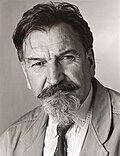 John Coley
 Wayne Wright
 Catherine Saunders
 Sir Barry Curtis
 Robin Jackson
.jpg)
.jpg)
.jpg)

.jpg)
.jpg)

.jpg)
April
- 1 April:
- Jack Harliwich, cricketer (Canterbury) and cricket coach (Canterbury) (born 1930).[265]
- Lee Mathias, nurse, healthcare business founder and health administrator, chair of Counties Manukau DHB (2013–2016) (born 1951).[266]
- 2 April – Ian Rutherford, cricketer (Otago, Central Districts) (born 1957).[267]
- 4 April – Cathie Gordon, art historian (Courtauld Institute, Birkbeck College) (born 1945).[268]
- 5 April – Judith Trotter, diplomat, ambassador to France (1988–1992) and Italy (1994–1998) (born 1935).[269]
- 8 April – Brian Brooks, legal academic (Victoria University of Wellington) (born 1937).[270]
- 9 April:
- Ward Robinson, crystallographer (University of Canterbury), Fellow of the Royal Society of New Zealand (since 1987).[271]
- Graeme Stevens, paleontologist (New Zealand Geological Survey) and science communicator, Fellow of the Royal Society of New Zealand (since 1976) (born 1932).[272]
- 10 April:
- Matt Arnold, designer (born c. 1976).[273]
- Sir Alan Frampton, agricultural economist (Massey University), chair of the Tatua Dairy Company (1990–2003) (born 1929).[274]
- Sharon Hawke, film and television camera operator, television director, and Māori leader (Ngāti Whātua Ōrākei) (born 1962).[275]
- 11 April:
- Cleighten Cornelius, cricketer (Canterbury) and winemaker (born 1976).[276]
- Peter Lynn, engineer and kite maker (born 1946).[277]
- 12 April – Alan Livingston, politician, Mayor of Waipā (2001–2013) (born 1952).[278]
- 15 April – Ned, snail with left-spriralling shell.[279]
- 16 April – Mark Carrington, cricketer (Northern Districts) (born 1961).[280]
- 19 April – Marshall Seifert, basketball player, coach (junior national team) and commentator (4ZB, TVNZ), television personality, and art gallery owner, Mobil Radio Award for best sports commentator (1993) (born 1939).[281]
- 20 April
- Adrienne Staples, politician, Mayor of South Wairarapa (2004–2016), deputy chair of Greater Wellington Regional Council (since 2019) (born 1956).[282]
- William Vivanco-Mackie, animal reproductive scientist (born 1947).[283]
- 29 April
- David Bell, art educator (University of Otago) (born 1950).[281]
- Carla van Zon, artistic director (New Zealand International Festival of the Arts, Auckland Arts Festival) (born 1952).[284]
 Lee Mathias
 Brian Brooks
 Sir Alan Frampton
 Cleighten Cornelius
 Alan Livingston
 Adrienne Staples
 Carla van Zon
.jpg)
.jpg)

.jpg)
.jpg)
.jpg)
.jpg)


