Portal:Organized Labour
From Wikipedia, the free encyclopedia


Introduction

- In trade unions, workers campaign for higher wages, better working conditions and fair treatment from their employers, and through the implementation of labour laws, from their governments. They do this through collective bargaining, sectoral bargaining, and when needed, strike action. In some countries, co-determination gives representatives of workers seats on the board of directors of their employers.
- Political parties representing the interests of workers campaign for labour rights, social security and the welfare state. They are usually called a labour party (in English-speaking countries), a social democratic party (in Germanic and Slavic countries), a socialist party (in Romance countries), or sometimes a workers' party.
- Though historically less prominent, the cooperative movement campaigns to replace capitalist ownership of the economy with worker cooperatives, consumer cooperatives, and other types of cooperative ownership. This is related to the concept of economic democracy.
The labour movement developed as a response to capitalism and the Industrial Revolution of the late 18th and early 19th centuries, at about the same time as socialism. The early goals of the movement were the right to unionise, the right to vote, democracy, safe working conditions and the 40-hour week. As these were achieved in many of the advanced economies of Western Europe and North America in the early decades of the 20th century, the labour movement expanded to issues of welfare and social insurance, wealth distribution and income distribution, public services like health care and education, social housing and in some cases common ownership. (Full article...)
Selected article

The Spartacist uprising (German: Spartakusaufstand), also known as the January uprising (Januaraufstand) or, more rarely, Bloody Week, was an armed uprising that took place in Berlin from the 5th to 12th of January 1919. It occurred in connection with the German revolution that broke out just before the end of World War I. The uprising was primarily a power struggle between the supporters of the provisional government led by Friedrich Ebert of the Majority Social Democratic Party of Germany (MSPD), which favored a social democracy, and those who backed the position of the Communist Party of Germany (KPD) led by Karl Liebknecht and Rosa Luxemburg, which wanted to set up a council republic similar to the one established by the Bolsheviks in Russia. The government's forces were victorious in the fighting.
The death toll was roughly 150–200, mostly among the insurgents. The most prominent deaths were those of Liebknecht and Luxemburg, who were executed extrajudicially on 15 January, almost certainly with at least tacit approval of the MSPD-led government. The party's involvement hampered its position throughout the life of the Weimar Republic, although quashing the uprising allowed elections for the National Assembly to take place as scheduled on 19 January 1919. The Assembly went on to write the Weimar Constitution that created the first national German democracy.
The uprising took its popular name from the Marxist Spartacus League (Spartakusbund), which Luxemburg and Liebknecht founded in 1914. When the KPD was established on 1 January 1919, the Spartacus League became part of it. Some historians, such as Heinrich August Winkler and Sebastian Haffner, consider the name to be misleading because the Spartacists (KPD) had neither wanted, planned, nor led the revolt. (Full article...)
May in Labor History
Significant dates in labour history.
- May 01 - In 1884 Proclamation of the demand for eight-hour workday in the United States. Two years later, in 1886, the general strike which eventually won the eight-hour workday in the United States, began. These events are today commemorated as May Day or Labor Day in most industrialized countries; Thomas Lewis died; the 1946 Pilbara strike occurred in Australia; International Woodworkers of America merged with the International Association of Machinists; Mike Watson was born; the Taksim Square massacre occurred in Turkey in 1977
- May 02 - Nazi Germany outlawed free trade unions and established the German Labour Front; Bernice Fisher died
- May 03 - The International Typographical Union was founded; the Bay View Tragedy occurred in 1886 in the U.S.
- May 04 - Haymarket Riot occurred in 1886 in the U.S.
- May 05 - John Sweeney was born; Jackie Presser stepped down as Teamsters president due to cancer; James Duncan was born
- May 06 - Miguel Contreras died; Frank Fitzsimmons died; Ludvik Buland was born
- May 07 - Miguel Contreras was born; Maurice Hutcheson was born; David Sullivan was born
- May 08 - Jerome Wurf was born; the Hard Hat riot occurred in the U.S. in 1970
- May 09 - Elias Motsoaledi died; 1934 West Coast Waterfront Strike began in the U.S.
- May 10 - Isaac Theophilus Akunna Wallace-Johnson died; Walter Philip Reuther died; the 2008 Skorpion Zinc Strike began in Namibia
- May 11 - William Konyha was born; Pullman Strike began in 1894 in the U.S.
- May 12 - Coal Strike of 1902 began in the U.S.; the American Maritime Officers was founded
- May 13 - Henk Sneevliet was born
- May 14 - Arthur Moore (labor leader) was born; the Ådalen shootings occurred in Sweden in 1931
- May 15 - Pope Leo XIII issued Rerum Novarum; Winnipeg General Strike of 1919 began; George Mock stepped down as president of the Teamsters after eight days; the Ulster Workers' Council Strike began in 1974 in Northern Ireland; the U.S. Supreme Court decided Gompers v. Buck's Stove and Range Co.; Arthur Creech Jones was born
- May 16 - The Minneapolis General Strike of 1934 began in the U.S.; the Iraqi Federation of Trade Unions was founded; the U.S. Supreme Court decided NLRB v. Mackay Radio & Telegraph Co.; A. Philip Randolph died
- May 17 - The first Starbucks Workers Union was organized; former trade union leader Francisco Largo Caballero was deposed as prime minister of Spain
- May 18 - Bill Haywood died; the Atlanta transit strike of 1950 began in the U.S.
- May 19 - James P. Hoffa was born; the Battle of Matewan began in 1920 in the U.S.
- May 21 - Cyrus S. Ching was born
- May 22 - Agustín Tosco was born; the Steel Workers Organizing Committee was disbanded in 1942; the United Steel Workers of America was founded in 1942
- May 23 - The "Battle of Toledo" occurred during the Auto-Lite Strike in 1934 in the U.S.
- May 24 - The Pennsylvania Association of Staff Nurses and Allied Professionals was founded; Peter J. Brennan was born
- May 25 - Philip Murray was born; the Remington Rand strike of 1936–1937 began in the U.S.; Basdeo Panday was born; Will H. Daly was born
- May 26 - Actors' Equity Association was founded; the Ohio Federation of Teachers was founded
- May 27 - The U.S. Supreme Court decided In re Debs
- May 29 - The Disney animators' strike began in 1941 in the U.S.; the Cordobazo uprising began in 1969 in Argentina; the 2006 TTC wildcat strike began in Canada
- May 30 - William Sidell was born; the Memorial Day massacre of 1937 occurred in the U.S.; the U.S. Supreme Court decided Lehnert v. Ferris Faculty Association
- May 31 - W. A. Boyle died
More Did you know (auto-generated)
- ... that Thames lightermen would pull their barges up to the Leaning Tower of Rotherhithe to collect their wages?
- ... that Bal Krishna Kaul, who served as the first Home and Finance minister of Ajmer State, undertook a 22-day hunger strike in Ajmer Jail?
- ... that the New Zealand Bill of Rights Act 1990 has been described as "one of the weakest affirmations of human rights" in the world because courts cannot strike down inconsistent laws?
- ... that M. Farooqui, who had been expelled from his studies for having organized a strike in 1940, received his Delhi University degree in a special convocation in 1989?
- ... that members of the Trade Union Opposition Federation stormed the Copenhagen Stock Exchange?
- ... that the communist trade unionist Ditto Pölzl was a member of all three provisional state governments of Styria in 1945?
Related Portals


Selected image
 Rally in Dhaka, organized by Jatiyo Nari Shramik Trade Union Kendra (National Women Workers Trade Union Centre), an organization affiliated with the Bangladesh Trade Union Kendra.
 Empty Gare du Nord train station during the November 2007 strikes in France.
 Strike leaders at the Paterson silk strike of 1913. From left, Patrick Quinlan, Carlo Tresca, Elizabeth Gurley Flynn, Adolph Lessig, and Bill Haywood.
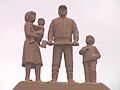 Detail of monument to the Reesor Siding Strike of 1963.

 Cripple Creek, Colo., under martial law, during the 1894 strike.
 Metropolitan Transportation Authority (New York) notice of subway closure during the 2005 New York City transit strike.
 Breaker boys, child laborers, working in a U.S. coal mine in 1911.
 Lewis Hine's 1920 image "Power house mechanic working on steam pump," which shows a working class young American man with wrench in hand, hunched over, surrounded by the machinery that defines his work.
 National Federation of Federal Employees officials sign a collective bargaining agreement with the U.S. 8th Army in October 2002.
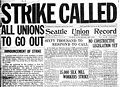 The front page of the Union Record on the Seattle General Strike of 1919.

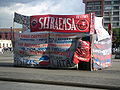
 Crowd gathered outside old City Hall during the Winnipeg general strike, June 21, 1919.
 American Federation of Teachers (AFT) president Albert Shanker.
 Illustration from the Brisbane Worker newspaper condemning the brutality of the Queensland Police on Black Friday during the 1912 Brisbane General Strike.
 Barges set ablaze by steelworkers during the Homestead strike in 1892.
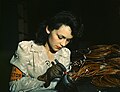 During World War II, a female aircraft worker checks electrical assemblies at the Vega Aircraft Corporation in Burbank, California.
 Members of the United Steelworkers in Ohio phone bank other union members to educate them about critical issues in the 2008 election in the U.S.
 Protesters barricade the street on June 22 during the 2006 Oaxaca protests.
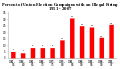 Union elections with an illegal firing, 1951 to 2007.
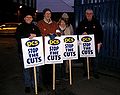 Public and Commercial Services Union members on strike in Manchester 2006.
 Union members picketing recent NLRB rulings outside the agency's Washington, D.C., headquarters in November 2007.
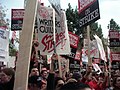 Picket signs at the 2007 Writers Guild of America strike.
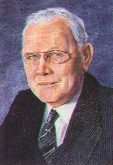 William Green, president of the AFL–CIO from 1924 to 1952.
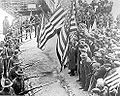 Striking I.W.W. members confront Massachusetts National Guard troops in Boston, during the Lawrence textile strike in 1912.
 Striking workers march moments before the Swedish military opened fire, killing five workers during the Ådalen shootings.
 Armed vigilantes deport striking copper miners during the Bisbee Deportation in Bisbee, Arizona, July 12, 1917.
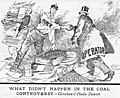 Political cartoon about the Coal Strike of 1902 from the Cleveland Plain Dealer.
 Union members march in Argentina on Human Rights Day in December 2005. The signs read "Worker rights are human rights..
 George Meany, former leader of the AFL–CIO.
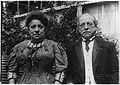 Samuel Gompers, President of the American Federation of Labor, and his wife, circa 1908.
 Memorial marker for the Bay View Tragedy.
 The Western Federation of Miners' famous flyer entitled "Is Colorado in America?".
 Mounted police chase demonstrators through Vancouver's East End during the Battle of Ballantyne Pier in 1935.
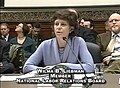 Wilma B. Liebman, chair, NLRB.
 Knights of Labor Grand Master Workman Terence V. Powderly.
 Big Bill Haywood, a founding member and leader of the Industrial Workers of the World.
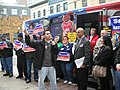 An AFL–CIO protest of Rite Aid, with Rev. Mark Reisinger (Pastor of Grace United Methodist Church in Mechanicsburg, Pennsylvania), Bill George, and Richard Bloomingdale.
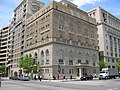 Former headquarters of the United Mine Workers of America and the Congress of Industrial Organizations, 900 15th Street NW, Washington, D.C., in 200.
 Shields used by striking workers at the Carnegie Steel Works during the Homestead Strike in 1892.
 United Mine Workers of America poster circa 1902.
 Striking American Railway Union members confront Illinois National Guard troops in Chicago, Illinois, during the Pullman Strike in 1894.
 Strike sign used by the German Train Drivers' Union in the German national rail strike of 2007.
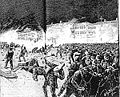 Exaggerated 19th century engraving showing flames and smoke following the Haymarket riot.

 John L. Lewis (right, President of the United Mine Workers, confers with Thomas Kennedy (left), UMW Secretary-Treasurer of the UMW, and a UMW official at the War Labor Board in 1943 about a coal miners' strike.
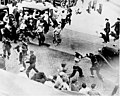 Striking teamsters armed with pipes battle police in the streets during the Minneapolis Teamsters Strike of 1934.
.JPG)
.jpg)


Selected Quote
 |
Labor is prior to, and independent of, capital. Capital is only the fruit of labor, and could never have existed if Labor had not first existed. Labor is superior to capital, and deserves much the higher consideration." |
 |
— Abraham Lincoln. |
Did you know
- ...that the supply of natural gas and electricity in New Orleans, ceased as a result of the 1892 New Orleans general strike, plunging the city into darkness for four nights?
- ...that strikebreakers are used more frequently in the U.S. than in any other industrialized country?
- ...that American trade union leader William McFetridge switched from Democrat to Republican in 1948 and supported Thomas E. Dewey for president even though Dewey had successfully prosecuted his predecessor for labor racketeering?
Topics
Get involved

Also see our sister WikiProject, Housing and Tenant Rights!

Associated Wikimedia
The following Wikimedia Foundation sister projects provide more on this subject:
-
 Commons
Free media repository -
 Wikidata
Free knowledge base -
 Wikiquote
Collection of quotations -
 Wikisource
Free-content library -
 Wikiversity
Free learning tools -
 Wiktionary
Dictionary and thesaurus


