Science is a systematic discipline that builds and organises knowledge in the form of testable explanations about nature and society. It is driven by the scientific method: an empirical cycle that typically involves making observations, producing hypotheses, testing them with evidence, and drawing conclusions. Science encompasses this process and the body of knowledge it produces, which the scientific community continuously challenges, validates, and organises. (Full article...)
A 17th-century sand hourglass. The hourglass is nowadays often used symbolically to represent the concept of time.
The history of timekeeping devices dates back to when ancient civilizations first observed astronomical bodies as they moved across the sky. Devices and methods for keeping time have gradually improved through a series of new inventions, starting with measuring time by continuous processes, such as the flow of liquid in water clocks, to mechanical clocks, and eventually repetitive, oscillatory processes, such as the swing of pendulums. Oscillating timekeepers are used in modern timepieces. Sundials and water clocks were first used in ancient Egypt c.1200BC and later by the Babylonians, the Greeks and the Chinese. Incense clocks were being used in China by the 6th century. In the medieval period, Islamic water clocks were unrivalled in their sophistication until the mid-14th century. The hourglass, invented in Europe, was one of the few reliable methods of measuring time at sea. (Full article...)
Stela 51 from Calakmul, dating to 731, is the best preserved monument from the city. It depicts the king Yuknoom Tookʼ Kʼawiil.
Maya stelae (singular stela) are monuments that were fashioned by the Maya civilization of ancient Mesoamerica. They consist of tall, sculpted stone shafts and are often associated with low circular stones referred to as altars, although their actual function is uncertain. Many stelae were sculpted in low relief, although plain monuments are found throughout the Maya region. The sculpting of these monuments spread throughout the Maya area during the Classic Period (c.250– c.900 AD), and these pairings of sculpted stelae and circular altars are considered a hallmark of Classic Maya civilization. The earliest dated stela to have been found in situ in the Maya lowlands was recovered from the great city of Tikal in Guatemala. During the Classic Period almost every Maya kingdom in the southern lowlands raised stelae in its ceremonial centre. (Full article...)
The European rabbit (Oryctolagus cuniculus) or coney is a species of rabbit native to the Iberian Peninsula and southwestern France. It has been introduced to hundreds of locations around the world. Wild and domesticated European rabbits around the world can vary widely in size, shape, and colour. The average adult European rabbit is smaller than the European hare, though size and weight vary with habitat and diet. (Full article...)
Image 8
The king brown snake (Pseudechis australis) is a species of highly venomous snake of the family Elapidae, native to northern, western, and Central Australia. The king brown snake is the largest terrestrial venomous snake in Australia. Despite its common name, it is a member of the genusPseudechis (black snakes) and only distantly related to true brown snakes. Its alternative common name is the mulga snake, although it lives in many habitats apart from mulga. First described by English zoologist John Edward Gray in 1842, it is a robust snake up to 3.3m (11ft) long. It is variable in appearance, with individuals from northern Australia having tan upper parts, while those from southern Australia are dark brown to blackish. Sometimes, it is seen in a reddish-green texture. The dorsal scales are two-toned, sometimes giving the snake a patterned appearance. Its underside is cream or white, often with orange splotches. The species is oviparous. The snake is considered to be a least-concern species according to the International Union for Conservation of Nature, though may have declined with the spread of the cane toad. (Full article...)
Image 9
Thyrotoxic periodic paralysis occurs when the thyroid gland releases excessive amounts of thyroxine (thyroid hormone).
Hydnellum peckii is a fungus in the genus Hydnellum of the family Bankeraceae. The unusual appearance of the young fruit bodies has earned the species several descriptive common names, including strawberries and cream, the bleeding Hydnellum, the bleeding tooth fungus, the red-juice tooth, and the Devil's tooth. (Full article...)
Image 11
Lentiviral delivery of designed shRNAs and the mechanism of RNA interference in mammalian cells RNA interference (RNAi) is a biological process in which RNA molecules are involved in sequence-specific suppression of gene expression by double-stranded RNA, through translational or transcriptional repression. Historically, RNAi was known by other names, including co-suppression, post-transcriptional gene silencing (PTGS), and quelling. The detailed study of each of these seemingly different processes elucidated that the identity of these phenomena were all actually RNAi. Andrew Fire and Craig Mello shared the 2006 Nobel Prize in Physiology or Medicine for their work on RNAi in the nematode worm Caenorhabditis elegans, which they published in 1998. Since the discovery of RNAi and its regulatory potentials, it has become evident that RNAi has immense potential in suppression of desired genes. RNAi is now known as precise, efficient, stable and better than antisense therapy for gene suppression. Antisense RNA produced intracellularly by an expression vector may be developed and find utility as novel therapeutic agents. (Full article...)
Image 12
The Caerleon pipe burial is a second-century Roman grave from a cemetery associated with the former legionary fortress and settlement, Isca Augusta, in what is now Caerleon, Wales, United Kingdom. The main site, including its large amphitheatre, was excavated in the early twentieth century, largely by the archaeologist Tessa Wheeler, but its surrounding cemeteries were mainly known only through casual discoveries. (Full article...)
The bobcat (Lynx rufus), also known as the wildcat, bay lynx, or red lynx, is one of the four extant species within the medium-sized wild catgenusLynx. Native to North America, it ranges from southern Canada through most of the contiguous United States to Oaxaca in Mexico. It is listed as Least Concern on the IUCN Red List since 2002, due to its wide distribution and large population. Although it has been hunted extensively both for sport and fur, populations have proven stable, though declining in some areas. (Full article...)
Banksia sessilis, commonly known as parrot bush, is a species of shrub or tree in the plantgenusBanksia of the family Proteaceae. It had been known as Dryandra sessilis until 2007, when the genus Dryandra was sunk into Banksia. The Noongar peoples know the plant as budjan or butyak. Widespread throughout southwestWestern Australia, it is found on sandy soils over laterite or limestone, often as an understorey plant in open forest, woodland or shrubland. Encountered as a shrub or small tree up to 6m (20ft) in height, it has prickly dark green leaves and dome-shaped cream-yellow flowerheads. Flowering from winter through to late spring, it provides a key source of food—both the nectar and the insects it attracts—for honeyeaters in the cooler months, and species diversity is reduced in areas where there is little or no parrot bush occurring. Several species of honeyeater, some species of native bee, and the European honey bee seek out and consume the nectar, while the long-billed black cockatoo and Australian ringneck eat the seed. The life cycle of Banksia sessilis is adapted to regular bushfires. Killed by fire and regenerating by seed afterwards, each shrub generally produces many flowerheads and a massive amount of seed. It can recolonise disturbed areas, and may grow in thickets. (Full article...)
... that a poem by Moses da Rieti includes an encyclopedia of the sciences, a Jewish paradise fantasy, and a post-biblical history of Jewish literature?
... that by 2010 Yi Kŭmch'ŏl had written approximately one-fifth of all North Korean science fiction literature?
... that The Science of Dune contains a scientific analysis of the fictional concepts from the Dune franchise, such as sandworms, stillsuits, and the fictional drug melange?
Get involved
For editor resources and to collaborate with other editors on improving Wikipedia's Science-related articles, visit WikiProject Science.
This portal needs to be updated. Please help update this portal to reflect recent events or newly available information. Relevant discussion may be found on the talk page.
Many naturally occurring phenomena approximate a normal distribution.
Integrate relatively new scientific knowledge and findings (major studies reported on by RS) into relevant articles
You can also go through this list of items that were nearly/not included in the last Year in science article to find studies to integrate elsewhere (many of these contain notable info, you can filter them by field and many rows have a likely relevant article already wikilinked in the last column)
Complete requests of other editors on the talk pages of science-related articles (examples)
Expand 2026 in science and/or other articles for science-related topics of the year (in the box on the right)
Create new articles for items of this article, mostly articles relating to new scientific fields/topics/findings (the page does not use redlinks anymore but you will quickly identify possible new articles when reading it; here you can find a version with over 60 redlinked examples)
Some of the lists' items have not yet been integrated into their wikilinked articles; if you add a study there it should also be relevant to at least one other article
Find studies published under a compatible open license (like CC BY 4.0) and upload the studies' images with descriptions from the study and add these images to articles if they are relevant and useful there
When a study with a useful image is published under an incompatible or unclear license (or the image is published not in a study but elsewhere), you could contact its authors (Twitter/Mail) and ask them to give you the permission to upload them under CC BY 4.0 (or whether they could upload the image/s under a compatible license)
You can also think about whether images would be useful as you read a science-related article and then search for such images:
if they already exist add them (if already on WMCommons) or upload them (if the license is ok) or ask their authors for permissions
Science is a systematic discipline that builds and organises knowledge in the form of testable explanations about nature and society. It is driven by the scientific method: an empirical cycle that typically involves making observations, producing hypotheses, testing them with evidence, and drawing conclusions. Science encompasses this process and the body of knowledge it produces, which the scientific community continuously challenges, validates, and organises. (Full article...)
Image 6
A photomicrograph of SRIF as seen by a pathologist through a microscope. The tissue on the slide is stained with two standard dyes (hematoxylin: blue, eosin: pink) to make it visible. Note that the excess collagen in SRIF gives the air sacs a pink color.
Sci-Hub is a shadow library that provides free access to millions of research papers, regardless of copyright, by bypassing publishers' paywalls in various ways. Unlike Library Genesis, it does not provide access to books. Sci-Hub was founded in Kazakhstan by Alexandra Elbakyan in 2011, in response to the rising costs of research papers behind paywalls. The site is extensively used worldwide. In September 2019, the site's operator(s) said that it served approximately 400,000 requests per day. In addition to its intensive use, Sci-Hub stands out among other shadow libraries because of its easy use and reliability, as well as the enormous size of its collection. A 2018 study estimated that Sci-Hub provided access to almost all scholarly publications. On 15 July 2022, Sci-Hub reported that its collection comprised 88,343,822 files. In December 2020, the site paused uploads due to legal troubles. Since then, the site has archived a much lower fraction of new articles. (Full article...)
Image 8
In biology, taxonomy (from Ancient Greekτάξις (taxis)'arrangement' and -νομία (-nomia)'method') is the scientific study of naming, defining (circumscribing) and classifying groups of biological organisms based on shared characteristics. Modern approaches prioritize common ancestry and evolutionary relationships. Organisms are grouped into taxa (singular: taxon), and these groups are given a taxonomic rank; groups of a given rank can be aggregated to form a more inclusive group of higher rank, thus creating a taxonomic hierarchy. The principal ranks in modern use are domain, kingdom, phylum (division is sometimes used in botany in place of phylum), class, order, family, genus, and species. The Swedish botanist Carl Linnaeus is regarded as the founder of the current system of taxonomy, having developed a ranked system known as Linnaean taxonomy for categorizing organisms. (Full article...)


 Featured articles are displayed here, which represent some of the best content on English Wikipedia.


.jpeg)


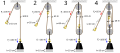 Mechanical advantage device, by Prolineserver (edited by Tomia, Ss181292 and Atropos235) (from Wikipedia:Featured pictures/Sciences/Others)
 Translational motion at Thermodynamic temperature, by Greg L (from Wikipedia:Featured pictures/Sciences/Others)
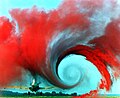 NASA study on wingtip vortices at Wake turbulence, by Langley Research Center (edited by Fir0002) (from Wikipedia:Featured pictures/Sciences/Others)
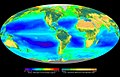 Global oceanic and terrestrial photoautotroph abundance at Primary production, by SeaWiFS Project (from Wikipedia:Featured pictures/Sciences/Others)
 Color cathodoluminescence of a diamond, by Pavel.Somov (from Wikipedia:Featured pictures/Sciences/Others)
 Parallax, by Mila Zinkova (edited by Richard Bartz) (from Wikipedia:Featured pictures/Sciences/Others)
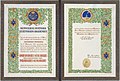 Nobel Prize in Physics diploma, by Sofia Gisberg (restored by Jebulon) (from Wikipedia:Featured pictures/Sciences/Others)

 Simulation of liquids with different viscosities, by Synapticrelay (from Wikipedia:Featured pictures/Sciences/Others)


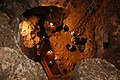 Archaeologists prospecting Santa Ana Cave at Excavation (archaeology), by Mario modesto (from Wikipedia:Featured pictures/Sciences/Others)
 Peruvian Andes at United States Exploring Expedition, by Alfred Thomas Agate (edited by Durova) (from Wikipedia:Featured pictures/Sciences/Others)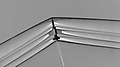
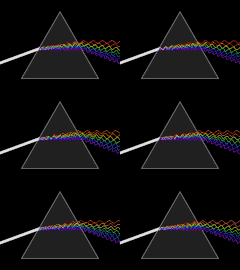
 Toroid magnets of the ATLAS detector, by Maximilien Brice, CERN (edited by Bammesk) (from Wikipedia:Featured pictures/Sciences/Others)
 Section of the Large Hadron Collider, by Maximilien Brice (from Wikipedia:Featured pictures/Sciences/Others)
 A patient being treated for COVID-19, by Gustavo Basso (from Wikipedia:Featured pictures/Sciences/Others)
 Drop impact on a liquid surface, by José Manuel Suárez (from Wikipedia:Featured pictures/Sciences/Others)
 Vibrating glass beam at Euler–Bernoulli beam theory, by Ben pcc (from Wikipedia:Featured pictures/Sciences/Others)


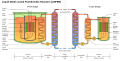

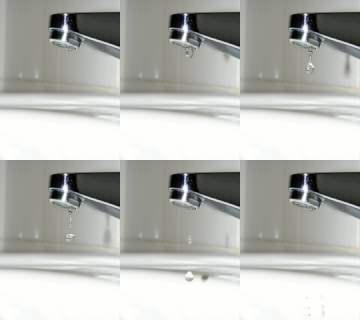 Animation of a water drop, by Chris 73 and Gmaxwell (from Wikipedia:Featured pictures/Sciences/Others)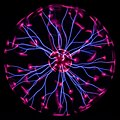
 Archaeological excavation at Atapuerca Mountains, by Mario modesto (from Wikipedia:Featured pictures/Sciences/Others)
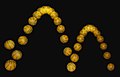 Projectile motion of a bouncing ball at Inelastic collision, by MichaelMaggs (from Wikipedia:Featured pictures/Sciences/Others)


.png)


.jpg)


_-_Climate_Lab_Book_(Ed_Hawkins).png)




.svg)
.svg)
_(cropped).jpg)

.svg)


