Section 16 of the Constitution Act, 1867
From Wikipedia, the free encyclopedia
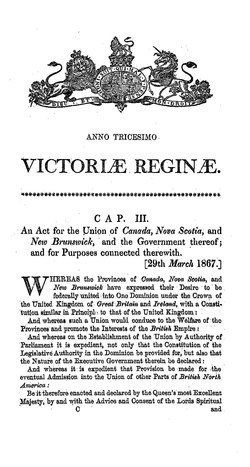
| Constitution Act, 1867 |
|---|
| Part of the Constitution of Canada |
| PREAMBLE |
| I. PRELIMINARY |
| 1, 2 |
| II. UNION |
| 3, 4, 5, 6, 7, 8 |
| III. EXECUTIVE POWER |
| 9, 10, 11, 12, 13, 14, 15, 16 |
| IV. LEGISLATIVE POWER |
| 17, 18, 19, 20 |
| The Senate |
| 21, 22, 23, 24, 25, 26, 27, 28, 29, 30, 31, 32, 33, 34, 35, 36 |
| The House of Commons |
| 37, 38, 39, 40, 41, 42, 43, 44, 45, 46, 47, 48, 49, 50, 51(1), 51(2), 51A, 52 |
| Money Votes; Royal Assent |
| 53, 54, 55, 56, 57 |
|
V. PROVINCIAL CONSTITUTIONS Executive Power |
| 58, 59, 60, 61, 62, 63, 64, 65, 66, 67, 68 |
| Legislative Power |
| 69, 70, 71, 72, 73, 74, 75, 76, 77, 78, 79, 80, 81, 82, 83, 84, 85, 86, 81, 82, 83, 84, 85, 86, 87, 88, 89, 90, 90Q, 90S |
| VI. DISTRIBUTION OF LEGISLATIVE POWERS |
| 91, 92, 92A, 93, 93A, 94, 94A, 95 |
| VII. JUDICATURE |
| 96, 97, 98, 99, 100, 101 |
| VIII. REVENUES; DEBTS; ASSETS; TAXATION |
| 102, 103, 104, 105, 106, 107, 108, 109, 110, 111, 112, 113, 114, 115, 116, 117, 118, 119, 120, 121, 122, 123, 124, 125, 126 |
| IX. MISCELLANEOUS PROVISIONS |
| 127, 128, 128Q, 129, 130, 131, 132, 133, 134, 135, 136, 137, 138, 139, 140, 141, 142, 143, 144 |
| X. INTERCOLONIAL RAILWAY |
| 145 |
| XI. ADMISSION OF OTHER COLONIES |
| 146, 147 |
| SCHEDULES |
|
First: Electoral Districts of Ontario Second: Electoral Districts of Quebec Third: Property of Canada Fourth: Property of Ontario and Quebec Fifth: Allegiance and Senate Qualification Sixth: Natural Resources |
| COMING INTO FORCE |
| Proclamation of the Constitution Act, 1867 |
Section 16 of the Constitution Act, 1867 (French: article 16 de la Loi constitutionnelle de 1867) is a provision of the Constitution of Canada, making Ottawa the seat of government of Canada.
The Constitution Act, 1867 is the constitutional statute which established Canada. Originally named the British North America Act, 1867, the Act continues to be the foundational statute for the Constitution of Canada, although it has been amended many times since 1867. It is now recognised as part of the supreme law of Canada.
The Constitution Act, 1867 is part of the Constitution of Canada and thus part of the supreme law of Canada.[1][2] The Act sets out the constitutional framework of Canada, including the structure of the federal government and the powers of the federal government and the provinces. It was the product of extensive negotiations between the provinces of British North America at the Charlottetown Conference in 1864, the Quebec Conference in 1864, and the London Conference in 1866.[3][4] Those conferences were followed by consultations with the British government in 1867.[3][5] The Act was then enacted in 1867 by the British Parliament under the name the British North America Act, 1867.[6][7] In 1982 the Act was brought under full Canadian control through the Patriation of the Constitution, and was renamed the Constitution Act, 1867.[2][6] Since Patriation the Act can only be amended in Canada, under the amending formula set out in the Constitution Act, 1982.[8][9][10]
Text of section 16
Section 16 reads:
Seat of Government of Canada
16 Until the Queen otherwise directs, the Seat of Government of Canada shall be Ottawa.[11]
Section 16 is found in Part III of the Constitution Act, 1867, dealing with the executive power of the federal government.
Section 16 has not been amended since the Act was enacted in 1867.[11]
Legislative history
At the Quebec Conference, one issue which needed to be addressed for the new country was the location of the seat of government. Both the Quebec Resolutions and the London Resolutions provided that the seat of government should be Ottawa, but stated that the designation of the seat of government was "subject to the Royal Prerogative".[12][13]
During the drafting of the bill, this provision first appeared in the fourth draft, which continued to refer to the royal prerogative. The section took its current wording in the final draft of the bill, which gave the Queen the statutory power to direct a different location, rather than citing the royal prerogative.[14]


.svg)
