1980s in video games
Video game-related events in 1980s
From Wikipedia, the free encyclopedia
The 1980s was the second decade in the industry's history. It was a decade of highs and lows for video games. The decade began amidst a boom in the arcade video game business with the golden age of arcade video games, the Atari 2600's dominance of the home console market during the second generation of video game consoles, and the rising influence of home computers. However, an oversatuation of low quality games led to an implosion of the video game market that nearly destroyed the industry in North America.[1] Most investors believed video games to be a fad that had since passed,[2] up until Nintendo's success with its Nintendo Entertainment System (NES, Famicom) revived interest in game consoles and led to a recovery of the home video game industry.[3] In the remaining years of the decade, Sega ignites a console war with Nintendo, developers that had been affected by the crash experimented with PC games,[4] and Nintendo released the Game Boy, which would become the best-selling handheld gaming device for the next two decades.[5] Other consoles released in the decade included the Intellivision, ColecoVision, TurboGrafx-16 (PC Engine) and Sega Genesis (Mega Drive).

Notable games of the 1980s included Pac-Man, Ms. Pac-Man, Donkey Kong, Super Mario Bros., Adventure, Galaga, Duck Hunt, Tetris, The Legend of Zelda, John Madden Football, Pole Position, Final Fantasy, King's Quest, Microsoft Flight Simulator, Dragon Warrior, Double Dragon, Contra, Mega Man 2, SimCity, Sid Meier's Pirates!, Alex Kidd in Miracle World, After Burner, Prince of Persia, Toss-Up, Gauntlet, Gradius, Out Run, Manic Miner, Defender, Missile Command, Dizzy, 3D Monster Maze, Mother, Frogger, Q*bert, Mappy, Dig Dug, Pitfall!, Elite, and Maniac Mansion.
Consoles of the 1980s
The 1980s opened with popular holdovers like the Atari 2600, alongside newer machines chasing “arcade-at-home” fidelity such as ColecoVision (launched mid-1982 with Donkey Kong as a pack-in) and the self-contained, vector-display Vectrex.[6]


In Japan, Nintendo’s Family Computer (Famicom) arrived in 1983, setting the stage for the company’s U.S. push two years later with the Nintendo Entertainment System. However it wasn't an easy transition to the United States as the market had just crashed the same year as Nintendo launched their own system, the Famicom, in Japan. Thus the American debut began in New York City on Oct. 18, 1985, marketed as a toy (with R.O.B. the Robot and the Zapper Gun) to win back skeptical retailers after the market crash—an approach that helped spark a broader recovery.[7]
Through the second half of the decade, Nintendo consolidated its lead in North America while refining a stricter publishing model: the 10NES lockout chip and licensing rules that shaped third-party game releases and distribution.


Sega mounted the most persistent challenge with the Master System (sold as Mark III in Japan). While it lagged in the U.S., it carved out lasting strength in places like Brazil, where local partner TecToy kept variants on store shelves for decades—an unusual longevity for an ’80s console.[8]
Atari returned with the 7800, emphasizing affordability and backward compatibility with 2600 cartridges—an early nod to preserving players’ libraries. (Modern reissues even highlight that cross-compatibility today.) [9]
By the late 1980s, the conversation shifted toward higher performance: NEC and Hudson’s PC Engine (1987, Japan) and Sega’s Mega Drive/Genesis (1988 Japan; 1989 U.S.) ushered in faster scrolling, bigger sprites, and more elaborate sound, signaling the next wave of competition that would define the early 1990s.[10]
Behind the scenes, the decade also standardized features we now take for granted—battery-backed saves and rewritable media (e.g., Nintendo’s Disk Writer service for the Famicom Disk System)—and elevated hardware engineers like Masayuki Uemura to quiet renown for the designs that reshaped living-room entertainment.[11]
History
Golden age of arcade games
In the early-1980s, arcade games were a vibrant industry. The arcade video game industry in the US alone was generating $5 billion of revenue annually in 1981[12] and the number of arcades doubled between 1980 and 1982.[13] The effect video games had on society expanded to other mediums as well such as major films and music. In 1982, "Pac-Man Fever" charted on the Billboard Hot 100 charts[14] and Tron became a cult classic.[15]
Third-party development and an oversaturated market
Following a dispute over recognition and royalties, several of Atari's key programmers split and founded their own company Activision in late 1979.[16] Activision was the first third-party developer for the Atari 2600.[17] Atari sued Activision for copyright infringement and theft of trade secrets in 1980,[18] but the two parties settled on fixed royalty rates and a legitimizing process for third parties to develop games on hardware.[19]
In the aftermath of the lawsuit, an oversaturated market resulted in companies that had never had an interest in video games before beginning to work on their own games and acquire software houses, for instance, Parker Brothers, the board game giant owned at the time by General Mills, developed video games, which spurred the acquisition of U.S. Games by Quaker Oats to compete.[20] The market was also flooded with too many consoles and what were seen as too many poor quality games,[21] elements that would contribute to the collapse of the entire video game industry in 1983.
American video game crash of 1983
By 1983, the video game bubble created during the golden age had burst and several major companies that produced computers and consoles had gone into bankruptcy.[22] Atari reported a $536 million loss in 1983.[23] Some entertainment experts and investors lost confidence in the medium and believed it was a passing fad.[24] A game often given poster child status to this era, E.T. the Extra-Terrestrial had such bad sale figures that the remaining unsold cartridges were buried in the deserts of New Mexico.[25][26]
Rise of computer gaming

The brunt of the crash was felt mainly across the home console market, localized within the United States. Home computer gaming continued to thrive in this time period, especially with lower-cost machines such as the Commodore 64, ZX Spectrum and IBM Personal Computer. Some computer companies adopted aggressive advertising strategies to compete with gaming consoles and to promote their educational appeal to parents as well.[27][28] Home computers also allowed motivated users to develop their own games, and many notable titles were created this way, such as Jordan Mechner's Karateka, which he wrote on an Apple II while in college.[29]
In the late 1980s, IBM PC compatibles became popular as gaming devices, with more memory and higher resolutions than consoles, but lacking in the custom hardware that allowed the slower console systems to create smooth visuals.[30]
American rejuvenation
By 1985, the home market console in North America had been dormant for nearly two years. Elsewhere, video games continued to be a staple of innovation and development. After seeing impressive numbers from its Famicom system in Japan, Nintendo decided to jump into the North American market by releasing the Nintendo Entertainment System, or NES for short. After release it took several years to build up momentum, but despite the pessimism of critics it became a success. Nintendo is credited with reviving the home console market within the United States.[3]
One innovation that led to Nintendo's success was its ability to tell stories on an inexpensive home console; something that was more common for home computer games, but had only been seen on consoles in a limited fashion. Nintendo also took measures to prevent another crash by requiring third-party developers to adhere to regulations and standards, something that has existed on major consoles since then. One requirement was a "lock and key" system to prevent reverse engineering. It also forced third parties to pay in full for their cartridges before release, so that in case of a flop, the liability will be on the developer and not the provider.[31]
Notable video-game franchises established in the 1980s


.png)

Arcades
- 1942 (1984)
- After Burner (1987)
- Altered Beast (1988)
- Arkanoid (1986)
- Balloon Fight (1984)
- Baraduke (1985)
- Battlezone (1980)
- Berzerk (1980)
- Bionic Commando (1987)
- Bomb Jack (1984)
- Bubble Bobble (1986)
- BurgerTime (1982)
- Centipede (1981)
- Contra (1987)
- Darius (1987)
- Defender (1981)
- Dig Dug (1982)
- Donkey Kong (1981)
- Double Dragon (1987)
- Dragon's Lair (1983)
- Fantasy Zone (1986)
- Final Fight (1989)
- Frenzy (1982)
- Frogger (1981)
- Gauntlet (1985)
- Ghosts 'n Goblins (1985)
- Golden Axe (1989)
- Golden Tee Golf (1989)
- Gradius (1985)
- Hang-On (1985)
- Joust (1982)
- Jungle King (1982)
- Kunio-kun (1986)
- Ikari Warriors (1986)
- Mappy (1983)
- Missile Command (1980)
- Mr. Do! (1982)
- Ms. Pac-Man2 (1982)
- Ninja Gaiden (1988)
- OutRun (1986)
- Pac-Man (1980)
- Paperboy (1985)
- Pocky & Rocky (1986)
- Pole Position (1982)
- Punch-Out!! (1984)
- Q*bert (1982)
- Qix (1981)
- Rally-X (1980)
- Rampage (1986)
- Red Baron (1981)
- Robotron: 2084 (1982)
- R-Type (1987)
- Rush'n Attack (1985)
- Shinobi (1987)
- Space Harrier (1985)
- Spy Hunter (1983)
- Street Fighter (1987)
- Strider (1989)
- Super Cobra (1981)
- Tempest (1981)
- Track & Field (1983)
- Tron1 (1982)
- TwinBee (1985)
- Wonder Boy (1986)
- World Stadium (1988)
- Xevious (1982)
- Zaxxon (1982)
Consoles and home computers
- Adventure Island (1986)
- Alien1 (1982)
- Alternate Reality (1985)
- Alex Kidd (1986)
- The Bard's Tale (1985)
- Batman1 (1986)
- BattleTech (1988)
- Blaster Master (1988)
- Bomberman2 (1983)
- Bonk (1989)
- Boulder Dash (1984)
- Carmen Sandiego (1985)
- Castlevania (1986)
- Chip's Challenge (1989)
- Choplifter (1982)
- Dizzy (1987)
- Dragon Ball1 (1986)
- Dragon Quest (1986)
- Dragon Slayer (1984)
- Dungeons & Dragons (1988)
- Dungeon Explorer (1989)
- Dungeon Master (1987)
- Elite (1984)
- Excitebike (1984)
- Famicom Detective Club (1988)
- Family Stadium (1986)
- Final Fantasy (1987)
- Fire Pro Wrestling (1989)
- G.I. Joe1 (1983)
- Godzilla1 (1983)
- Giana Sisters (1987)
- Horace (1982)
- James Bond1 (1983)
- Jetpac (1983)
- Kid Icarus (1986)
- King's Quest (1980)
- Last Ninja (1987)
- The Legend of Heroes (1989)
- The Legend of Zelda (1986)
- Leisure Suit Larry (1987)
- Lode Runner (1983)
- Madden NFL (1988)
- Maniac Mansion (1987)
- Manic Miner (1983)
- MechWarrior2 (1989)
- Mega Man (1987)
- Megami Tensei (1987)
- Metal Gear (1987)
- Metroid (1986)
- Microsoft Flight Simulator (1982)
- Middle-earth1 (1982)
- Might and Magic (1986)
- Monty Mole (1984)
- Mother (1989)
- Parodius (1988)
- Phantasie (1985)
- Phantasy Star (1987)
- Pitfall! (1982)
- Police Quest (1987)
- Populous (1989)
- Prince of Persia (1989)
- The Prisoner1 (1980)
- RealSports (1982)
- RoboCop1 (1988)
- Rocky's Boots (1982)
- Romance of the Three Kingdoms (1985)
- SaGa (1989)
- Shadow of the Beast (1989)
- SimCity (1989)
- Space Quest (1986)
- Spider-Man1 (1982)
- Star Raiders (1980)
- Star Soldier (1986)
- Super Mario2 (1985)
- Teenage Mutant Ninja Turtles1 (1989)
- Test Drive (1987)
- Tetris (1985)
- Thunder Force (1983)
- Ultima (1981)
- Wasteland (1988)
- Wizardry (1981)
- Wolfenstein (1981)
- X-Men1 (1989)
- Ys (1987)
Notes:
- 1Game franchises that also accompany major film or television franchises.
- 2Game franchises that are considered spin-offs of previously established franchises.
Financial performance
Highest-grossing arcade games of the decade
The following titles were the highest-grossing arcade video games of each year in the 1980s, in terms of coin drop earnings.
| Year | Market | Chart(s) | Title | Revenue | Inflation | Developer | Manufacturer(s) | Genre | Ref |
|---|---|---|---|---|---|---|---|---|---|
| 1980 | Worldwide | N/a | Pac-Man | $6 billion | $20 billion | Namco | Namco / Midway | Maze | [32][33] |
| 1981 | |||||||||
| 1982 | |||||||||
| 1983 | Worldwide | N/a | Pole Position | Unknown | Namco | Namco / Atari | Racing | [34] | |
| 1984 | UK | Unknown | Track & Field | Unknown | Konami | Konami | Olympic sports | [35] | |
| USA | AMOA | Pole Position | Unknown | Namco | Atari | Racing | [36] | ||
| RePlay | Pole Position II | Unknown | Namco | Atari | Racing | [37] | |||
| 1985 | UK | Unknown | Commando | Unknown | Capcom | Capcom | Run-and-gun | [35] | |
| USA | Play Meter | Hang-On | Unknown | Sega | Sega | Racing | [38] | ||
| RePlay | Karate Champ | Unknown | Technōs | Data East | Fighting | [39] | |||
| 1986 | Japan | Game Machine | Hang-On | Unknown | Sega | Sega | Racing | [40][41] | |
| UK | Electrocoin (London) | Nemesis (Gradius) | Unknown | Konami | Konami | Scrolling shooter | [42] | ||
| USA | Play Meter | Gauntlet | Unknown | Atari Games | Atari Games | Hack-and-slash | [43] | ||
| RePlay | Hang-On | Unknown | Sega | Sega | Racing | [44] | |||
| 1987 | Japan | Gamest / Game Machine | Out Run | Unknown | Sega | Sega | Driving | [45][46] | |
| USA | Play Meter | Sega | Sega | Driving | [47] | ||||
| 1988 | Japan | Gamest / Game Machine | After Burner | Unknown | Sega | Sega | Air combat | [48][49] | |
| Hong Kong | Bondeal | RoboCop | Unknown | Data East | Data East | Action | [50] | ||
| UK | Unknown | Operation Wolf | Unknown | Taito | Taito | Light gun shooter | [51] | ||
| USA | Play Meter | Double Dragon | Unknown | Technōs | Taito | Beat 'em up | [52] | ||
| 1989 | Japan | Dedicated cabinet | Final Lap | Unknown | Namco | Namco | Racing | [53] | |
| Conversion kit | Tetris | Unknown | Sega | Sega | Puzzle | [53][54] | |||
| USA | AMOA (dedicated) | Double Dragon | Unknown | Technōs | Taito | Beat 'em up | [55] | ||
| AMOA (conversion kit) | Capcom Bowling | Unknown | Strata | Capcom | Sports | ||||
| RePlay (dedicated) | Super Off Road | Unknown | Leland | Leland | Racing | [56] | |||
| RePlay (conversion kit) | Ninja Gaiden | Unknown | Tecmo | Tecmo | Beat 'em up | ||||
Best-selling home video games of the decade
The following table lists the top 20 best-selling home video games of the 1980s. Note that video game sales numbers were not as widely reported during the 1980s, with the exception of titles published by Nintendo and Atari, Inc.
Best-selling home systems of the decade
The following table lists the top 20 best-selling home systems in the 1980s, including home video game consoles, handheld game consoles, handheld electronic games, and personal computers.
| No. | System(s) | Manufacturer | Type | Generation | Release | Hardware sales | Software sales | ||||||
|---|---|---|---|---|---|---|---|---|---|---|---|---|---|
| Japan | USA | Europe | Korea | Worldwide | As of | USA | As of | ||||||
| 1 | Famicom / NES | Nintendo | Console | Third | 1983 | 14,630,000[82] | 20,800,000+[83] | 1,000,000[84] | 20,000[85] | 36,450,000 | 1989 | 101,500,000[86] | 1989 |
| 2 | Game & Watch | Nintendo | Handheld | N/a | 1980 | N/a | N/a | N/a | N/a | 18,600,000+[87][88] | 1982 | N/a | N/a |
| 3 | Atari 2600 (Atari VCS) | Atari | Console | Second | 1977 | N/a | N/a | N/a | N/a | 18,450,000+[89][90] | 1986 | Unknown | Unknown |
| 4 | Commodore 64 | Commodore | Computer | 8-bit | 1982 | N/a | N/a | N/a | N/a | 13,700,000[91] | 1989 | ||
| 5 | IBM PC | IBM | Computer | 8/16-bit | 1981 | N/a | N/a | N/a | N/a | 6,952,600+[e] | 1989 | ||
| 6 | ZX81 / ZX Spectrum | Sinclair | Computer | 8-bit | 1981 | N/a | N/a | N/a | N/a | 5,000,000[95] | 1985 | ||
| 7 | Apple II | Apple Inc. | Computer | 8-bit | 1977 | N/a | N/a | N/a | N/a | 4,487,000[91] | 1989 | ||
| 8 | NEC UltraLite / PC-88 / PC-98 | NEC | Computer | 8/16-bit | 1981 | 4,040,000[f] | 211,000+[94] | Unknown | Unknown | 4,251,000+ | 1989 | ||
| 9 | Famicom Disk System | Nintendo | Console | 8-bit | 1986 | 4,000,000[96] | N/a | N/a | N/a | 4,000,000 | 1989 | ||
| 10 | MSX | ASCII Corp. | Computer | 8-bit | 1983 | N/a | N/a | N/a | N/a | 4,000,000[97] | 1989 | ||
| 11 | Sega Mark III/Master System | Sega | Console | Third | 1985 | 1,440,000[98] | 1,665,000+[99][100][101] | 700,000[84] | 130,000[85] | 3,935,000+ | 1989 | ||
| 12 | Macintosh | Apple Inc. | Computer | 16-bit | 1984 | N/a | N/a | N/a | N/a | 3,502,000[91] | 1989 | ||
| 13 | Intellivision | Mattel | Console | Second | 1979 | N/a | N/a | N/a | N/a | 3,000,000+[102] | 1983 | ||
| 14 | Coleco Mini-Arcade | Coleco | Dedicated | N/a | 1982 | N/a | 3,000,000[103] | N/a | N/a | 3,000,000 | 1982 | N/a | N/a |
| 15 | PC Engine/TurboGrafx-16 | NEC | Console | 8/16-bit | 1987 | 2,350,000[82] | 300,000[104] | Unknown | Unknown | 2,650,000+ | 1989 | Unknown | |
| 16 | Game Boy | Nintendo | Handheld | 8-bit | 1989 | 1,480,000[82] | 1,000,000[83] | N/a | N/a | 2,500,000[105] | 1989 | ||
| 17 | ColecoVision | Coleco | Console | Second | 1982 | N/a | 2,000,000[106] | Unknown | Unknown | 2,000,000+ | 1984 | ||
| 18 | Amstrad CPC | Amstrad | Computer | 8-bit | 1984 | N/a | Unknown | 2,000,000[107] | N/a | 2,000,000+ | 1989 | ||
| 19 | Atari 8-bit computers | Atari | Computer | 8-bit | 1979 | N/a | N/a | N/a | N/a | 1,900,000[91] | 1989 | ||
| 20 | Amiga | Commodore | Computer | 16-bit | 1985 | N/a | N/a | N/a | N/a | 1,600,000[91] | 1989 | ||
Hardware timeline
The following gallery highlights hardware used to predominantly play games throughout the 1980s.
 Computer TV-Game (1980)
 Game & Watch (1980)
 ColecoVision (1982)
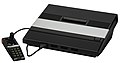 Atari 5200 (1982)
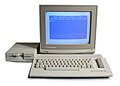 Commodore 64 (1982)
 Apple IIe (1983)

 Mark III/Master System (1985)
 Bubble Bobble (1986)
 Atari 7800 (1986)
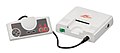 TurboGrafx-16/PC Engine (1987)
 Mega Drive/Genesis (1988)
 Game Boy (1989)
 Atari Lynx (1989)


Notes
- Pac-Man:
- Atari 2600 version (1982) – 8,095,586 game cartridges (7,956,413 by 1983,[66] 139,173 between 1986 and 1990)[64]
- Coleco tabletop version (1982) – 1.5 million units[67]
- Pac-Man Nelsonic Game Watch (1982) – 500,000+ units[68]
- Family Computer (Famicom) version – 480,000 cartridges in Japan[69]
- Atari 5200 version – 35,011 cartridges (between 1986 and 1988)[64]
- Atari XE computer version – 42,359 copies (between 1986 and 1990)[64]
- Thunder Mountain's home computer budget release (1986) – 500,000+ copies[70]
- 1,318,655 in 1980. 2,964,137 in 1981. 1,373,033 in 1982. 435,353 in 1983.

